Free Operations Compliance Monitoring Plan

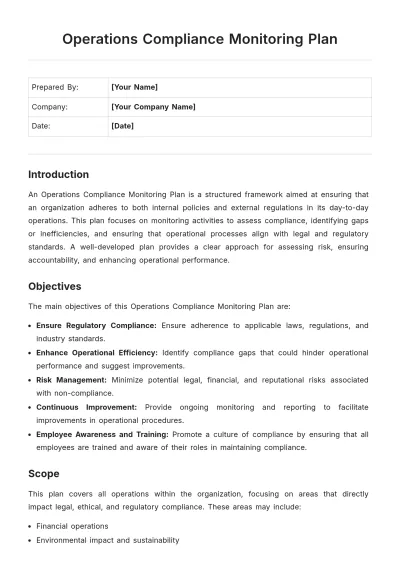
Prepared By: | [Your Name] |
Company: | [Your Company Name] |
Date: | [Date] |
Introduction
An Operations Compliance Monitoring Plan is a structured framework aimed at ensuring that an organization adheres to both internal policies and external regulations in its day-to-day operations. This plan focuses on monitoring activities to assess compliance, identifying gaps or inefficiencies, and ensuring that operational processes align with legal and regulatory standards. A well-developed plan provides a clear approach for assessing risk, ensuring accountability, and enhancing operational performance.
Objectives
The main objectives of this Operations Compliance Monitoring Plan are:
Ensure Regulatory Compliance: Ensure adherence to applicable laws, regulations, and industry standards.
Enhance Operational Efficiency: Identify compliance gaps that could hinder operational performance and suggest improvements.
Risk Management: Minimize potential legal, financial, and reputational risks associated with non-compliance.
Continuous Improvement: Provide ongoing monitoring and reporting to facilitate improvements in operational procedures.
Employee Awareness and Training: Promote a culture of compliance by ensuring that all employees are trained and aware of their roles in maintaining compliance.
Scope
This plan covers all operations within the organization, focusing on areas that directly impact legal, ethical, and regulatory compliance. These areas may include:
Financial operations
Environmental impact and sustainability
Health and safety regulations
Data protection and privacy laws
Labor and employment standards
Internal policies and procedures
Key Components of the Monitoring Plan
1. Compliance Assessment Framework
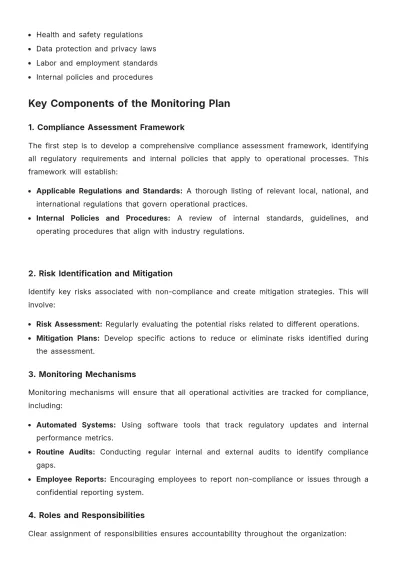
The first step is to develop a comprehensive compliance assessment framework, identifying all regulatory requirements and internal policies that apply to operational processes. This framework will establish:
Applicable Regulations and Standards: A thorough listing of relevant local, national, and international regulations that govern operational practices.
Internal Policies and Procedures: A review of internal standards, guidelines, and operating procedures that align with industry regulations.
2. Risk Identification and Mitigation
Identify key risks associated with non-compliance and create mitigation strategies. This will involve:
Risk Assessment: Regularly evaluating the potential risks related to different operations.
Mitigation Plans: Develop specific actions to reduce or eliminate risks identified during the assessment.
3. Monitoring Mechanisms
Monitoring mechanisms will ensure that all operational activities are tracked for compliance, including:
Automated Systems: Using software tools that track regulatory updates and internal performance metrics.
Routine Audits: Conducting regular internal and external audits to identify compliance gaps.
Employee Reports: Encouraging employees to report non-compliance or issues through a confidential reporting system.
4. Roles and Responsibilities
Clear assignment of responsibilities ensures accountability throughout the organization:
Compliance Officer: Oversees the compliance program and reports on its effectiveness.
Department Managers: Ensure their teams comply with the relevant regulations and policies.
Employees: Follow compliance-related procedures and report potential violations.
5. Compliance Training
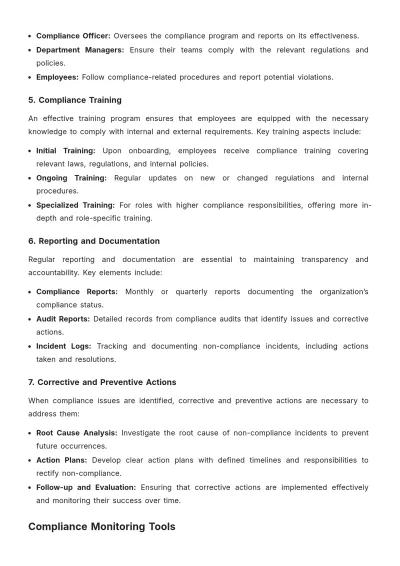
An effective training program ensures that employees are equipped with the necessary knowledge to comply with internal and external requirements. Key training aspects include:
Initial Training: Upon onboarding, employees receive compliance training covering relevant laws, regulations, and internal policies.
Ongoing Training: Regular updates on new or changed regulations and internal procedures.
Specialized Training: For roles with higher compliance responsibilities, offering more in-depth and role-specific training.
6. Reporting and Documentation
Regular reporting and documentation are essential to maintaining transparency and accountability. Key elements include:
Compliance Reports: Monthly or quarterly reports documenting the organization’s compliance status.
Audit Reports: Detailed records from compliance audits that identify issues and corrective actions.
Incident Logs: Tracking and documenting non-compliance incidents, including actions taken and resolutions.
7. Corrective and Preventive Actions
When compliance issues are identified, corrective and preventive actions are necessary to address them:
Root Cause Analysis: Investigate the root cause of non-compliance incidents to prevent future occurrences.
Action Plans: Develop clear action plans with defined timelines and responsibilities to rectify non-compliance.
Follow-up and Evaluation: Ensuring that corrective actions are implemented effectively and monitoring their success over time.
Compliance Monitoring Tools
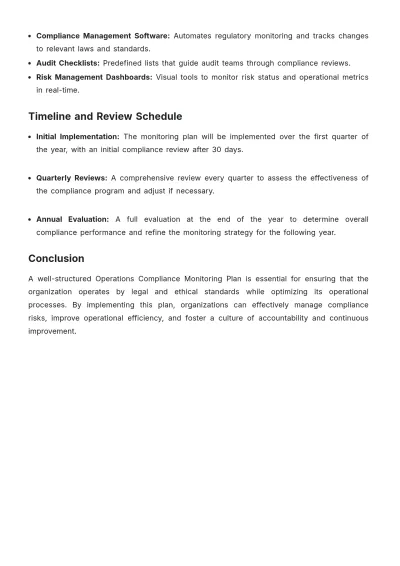
Compliance Management Software: Automates regulatory monitoring and tracks changes to relevant laws and standards.
Audit Checklists: Predefined lists that guide audit teams through compliance reviews.
Risk Management Dashboards: Visual tools to monitor risk status and operational metrics in real-time.
Timeline and Review Schedule
Initial Implementation: The monitoring plan will be implemented over the first quarter of the year, with an initial compliance review after 30 days.
Quarterly Reviews: A comprehensive review every quarter to assess the effectiveness of the compliance program and adjust if necessary.
Annual Evaluation: A full evaluation at the end of the year to determine overall compliance performance and refine the monitoring strategy for the following year.
Conclusion
A well-structured Operations Compliance Monitoring Plan is essential for ensuring that the organization operates by legal and ethical standards while optimizing its operational processes. By implementing this plan, organizations can effectively manage compliance risks, improve operational efficiency, and foster a culture of accountability and continuous improvement.
- 100% Customizable, free editor
- Access 1 Million+ Templates, photo’s & graphics
- Download or share as a template
- Click and replace photos, graphics, text, backgrounds
- Resize, crop, AI write & more
- Access advanced editor
Ensure your operations stay on track with the Operations Compliance Monitoring Plan Template from Template.net. This template is editable and customizable, allowing you to craft a detailed compliance monitoring plan that suits your operational requirements. Editable in our AI Editor tool, it facilitates a proactive approach to compliance.
You may also like
- Finance Plan
- Construction Plan
- Sales Plan
- Development Plan
- Career Plan
- Budget Plan
- HR Plan
- Education Plan
- Transition Plan
- Work Plan
- Training Plan
- Communication Plan
- Operation Plan
- Health And Safety Plan
- Strategy Plan
- Professional Development Plan
- Advertising Plan
- Risk Management Plan
- Restaurant Plan
- School Plan
- Nursing Home Patient Care Plan
- Nursing Care Plan
- Plan Event
- Startup Plan
- Social Media Plan
- Staffing Plan
- Annual Plan
- Content Plan
- Payment Plan
- Implementation Plan
- Hotel Plan
- Workout Plan
- Accounting Plan
- Campaign Plan
- Essay Plan
- 30 60 90 Day Plan
- Research Plan
- Recruitment Plan
- 90 Day Plan
- Quarterly Plan
- Emergency Plan
- 5 Year Plan
- Gym Plan
- Personal Plan
- IT and Software Plan
- Treatment Plan
- Real Estate Plan
- Law Firm Plan
- Healthcare Plan
- Improvement Plan
- Media Plan
- 5 Year Business Plan
- Learning Plan
- Marketing Campaign Plan
- Travel Agency Plan
- Cleaning Services Plan
- Interior Design Plan
- Performance Plan
- PR Plan
- Birth Plan
- Life Plan
- SEO Plan
- Disaster Recovery Plan
- Continuity Plan
- Launch Plan
- Legal Plan
- Behavior Plan
- Performance Improvement Plan
- Salon Plan
- Security Plan
- Security Management Plan
- Employee Development Plan
- Quality Plan
- Service Improvement Plan
- Growth Plan
- Incident Response Plan
- Basketball Plan
- Emergency Action Plan
- Product Launch Plan
- Spa Plan
- Employee Training Plan
- Data Analysis Plan
- Employee Action Plan
- Territory Plan
- Audit Plan
- Classroom Plan
- Activity Plan
- Parenting Plan
- Care Plan
- Project Execution Plan
- Exercise Plan
- Internship Plan
- Software Development Plan
- Continuous Improvement Plan
- Leave Plan
- 90 Day Sales Plan
- Advertising Agency Plan
- Employee Transition Plan
- Smart Action Plan
- Workplace Safety Plan
- Behavior Change Plan
- Contingency Plan
- Continuity of Operations Plan
- Health Plan
- Quality Control Plan
- Self Plan
- Sports Development Plan
- Change Management Plan
- Ecommerce Plan
- Personal Financial Plan
- Process Improvement Plan
- 30-60-90 Day Sales Plan
- Crisis Management Plan
- Engagement Plan
- Execution Plan
- Pandemic Plan
- Quality Assurance Plan
- Service Continuity Plan
- Agile Project Plan
- Fundraising Plan
- Job Transition Plan
- Asset Maintenance Plan
- Maintenance Plan
- Software Test Plan
- Staff Training and Development Plan
- 3 Year Plan
- Brand Activation Plan
- Release Plan
- Resource Plan
- Risk Mitigation Plan
- Teacher Plan
- 30 60 90 Day Plan for New Manager
- Food Safety Plan
- Food Truck Plan
- Hiring Plan
- Quality Management Plan
- Wellness Plan
- Behavior Intervention Plan
- Bonus Plan
- Investment Plan
- Maternity Leave Plan
- Pandemic Response Plan
- Succession Planning
- Coaching Plan
- Configuration Management Plan
- Remote Work Plan
- Self Care Plan
- Teaching Plan
- 100-Day Plan
- HACCP Plan
- Student Plan
- Sustainability Plan
- 30 60 90 Day Plan for Interview
- Access Plan
- Site Specific Safety Plan