CHEMICAL SAFETY FACT SHEET
[Your Company Name]
I. INTRODUCTION
This Fact Sheet aims to provide crucial information concerning chemical safety protocols, hazards, and precautions. Its primary objective is to heighten awareness among the employees, first responders, and the general public regarding the safe handling, storage, and disposal of hazardous chemicals to minimize the risks of accidents, injuries, and environmental harm.
II. CHEMICAL IDENTIFICATION AND CLASSIFICATION

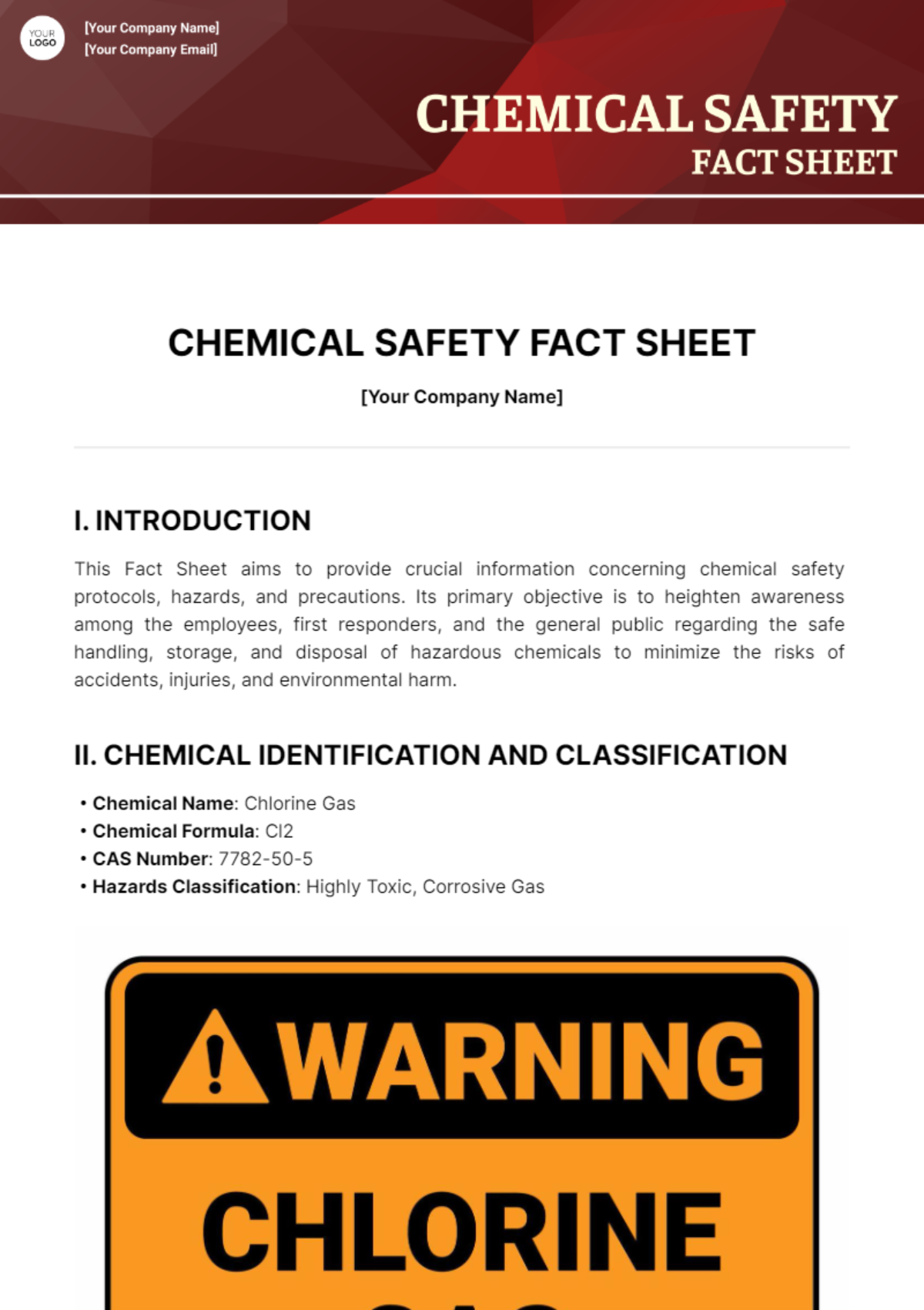
REMINDER: "Chlorine gas: a potent reminder that even the smallest molecule can wield immense power, demanding respect, caution, and unwavering diligence in its handling."
|
III. PHYSICAL PROPERTIES
Appearance: Greenish-yellow gas
Odor: Pungent, suffocating odor
Melting Point: -101.5°C
Boiling Point: -34.04°C
Density: 3.2 g/L
Solubility: Slightly soluble in water
IV. HEALTH HAZARD
Chlorine gas exposure can cause serious health issues, such as respiratory problems, skin burns, and pulmonary edema, with symptoms like coughing, skin irritation, nausea, and vomiting. It’s crucial to seek immediate medical help following exposure and to rigorously adhere to safety protocols to minimize risks.
Routes of Exposure: Inhalation, skin contact, ingestion
Health Effects:
Symptoms of Exposure:
V. SAFETY PRECAUTION
Personal Protective Equipment (PPE):
Full-face respirator with acid gas cartridges
Chemical-resistant gloves and clothing
Safety goggles or face shield

Engineering Controls:
Use in well-ventilated areas with local exhaust ventilation
Install gas detection systems
Implement emergency response procedures
Handling and Storage Guidelines:
Handle with extreme caution, avoid contact with skin and eyes
Store in tightly sealed containers in a well-ventilated, cool area away from incompatible substances
Do not store near sources of heat or ignition
Emergency Procedures:
Evacuate the area immediately in case of gas release
Seek medical attention if exposed to high concentrations
Provide artificial respiration if breathing has stopped
VI. SPILL AND LEAK PROCEDURES
Containment:
Stop the source of the leak if safe to do so
Evacuate the area and prevent entry
Use absorbent materials to contain and neutralize the spill
Cleanup:
Dispose of contaminated materials under regulations
Ventilate the area and monitor for residual gas
Decontaminate equipment and surfaces thoroughly
VII. DISPOSAL GUIDELINES
Disposal Methods:
Neutralize with sodium thiosulfate before disposal
Dispose of as hazardous waste following local, state, and federal regulations
Contact a licensed waste disposal company for proper disposal
Waste Classification: Hazardous waste
Regulatory Compliance: Comply with OSHA, EPA, and DOT regulations

VIII. CONCLUSION
Ensuring chemical safety is paramount in every workplace. By adhering to the guidelines outlined in this Fact Sheet, we can mitigate the risks associated with handling hazardous chemicals and create a safer environment for all. Remember, safety is everyone's responsibility. Stay informed, and stay vigilant, and together, we can prevent accidents and protect lives.
Fact Sheet Templates @ Template.net