Free Project Format Proposal

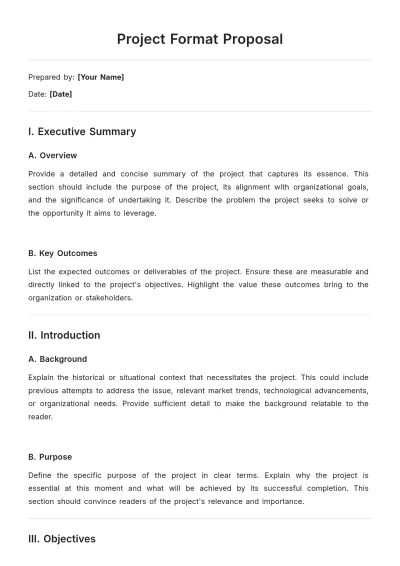
Prepared by: [Your Name]
Date: [Date]
I. Executive Summary
A. Overview
Provide a detailed and concise summary of the project that captures its essence. This section should include the purpose of the project, its alignment with organizational goals, and the significance of undertaking it. Describe the problem the project seeks to solve or the opportunity it aims to leverage.
B. Key Outcomes
List the expected outcomes or deliverables of the project. Ensure these are measurable and directly linked to the project's objectives. Highlight the value these outcomes bring to the organization or stakeholders.
II. Introduction
A. Background
Explain the historical or situational context that necessitates the project. This could include previous attempts to address the issue, relevant market trends, technological advancements, or organizational needs. Provide sufficient detail to make the background relatable to the reader.
B. Purpose
Define the specific purpose of the project in clear terms. Explain why the project is essential at this moment and what will be achieved by its successful completion. This section should convince readers of the project's relevance and importance.
III. Objectives
A. Primary Goals
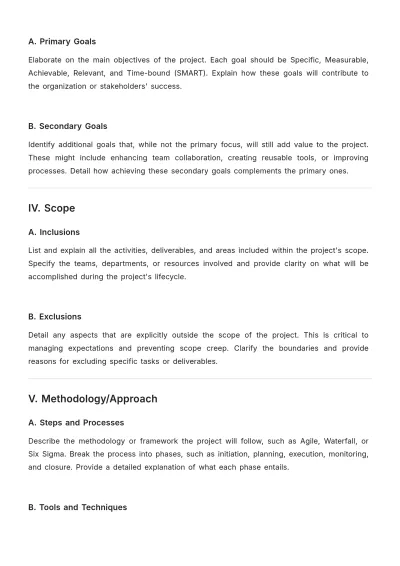
Elaborate on the main objectives of the project. Each goal should be Specific, Measurable, Achievable, Relevant, and Time-bound (SMART). Explain how these goals will contribute to the organization or stakeholders' success.
B. Secondary Goals
Identify additional goals that, while not the primary focus, will still add value to the project. These might include enhancing team collaboration, creating reusable tools, or improving processes. Detail how achieving these secondary goals complements the primary ones.
IV. Scope
A. Inclusions
List and explain all the activities, deliverables, and areas included within the project's scope. Specify the teams, departments, or resources involved and provide clarity on what will be accomplished during the project's lifecycle.
B. Exclusions
Detail any aspects that are explicitly outside the scope of the project. This is critical to managing expectations and preventing scope creep. Clarify the boundaries and provide reasons for excluding specific tasks or deliverables.
V. Methodology/Approach
A. Steps and Processes
Describe the methodology or framework the project will follow, such as Agile, Waterfall, or Six Sigma. Break the process into phases, such as initiation, planning, execution, monitoring, and closure. Provide a detailed explanation of what each phase entails.
B. Tools and Techniques
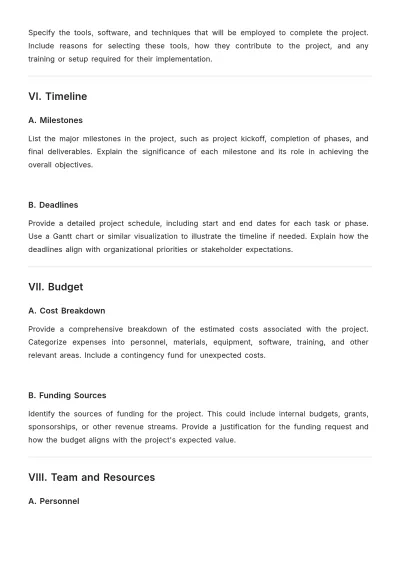
Specify the tools, software, and techniques that will be employed to complete the project. Include reasons for selecting these tools, how they contribute to the project, and any training or setup required for their implementation.
VI. Timeline
A. Milestones
List the major milestones in the project, such as project kickoff, completion of phases, and final deliverables. Explain the significance of each milestone and its role in achieving the overall objectives.
B. Deadlines
Provide a detailed project schedule, including start and end dates for each task or phase. Use a Gantt chart or similar visualization to illustrate the timeline if needed. Explain how the deadlines align with organizational priorities or stakeholder expectations.
VII. Budget
A. Cost Breakdown
Provide a comprehensive breakdown of the estimated costs associated with the project. Categorize expenses into personnel, materials, equipment, software, training, and other relevant areas. Include a contingency fund for unexpected costs.
B. Funding Sources
Identify the sources of funding for the project. This could include internal budgets, grants, sponsorships, or other revenue streams. Provide a justification for the funding request and how the budget aligns with the project's expected value.
VIII. Team and Resources
A. Personnel
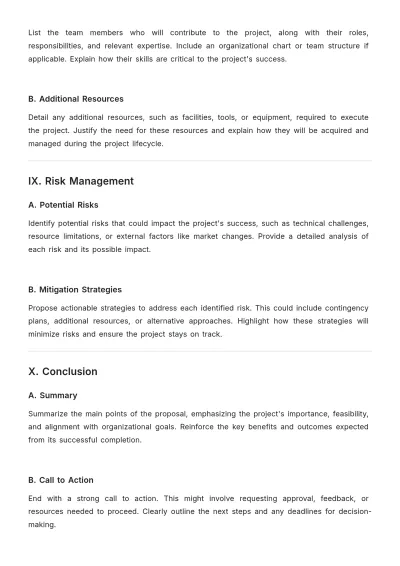
List the team members who will contribute to the project, along with their roles, responsibilities, and relevant expertise. Include an organizational chart or team structure if applicable. Explain how their skills are critical to the project's success.
B. Additional Resources
Detail any additional resources, such as facilities, tools, or equipment, required to execute the project. Justify the need for these resources and explain how they will be acquired and managed during the project lifecycle.
IX. Risk Management
A. Potential Risks
Identify potential risks that could impact the project's success, such as technical challenges, resource limitations, or external factors like market changes. Provide a detailed analysis of each risk and its possible impact.
B. Mitigation Strategies
Propose actionable strategies to address each identified risk. This could include contingency plans, additional resources, or alternative approaches. Highlight how these strategies will minimize risks and ensure the project stays on track.
X. Conclusion
A. Summary
Summarize the main points of the proposal, emphasizing the project's importance, feasibility, and alignment with organizational goals. Reinforce the key benefits and outcomes expected from its successful completion.
B. Call to Action
End with a strong call to action. This might involve requesting approval, feedback, or resources needed to proceed. Clearly outline the next steps and any deadlines for decision-making.
- 100% Customizable, free editor
- Access 1 Million+ Templates, photo’s & graphics
- Download or share as a template
- Click and replace photos, graphics, text, backgrounds
- Resize, crop, AI write & more
- Access advanced editor
Effortlessly draft project proposals with the Project Format Proposal Template from Template.net. This template is highly customizable, offering you the flexibility to personalize every detail. With its editable format, it can be easily adjusted to meet your specific project requirements. Plus, use our Ai Editor Tool to make changes quickly and effectively. Start creating your perfect proposal today.
You may also like
- Business Proposal
- Research Proposal
- Proposal Request
- Project Proposal
- Grant Proposal
- Photography Proposal
- Job Proposal
- Budget Proposal
- Marketing Proposal
- Branding Proposal
- Advertising Proposal
- Sales Proposal
- Startup Proposal
- Event Proposal
- Creative Proposal
- Restaurant Proposal
- Blank Proposal
- One Page Proposal
- Proposal Report
- IT Proposal
- Non Profit Proposal
- Training Proposal
- Construction Proposal
- School Proposal
- Cleaning Proposal
- Contract Proposal
- HR Proposal
- Travel Agency Proposal
- Small Business Proposal
- Investment Proposal
- Bid Proposal
- Retail Business Proposal
- Sponsorship Proposal
- Academic Proposal
- Partnership Proposal
- Work Proposal
- Agency Proposal
- University Proposal
- Accounting Proposal
- Real Estate Proposal
- Hotel Proposal
- Product Proposal
- Advertising Agency Proposal
- Development Proposal
- Loan Proposal
- Website Proposal
- Nursing Home Proposal
- Financial Proposal
- Salon Proposal
- Freelancer Proposal
- Funding Proposal
- Work from Home Proposal
- Company Proposal
- Consulting Proposal
- Educational Proposal
- Construction Bid Proposal
- Interior Design Proposal
- New Product Proposal
- Sports Proposal
- Corporate Proposal
- Food Proposal
- Property Proposal
- Maintenance Proposal
- Purchase Proposal
- Rental Proposal
- Recruitment Proposal
- Social Media Proposal
- Travel Proposal
- Trip Proposal
- Software Proposal
- Conference Proposal
- Graphic Design Proposal
- Law Firm Proposal
- Medical Proposal
- Music Proposal
- Pricing Proposal
- SEO Proposal
- Strategy Proposal
- Technical Proposal
- Coaching Proposal
- Ecommerce Proposal
- Fundraising Proposal
- Landscaping Proposal
- Charity Proposal
- Contractor Proposal
- Exhibition Proposal
- Art Proposal
- Mobile Proposal
- Equipment Proposal
- Student Proposal
- Engineering Proposal
- Business Proposal