Internal Audit SWOT Analysis
Prepared By : | [Your Name] |
Company : | [Your Company Name] |
Department : | [Your Department] |
I. Introduction
Specify the audience for whom the analysis is intended, including senior management, the board of directors, audit committee members, internal auditors, and relevant personnel involved in governance, risk management, and internal control processes.
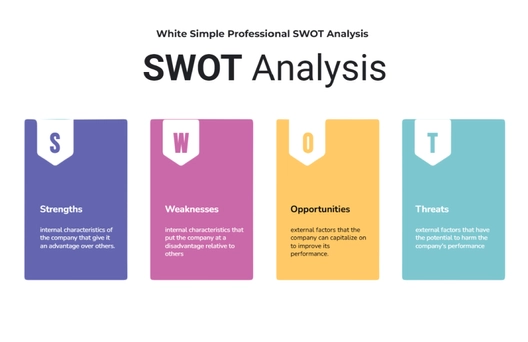
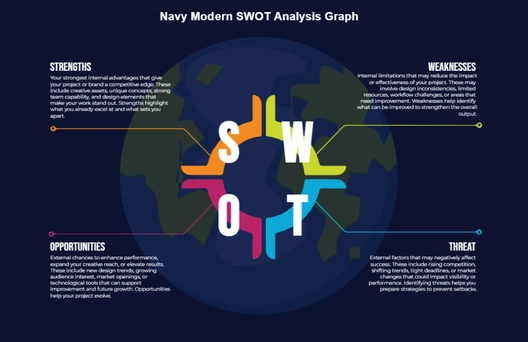
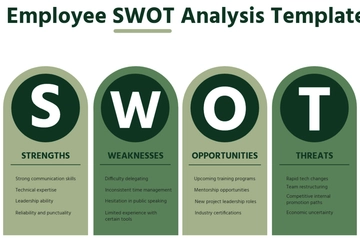
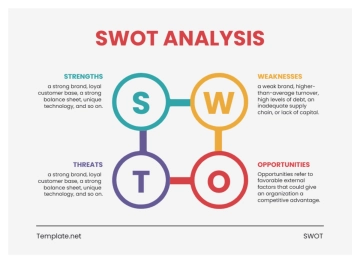
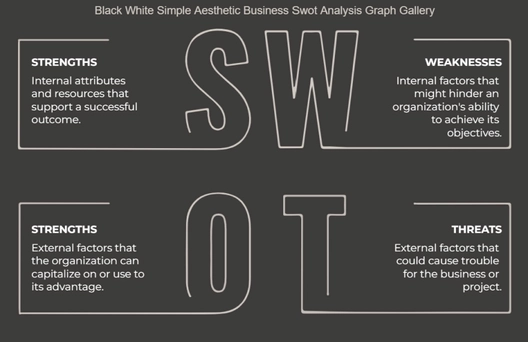
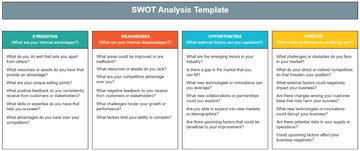
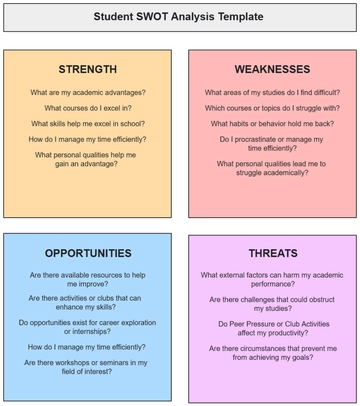
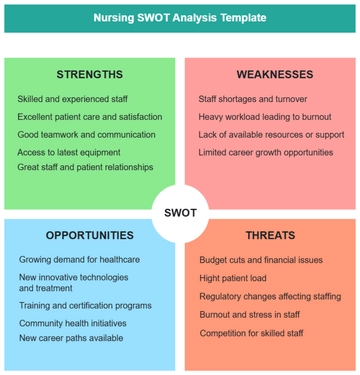
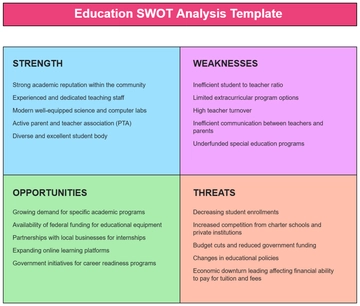
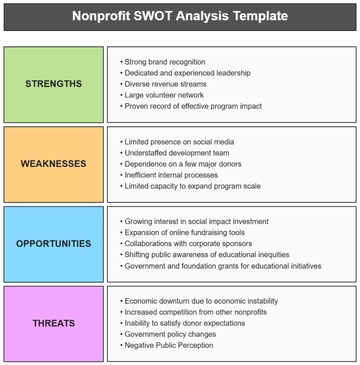
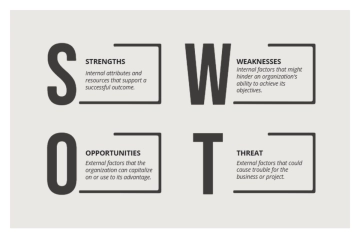
Briefly outline the structure of the analysis, which will focus on evaluating the strengths, weaknesses, opportunities, and threats associated with the internal audit function.
II. Internal Audit Function Overview
Role | Number of Staff | Qualifications/Experience | Key Responsibilities |
|---|
Chief Audit Executive | 1 | Certified Internal Auditor (CIA), Certified Public Accountant (CPA), Bachelor's degree in Accounting or related field. | - Provide strategic leadership and direction to the internal audit function. - Oversee the development and implementation of risk-based audit plans. - Report audit findings and recommendations to senior management and the audit committee. |
Senior Internal Auditor | 2 | Certified Internal Auditor (CIA), Bachelor's degree in Finance or related field. | - Lead and conduct complex audits across various business units. - Review work papers and guide junior auditors. - Assist in the development of audit programs and methodologies. |
Internal Auditor | 3 | Bachelor's degree in Accounting, Finance, or related field. | - Perform detailed testing of controls and procedures. - Document audit findings and observations. - Collaborate with process owners to develop corrective action plans. |
IT Auditor | 1 | Certified Information Systems Auditor (CISA), Bachelor's degree in Information Technology or related field. | - Conduct IT audits to assess the effectiveness of information systems controls. - Evaluate IT governance processes and data security measures. - Recommend improvements to IT controls and processes. |
Provide background information on the current structure, staffing, and methodologies used in internal audit processes, highlighting any recent changes or initiatives aimed at enhancing effectiveness and efficiency.
III. Strengths
Skilled Personnel: Highly qualified internal auditors with expertise in various domains, including finance, operations, and compliance. Continuous training and development programs ensure their skills remain up-to-date.
Robust Methodologies: Well-defined audit methodologies and frameworks, such as COSO or ISO standards, ensure consistency and thoroughness in audit processes. Regular reviews and updates are conducted to adapt to evolving risks and business environments.
Advanced Technology Tools: Utilization of cutting-edge audit software, such as data analytics tools and robotic process automation (RPA), enhances audit efficiency and allows for more extensive analysis of large datasets.
Management Support: Strong backing from senior management for internal audit initiatives, demonstrated through adequate resource allocation, clear communication of expectations, and support for implementing audit recommendations.
IV. Weaknesses
Lack of Independence: Potential conflicts of interest compromise audit objectivity, particularly in cases where auditors have close relationships with auditees or are involved in operational decision-making. Implementing clear policies and procedures to ensure independence and objectivity are maintained is essential.
V. Opportunities
Initiative | Description | Target Audience | Timeline |
|---|
Advanced-Data Analytics Training | Hands-on training on data analytics tools | Internal Auditors | Q3 2050 |
Cybersecurity Awareness Program | Awareness sessions on cybersecurity best practices | All Staff | Q4 2051 |
Fraud Examination Certification | Certification program for fraud examination skills | Selected Internal Auditors | Q1 2052 |
Regulatory Changes: Anticipation of upcoming regulatory updates, such as changes in accounting standards or industry-specific regulations, creates opportunities for proactive compliance efforts and alignment with best practices.
VI. Threats
Regulation/Standard | Description | Implications for Internal Audit |
|---|
GDPR | The General Data Protection Regulation (GDPR) enhances data protection and privacy for individuals in the EU and EEA, imposing strict data processing, consent, and breach notification rules. | Internal audits must ensure GDPR compliance by evaluating data processes, conducting privacy assessments, and monitoring protection measures. |
SOX (Sarbanes-Oxley Act) | The Sarbanes-Oxley Act of 2050 enhances corporate governance and financial transparency by requiring stringent internal controls and mandating management and auditors to evaluate and disclose their effectiveness. | Internal audit is crucial for assessing internal controls, ensuring SOX compliance, and ensuring the reliability of financial reporting to management and external auditors. |
IFRS 16 | IFRS 16 mandates lessees to include lease liabilities and right-of-use assets on balance sheets, enhancing financial statement transparency and comparability. | Internal audit must evaluate how adopting IFRS 16 affects financial reporting, focusing on lease accounting policies, data management, and disclosures, while also assessing control effectiveness and compliance with the new standard. |
Basel III | Basel III is an international regulatory framework created by the Basel Committee on Banking Supervision that strengthens bank capital norms, enhances risk management, and boosts the banking sector's resilience to financial shocks. | Internal audit must evaluate compliance with Basel III standards, including capital adequacy, liquidity, and risk management, by assessing risk measurement, reporting frameworks, stress testing, and capital planning effectiveness. |
FCPA (Foreign Corrupt Practices Act) | The Foreign Corrupt Practices Act (FCPA) bans foreign official bribery, mandates accurate record-keeping and internal controls for U.S.-listed companies, and seeks to curb corruption and enhance transparency in global business. | Internal audit is key for evaluating FCPA compliance, third-party due diligence, and the efficacy of anti-corruption measures. |
VII. Conclusion
Summarize key findings from the Internal Audit SWOT Analysis, emphasizing the importance of leveraging strengths, addressing weaknesses, capitalizing on opportunities, and mitigating threats to enhance the internal audit function's effectiveness.
Highlight actionable insights and recommendations for enhancing the internal audit function's performance, such as investing in technology upgrades, enhancing training programs, and strengthening independence and objectivity.
Analysis Templates @ Template.net