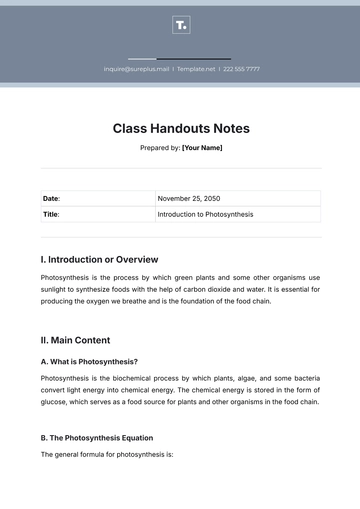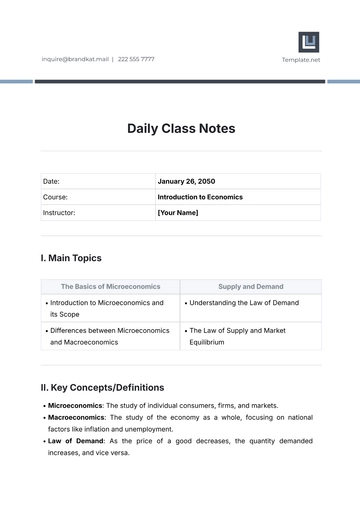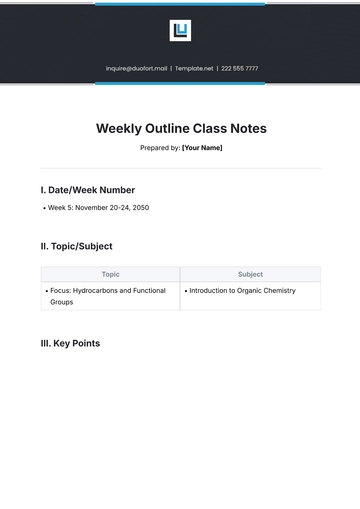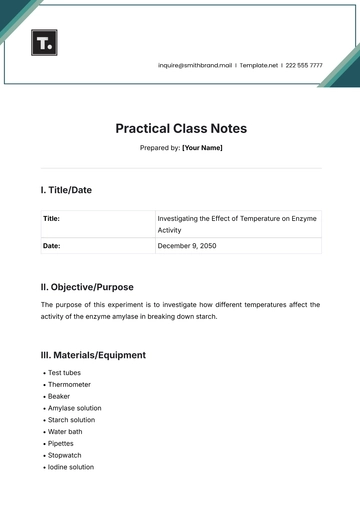
Free Class Handouts Notes

Prepared by: [Your Name]
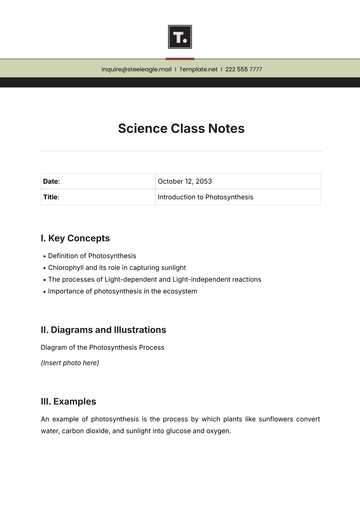
Date: | November 25, 2050 |
Title: | Introduction to Photosynthesis |
I. Introduction or Overview
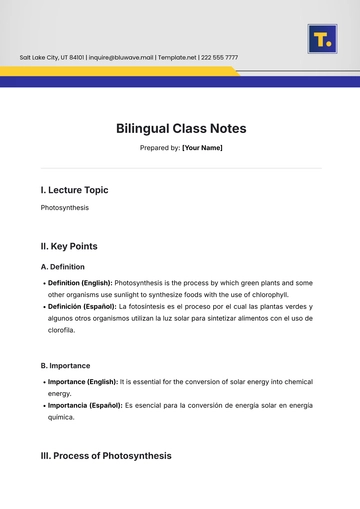
Photosynthesis is the process by which green plants and some other organisms use sunlight to synthesize foods with the help of carbon dioxide and water. It is essential for producing the oxygen we breathe and is the foundation of the food chain.
II. Main Content
A. What is Photosynthesis?
Photosynthesis is the biochemical process by which plants, algae, and some bacteria convert light energy into chemical energy. The chemical energy is stored in the form of glucose, which serves as a food source for plants and other organisms in the food chain.
B. The Photosynthesis Equation
The general formula for photosynthesis is:
6CO2+6H2O+light energy⟶C6H12O6+6O26CO_2 + 6H_2O + light \, energy \longrightarrow C_6H_{12}O_6 + 6O_26CO2+6H2O+lightenergy⟶C6H12O6+6O2
This means that six molecules of carbon dioxide and six molecules of water, in the presence of light, are converted into one molecule of glucose and six molecules of oxygen.
C. Stages of Photosynthesis
Photosynthesis occurs in two main stages: the light-dependent reactions and the light-independent reactions (Calvin cycle).
D. Light-Dependent Reactions
Occur in the thylakoid membranes of the chloroplasts.
Use sunlight to split water molecules (photolysis), releasing oxygen and transferring energy to molecules like ATP and NADPH.
E. Light-Independent Reactions (Calvin Cycle)
Occur in the stroma of the chloroplasts.
Use ATP and NADPH produced in the light-dependent reactions to convert carbon dioxide into glucose.
F. Role of Chlorophyll
Chlorophyll is the green pigment in plants that captures light energy for photosynthesis. It absorbs light mostly in the blue and red wavelengths, reflecting green light, which is why plants appear green.
III. Examples of Case Studies
Example 1: Photosynthesis in Green Plants
Green plants, such as trees, flowers, and grass, perform photosynthesis to generate their food. They absorb carbon dioxide from the air and water through their roots, using sunlight to produce glucose.
Example 2: Photosynthesis in Algae
Algae, similar to green plants, also perform photosynthesis and contribute to oxygen production in aquatic ecosystems. They play a significant role in marine food chains.
IV. Conclusion or Summary
In conclusion, photosynthesis is a critical process that sustains life on Earth. It enables plants to produce glucose for their growth while releasing oxygen into the atmosphere. Understanding this process is fundamental for studying biology, ecology, and environmental science.
V. References or Further Reading
“Biology: The Dynamics of Life” by Eldra P. Solomon
“The Photosynthesis Process: An Overview” by David W. Stokes
Additional resources: Khan Academy videos on Photosynthesis
- 100% Customizable, free editor
- Access 1 Million+ Templates, photo’s & graphics
- Download or share as a template
- Click and replace photos, graphics, text, backgrounds
- Resize, crop, AI write & more
- Access advanced editor
Stay organized with our Class Handouts Notes Template from Template.net. This editable and customizable template is ideal for both teachers and students to keep class handouts and notes in one place. With flexible sections and an easy-to-navigate design, you can tailor the format and content to your needs, editable in our Ai Editor Tool for effortless adjustments.

You may also like
- Delivery Note
- Notes Release
- Concept Note
- Class Note
- Hospital Note
- Apology Note
- Credit Note
- Handover Note
- Personal Note
- Excuse Note
- Case Note
- Sample Doctor Note
- Lesson Note
- Appointment Note
- Piano Note
- School Note
- Progress Note
- Business Note
- SOAP Note Templates
- Therapy Note
- Briefing Note
- Summary Note
- Sample Note
- Printable Note