
Free Risk Register Templates

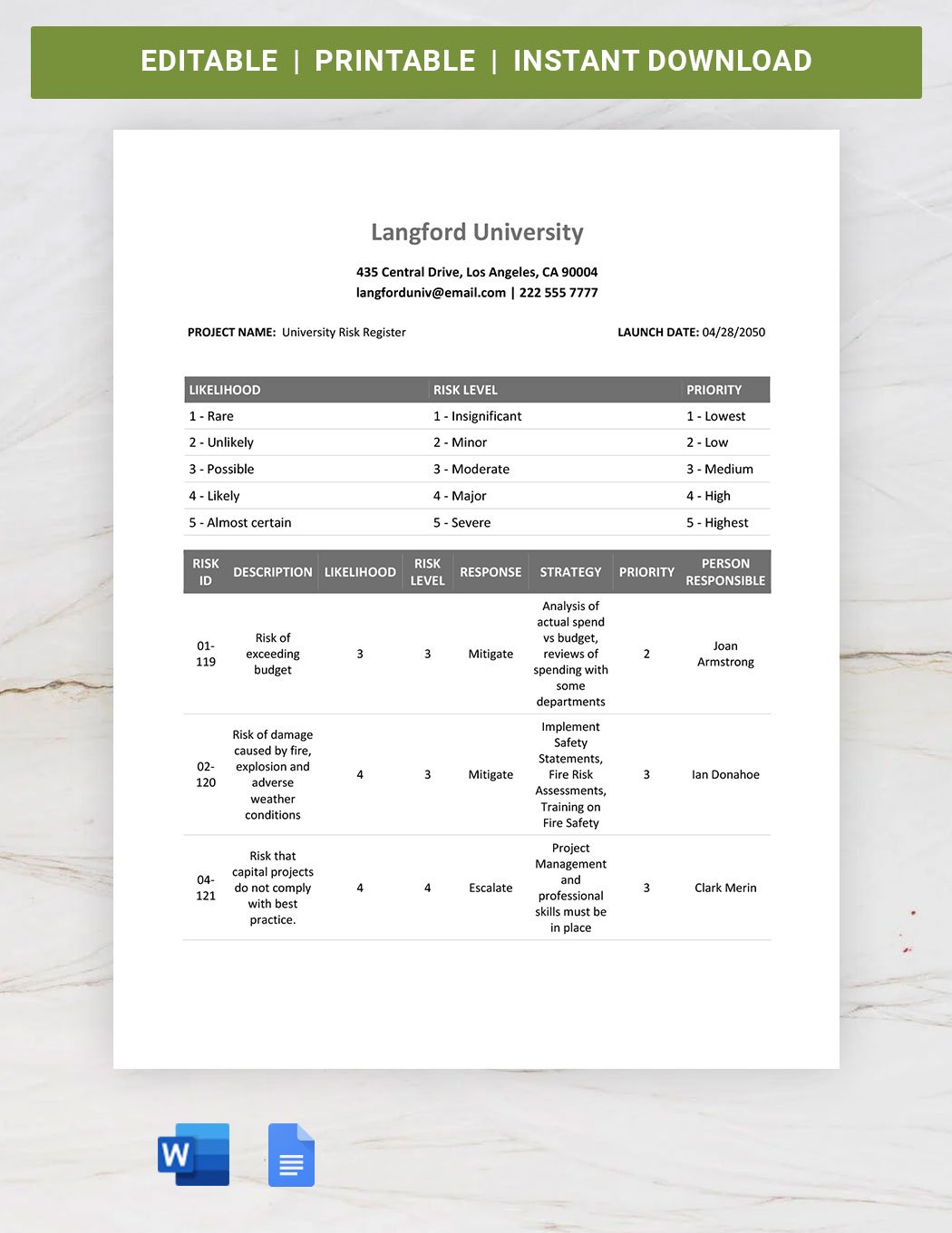
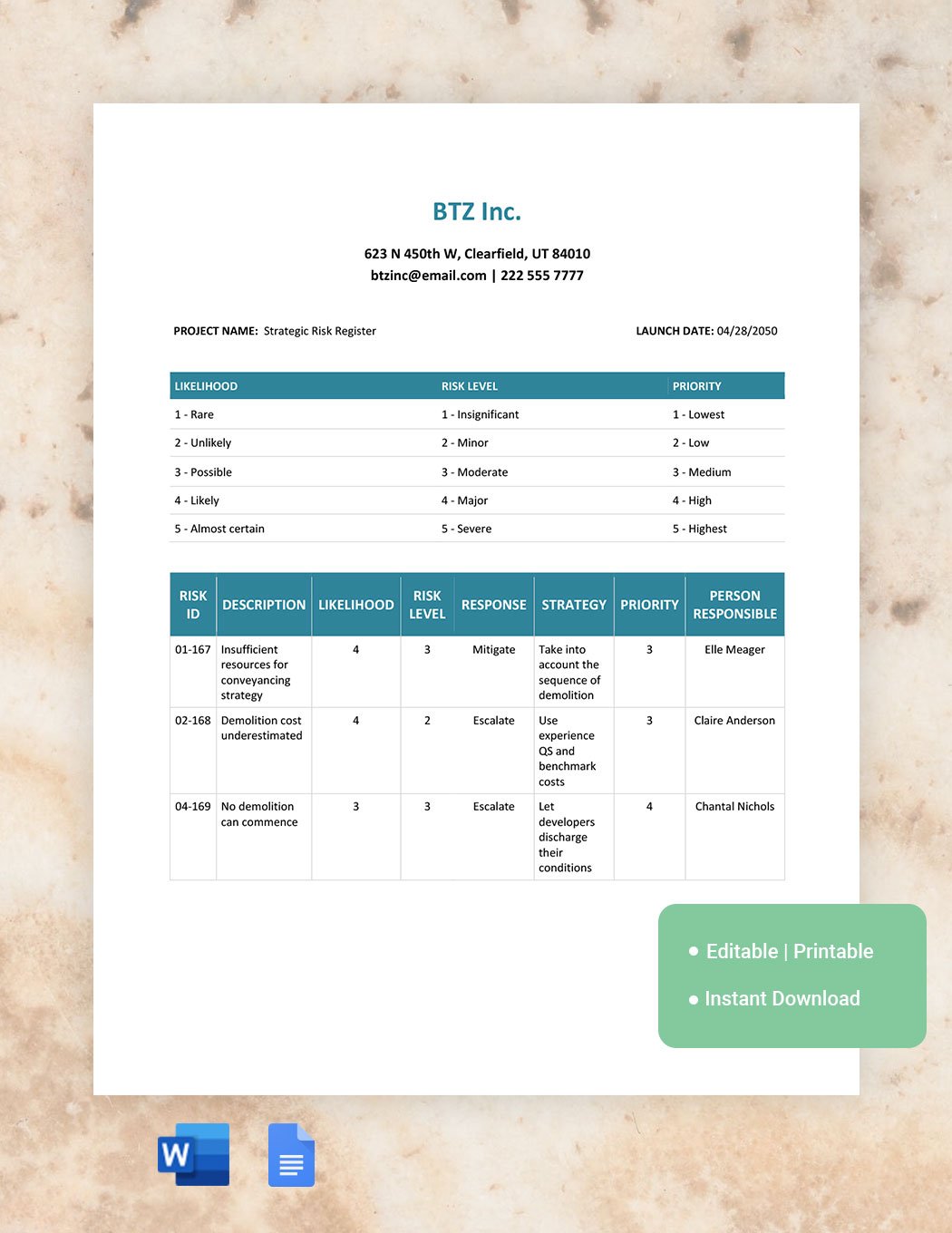
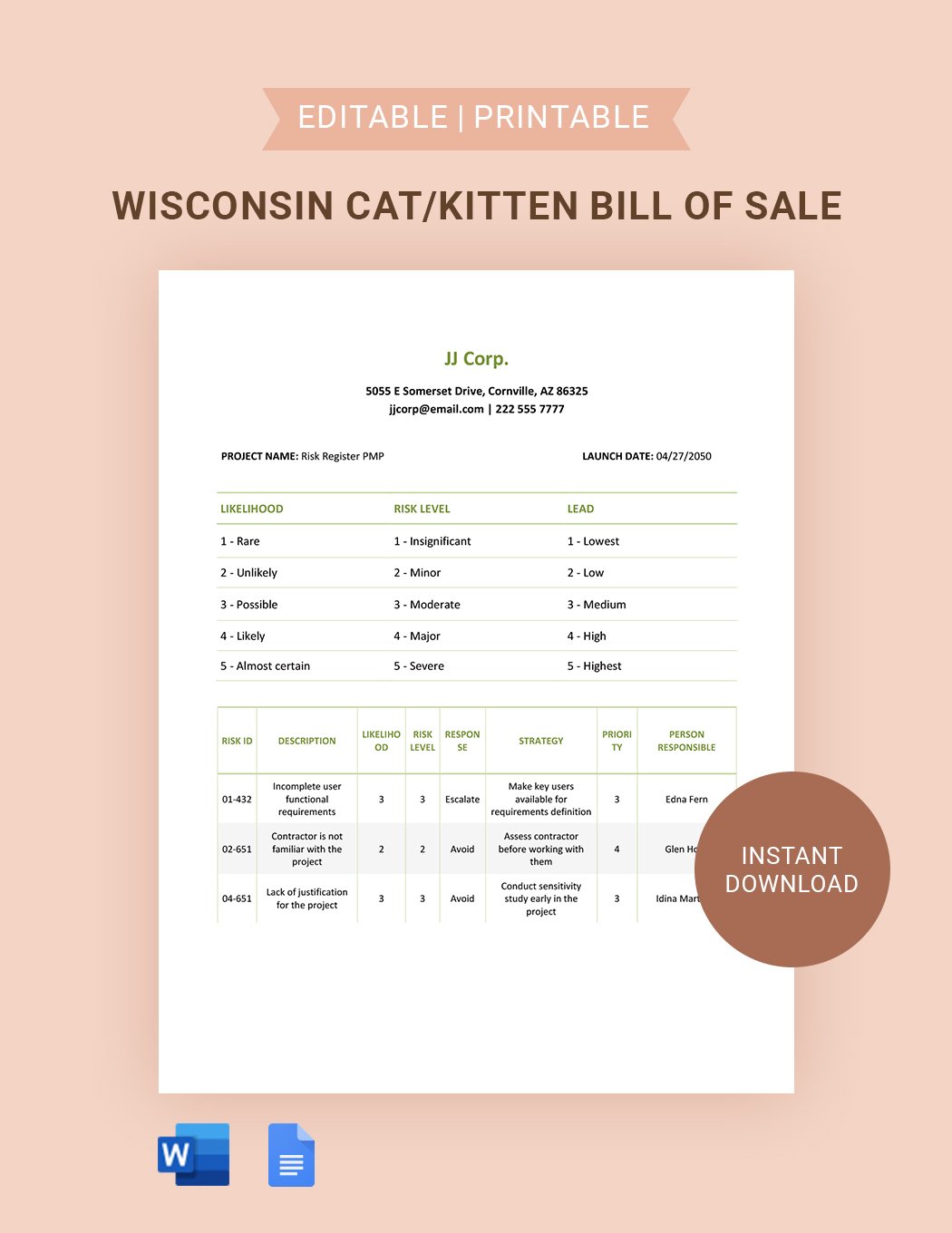
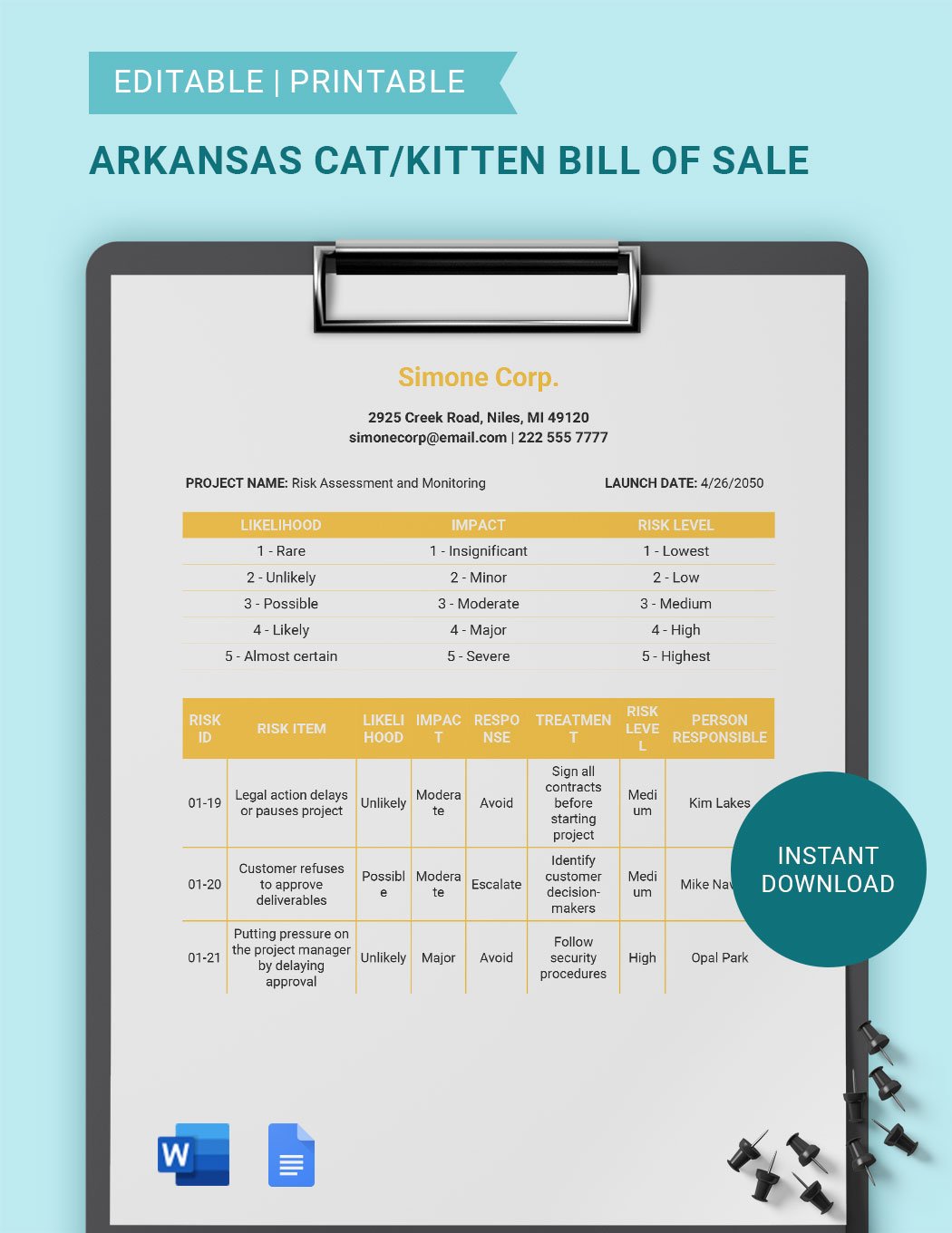
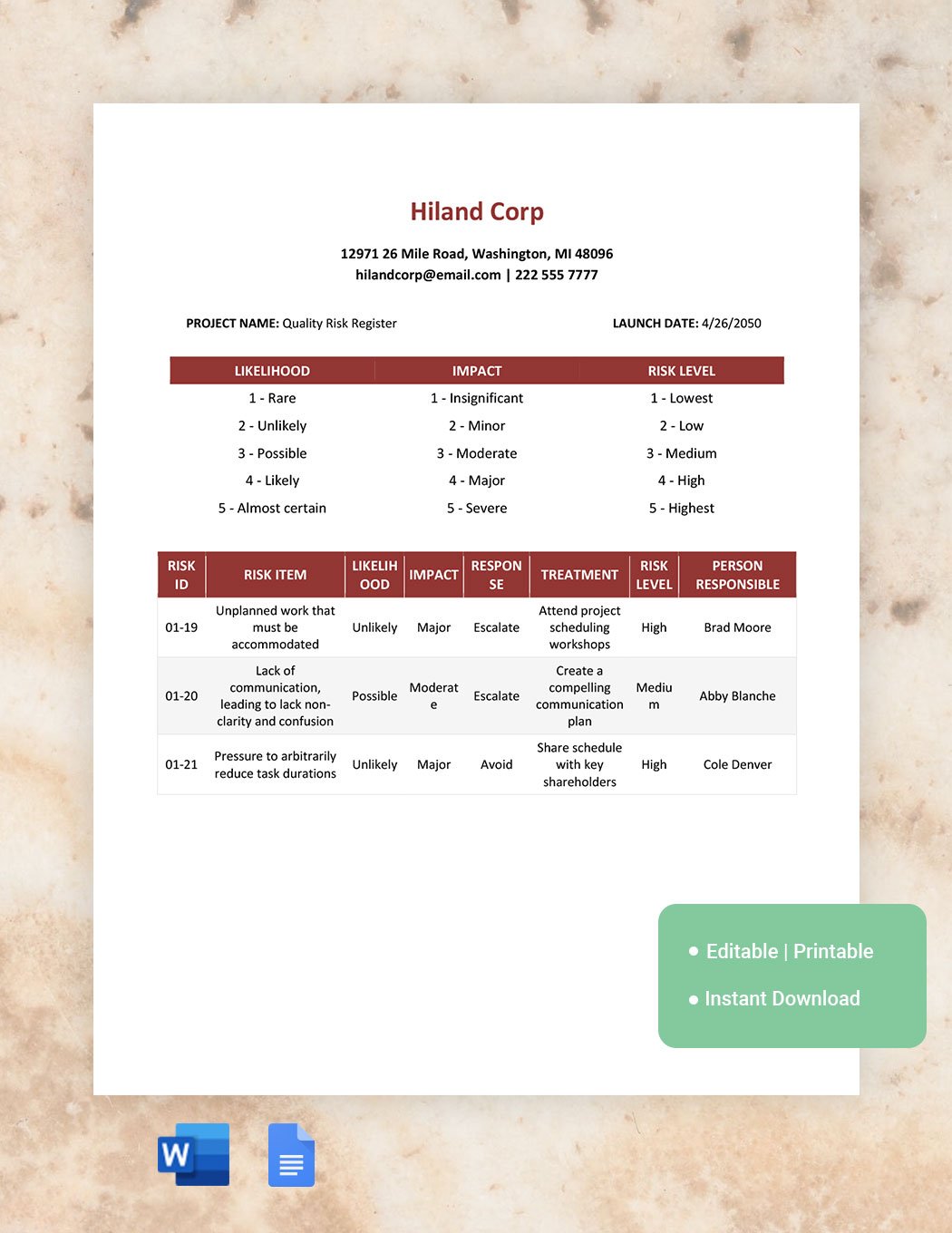
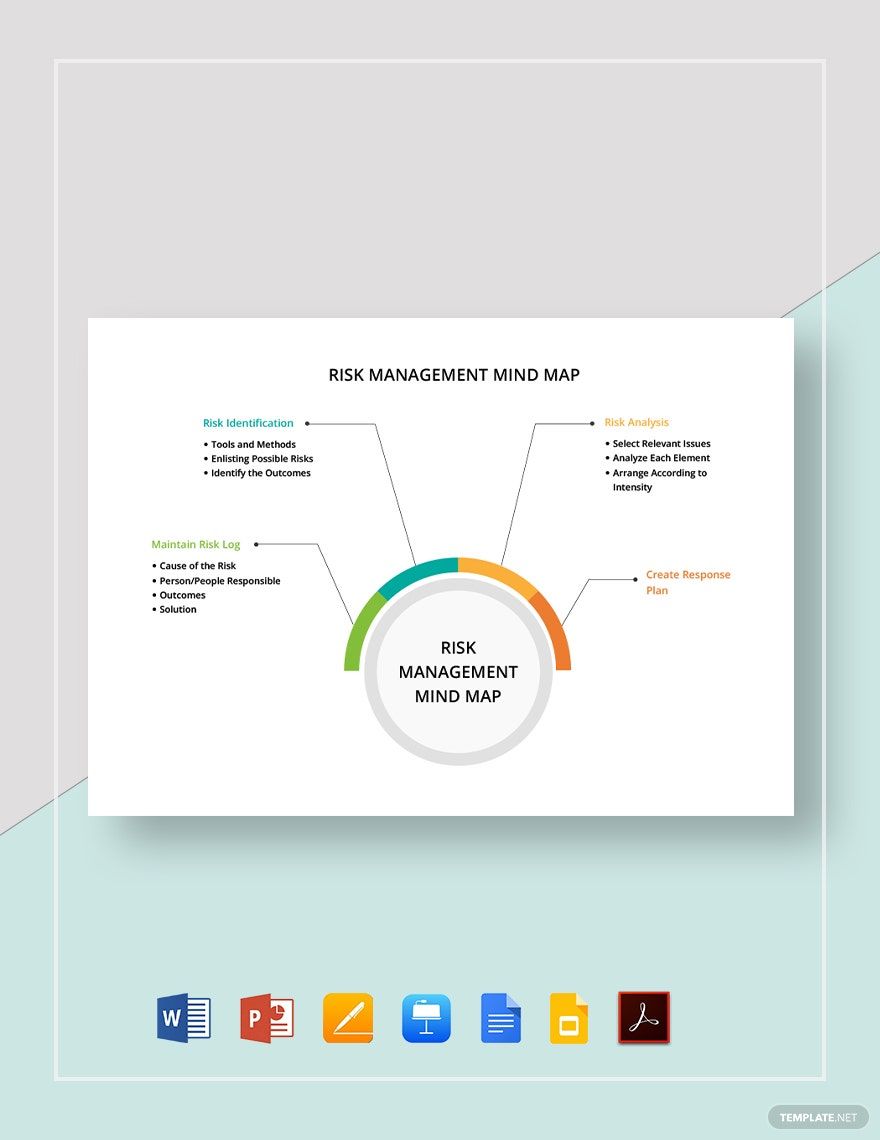
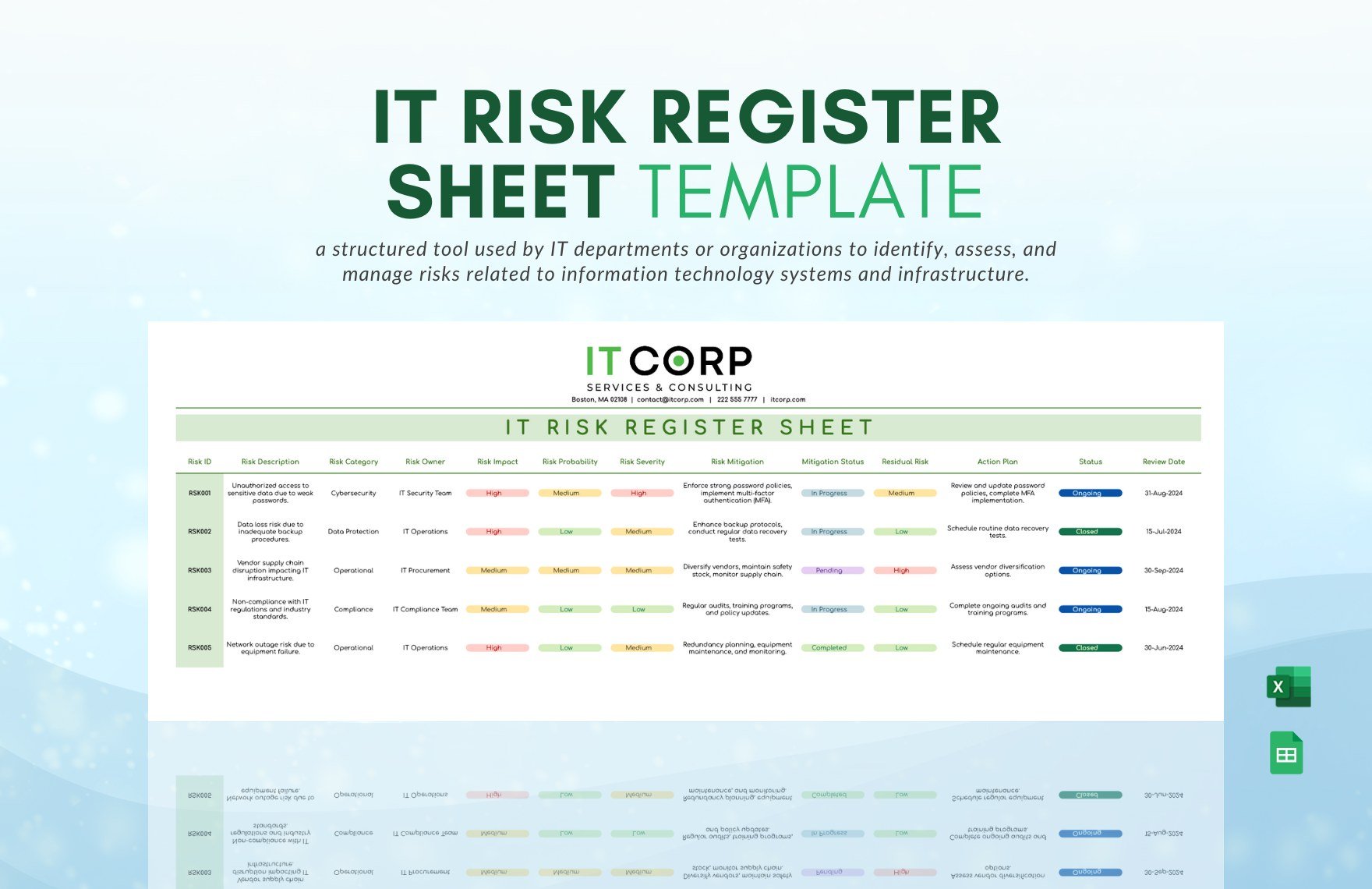
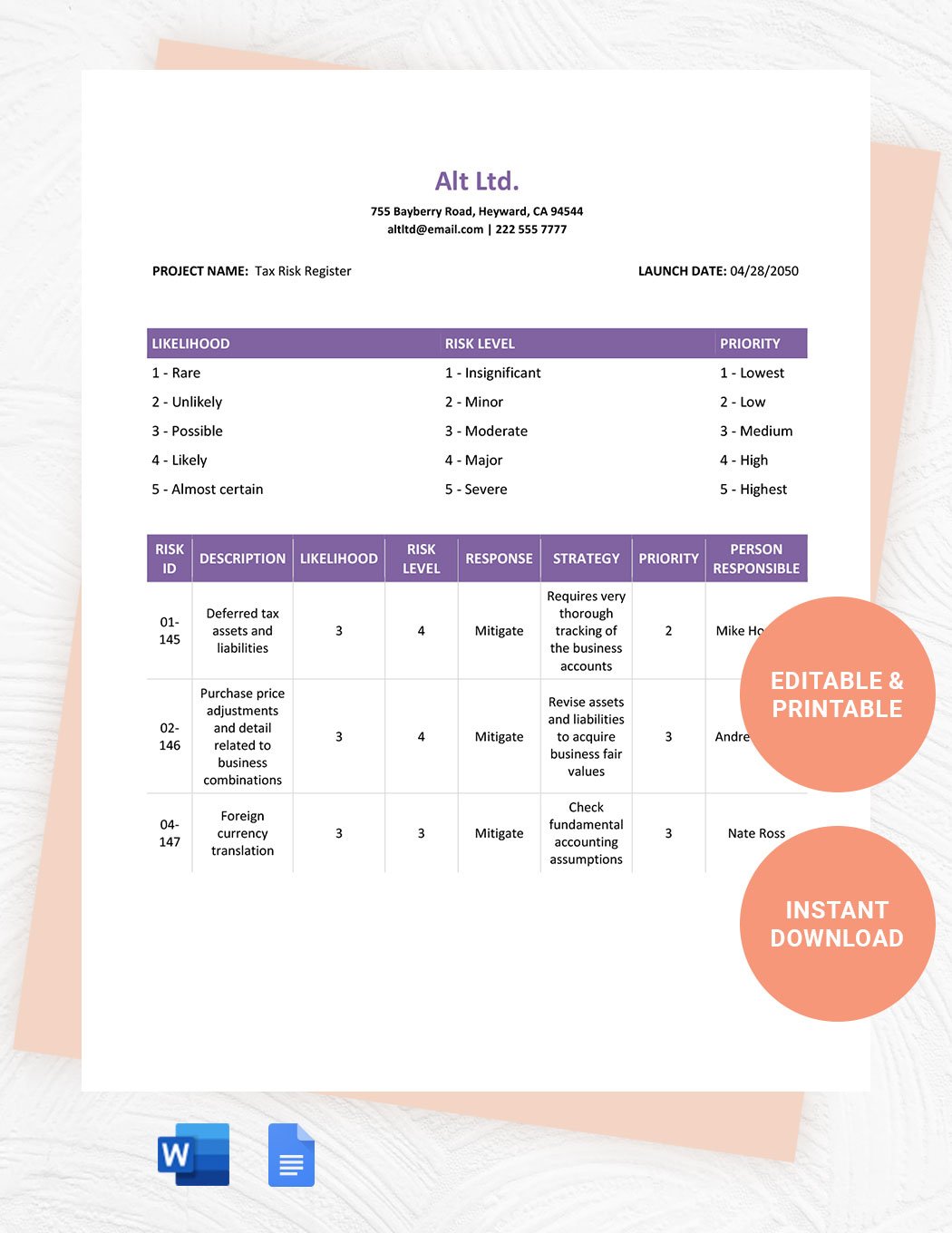
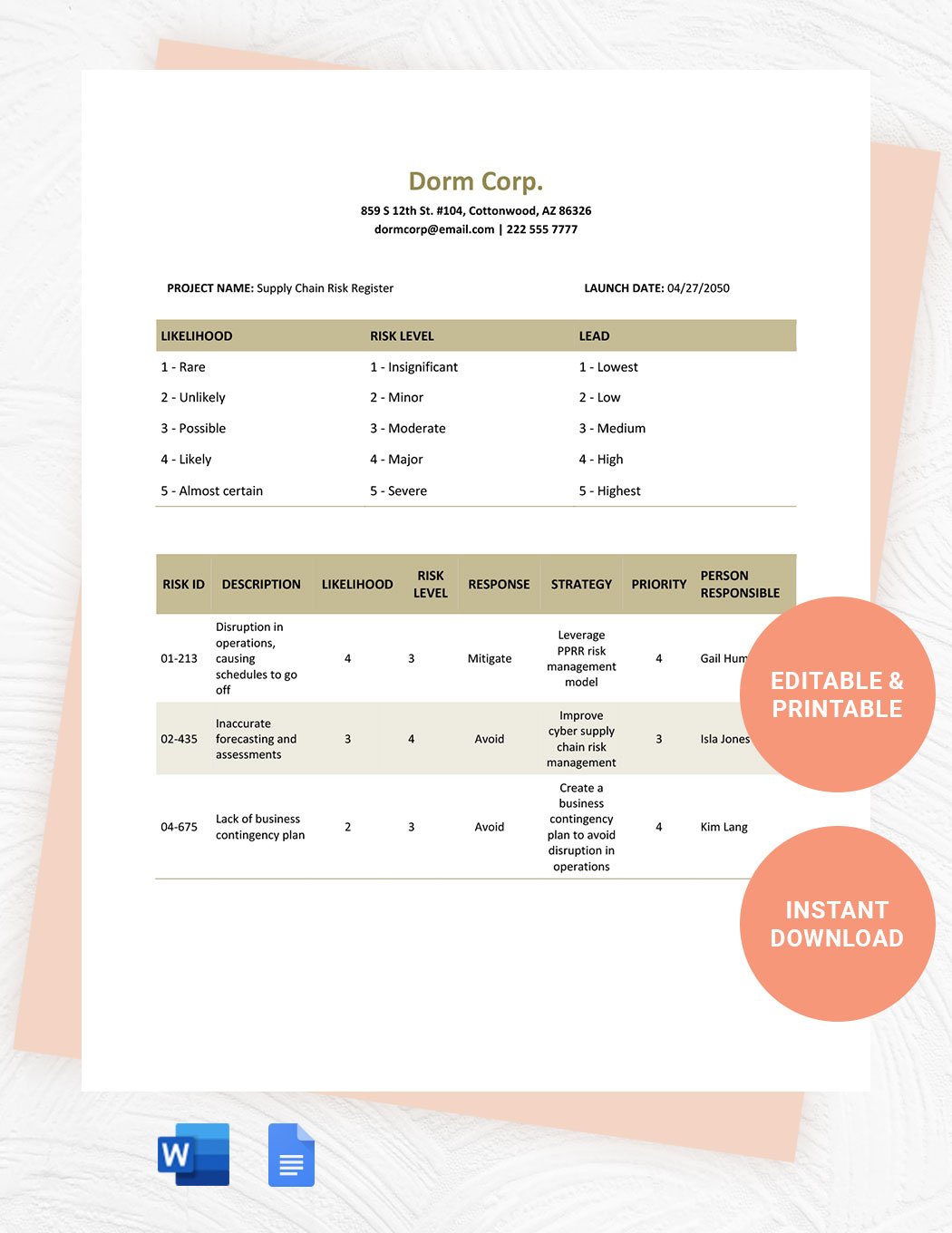
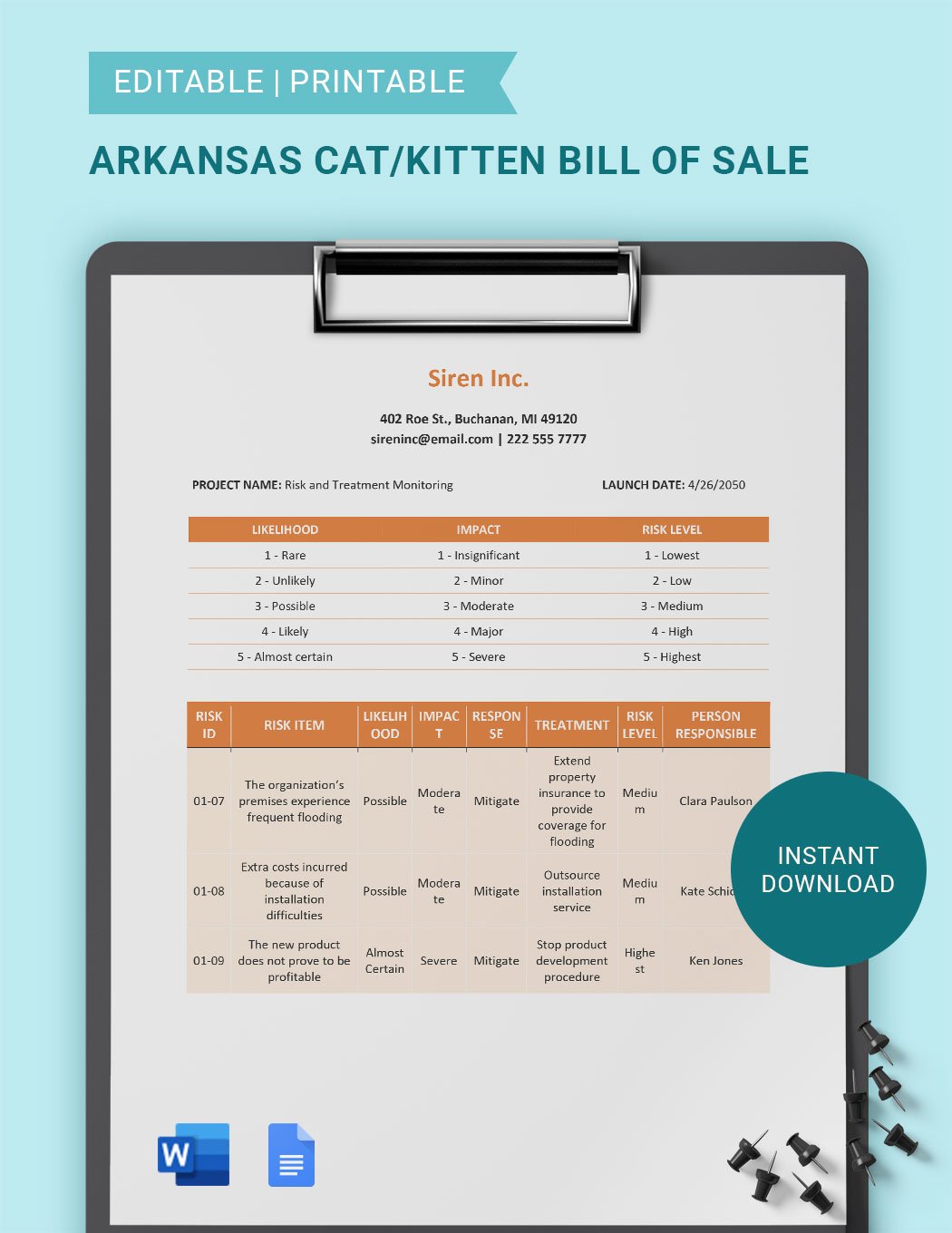
Free Risk Register Templates: Editable Organizational Tools, Uses, and Download Formats
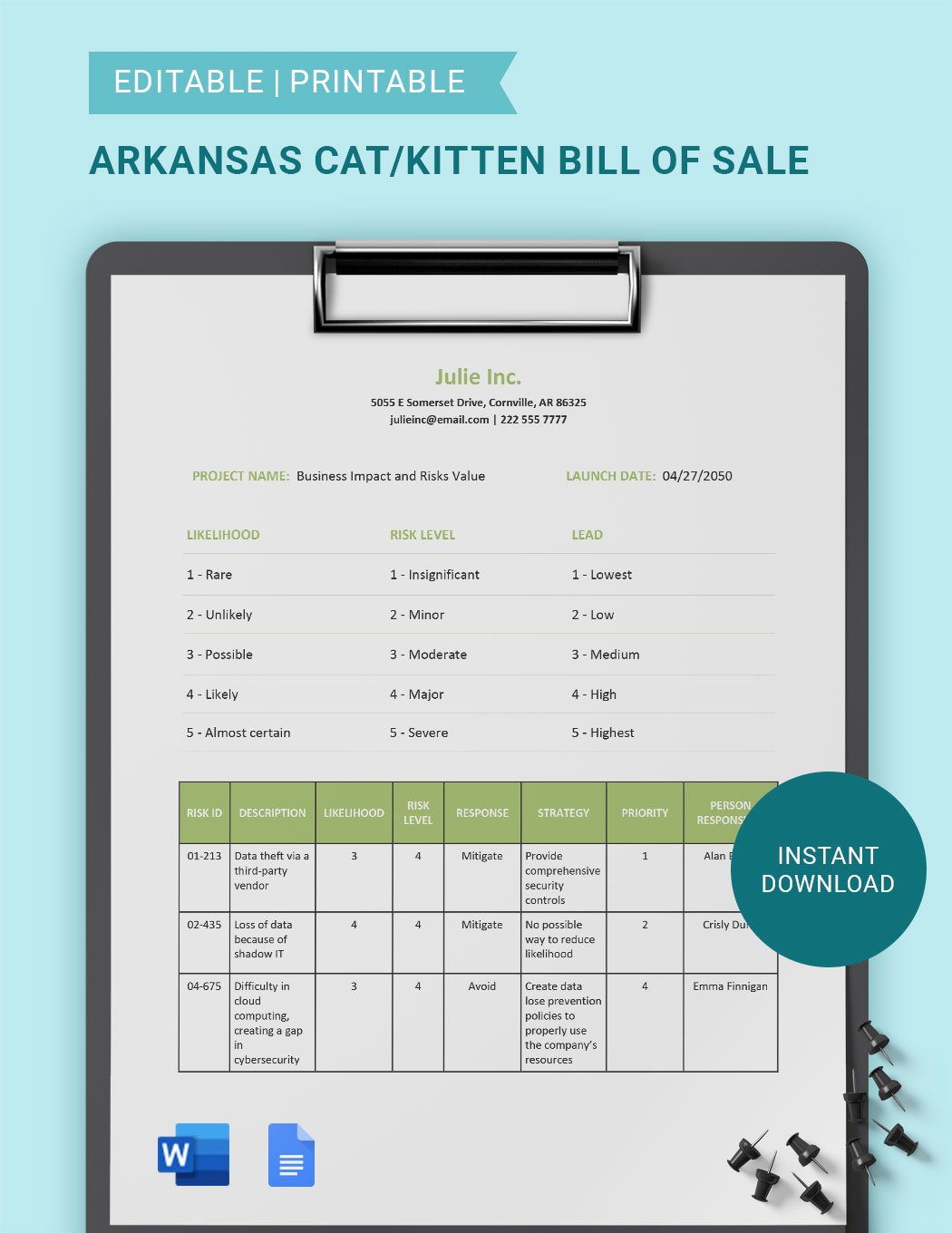
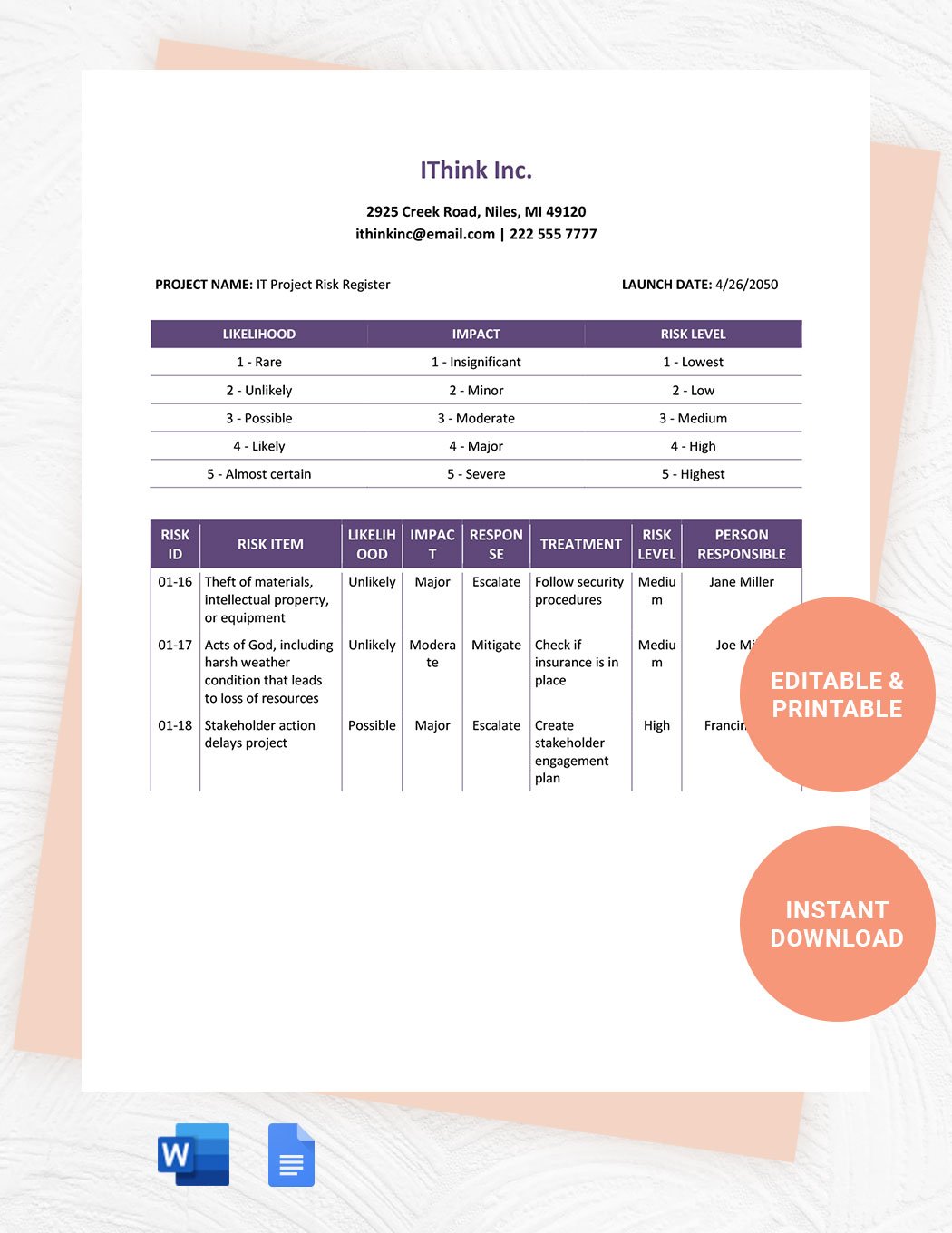
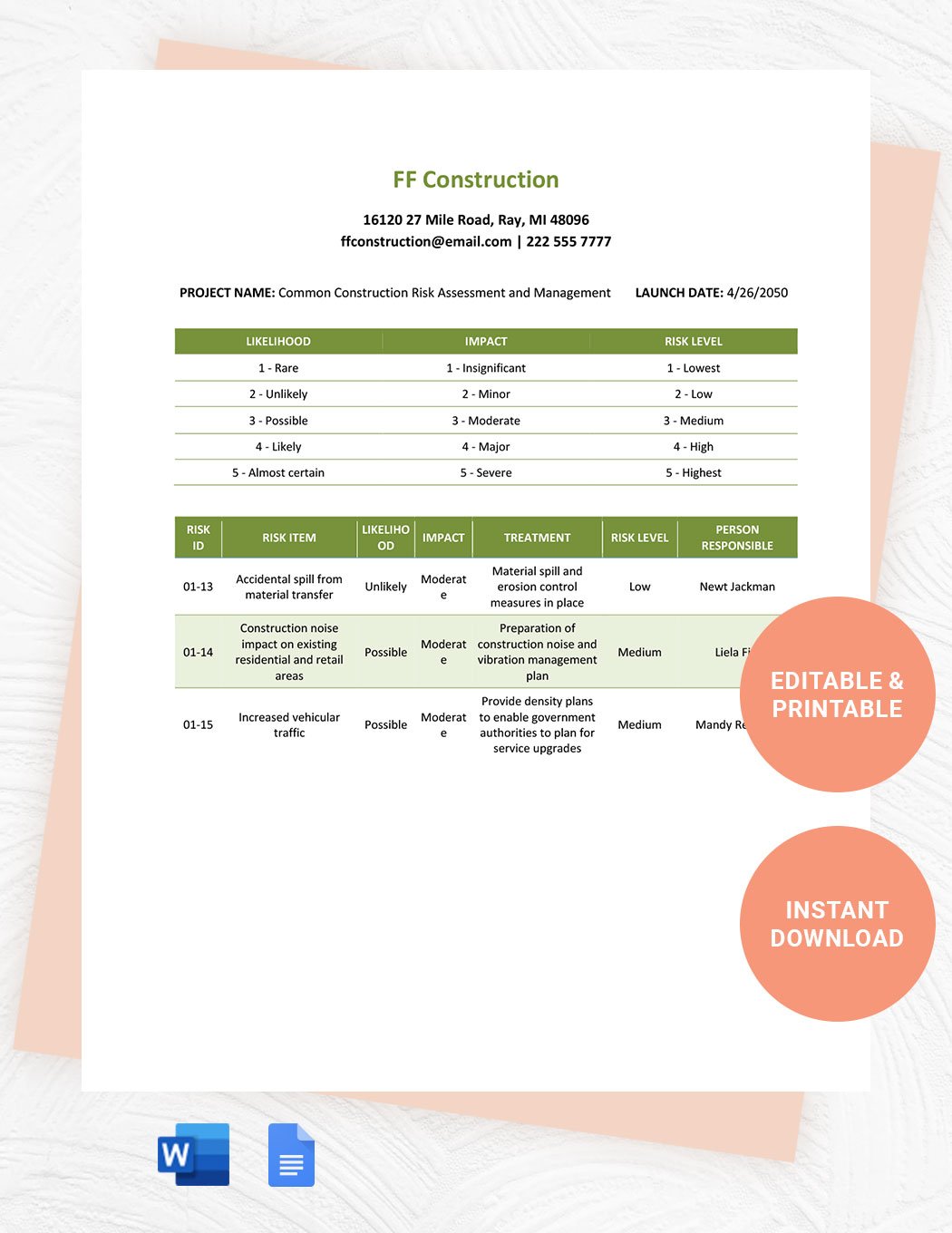
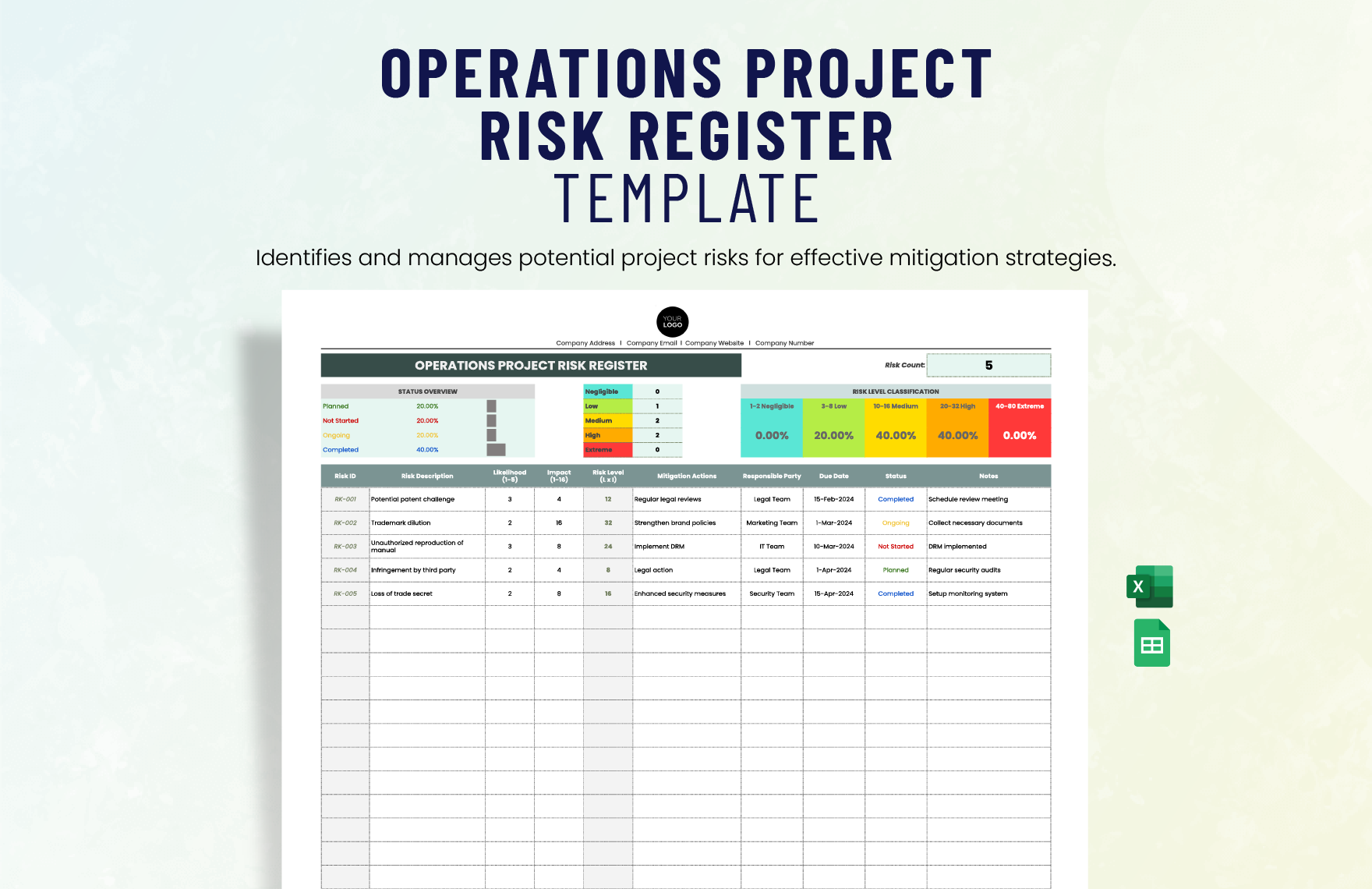
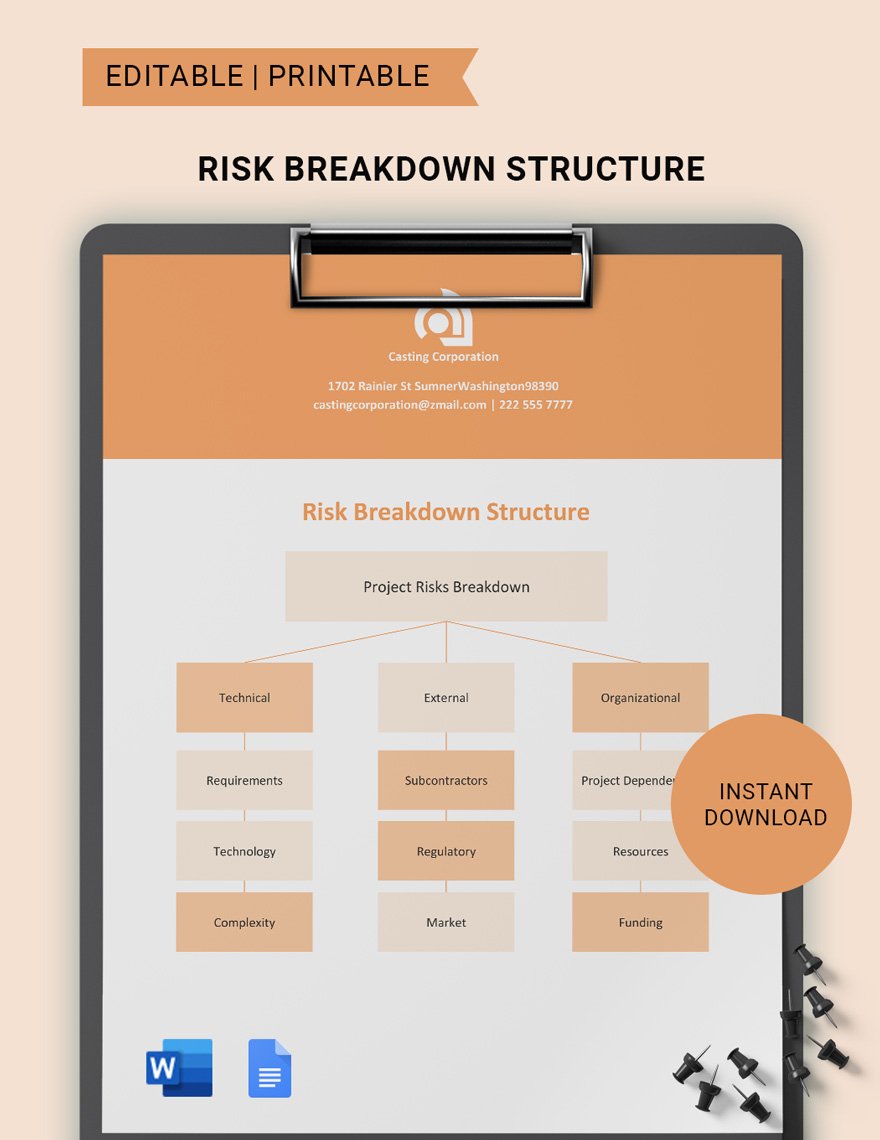
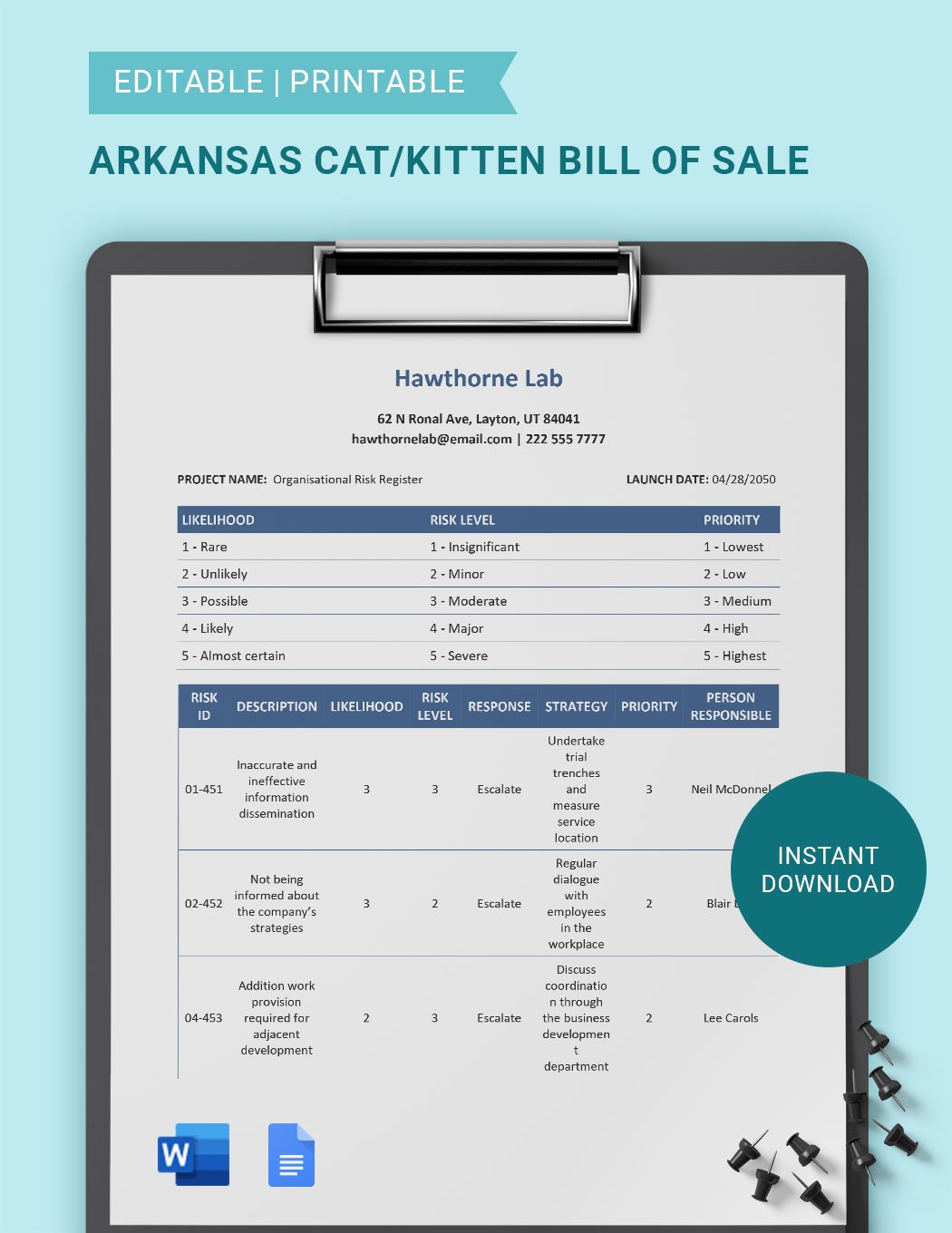
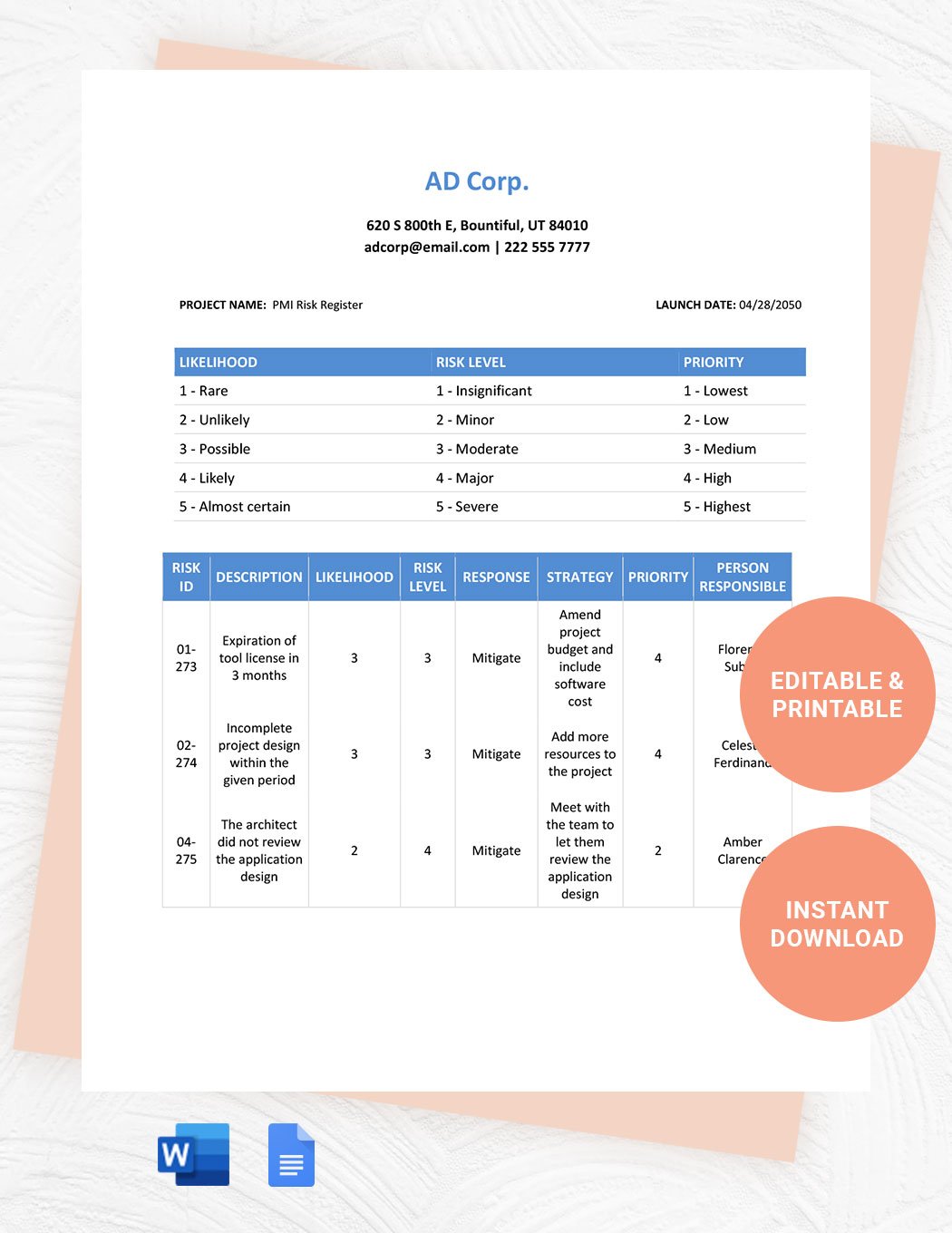
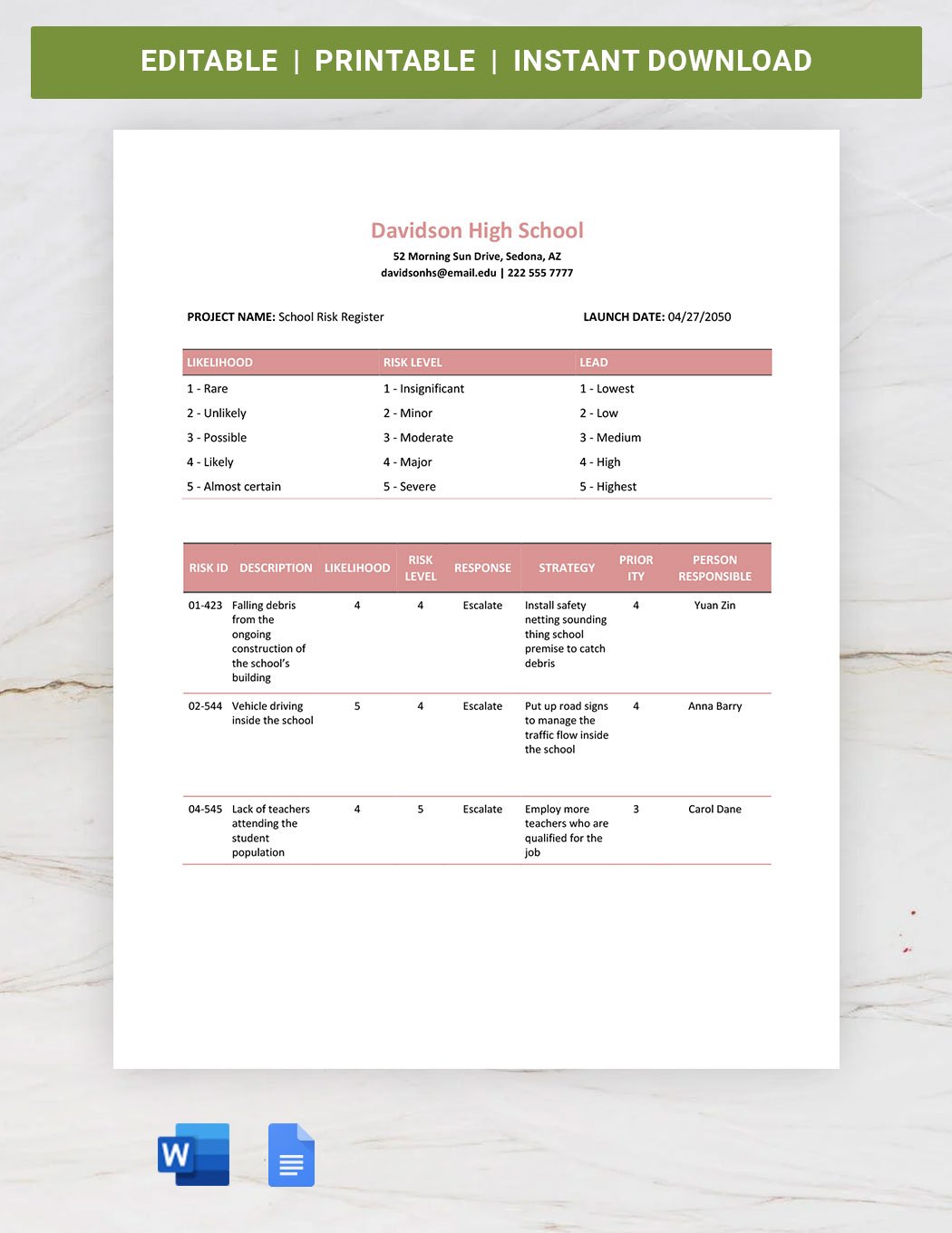
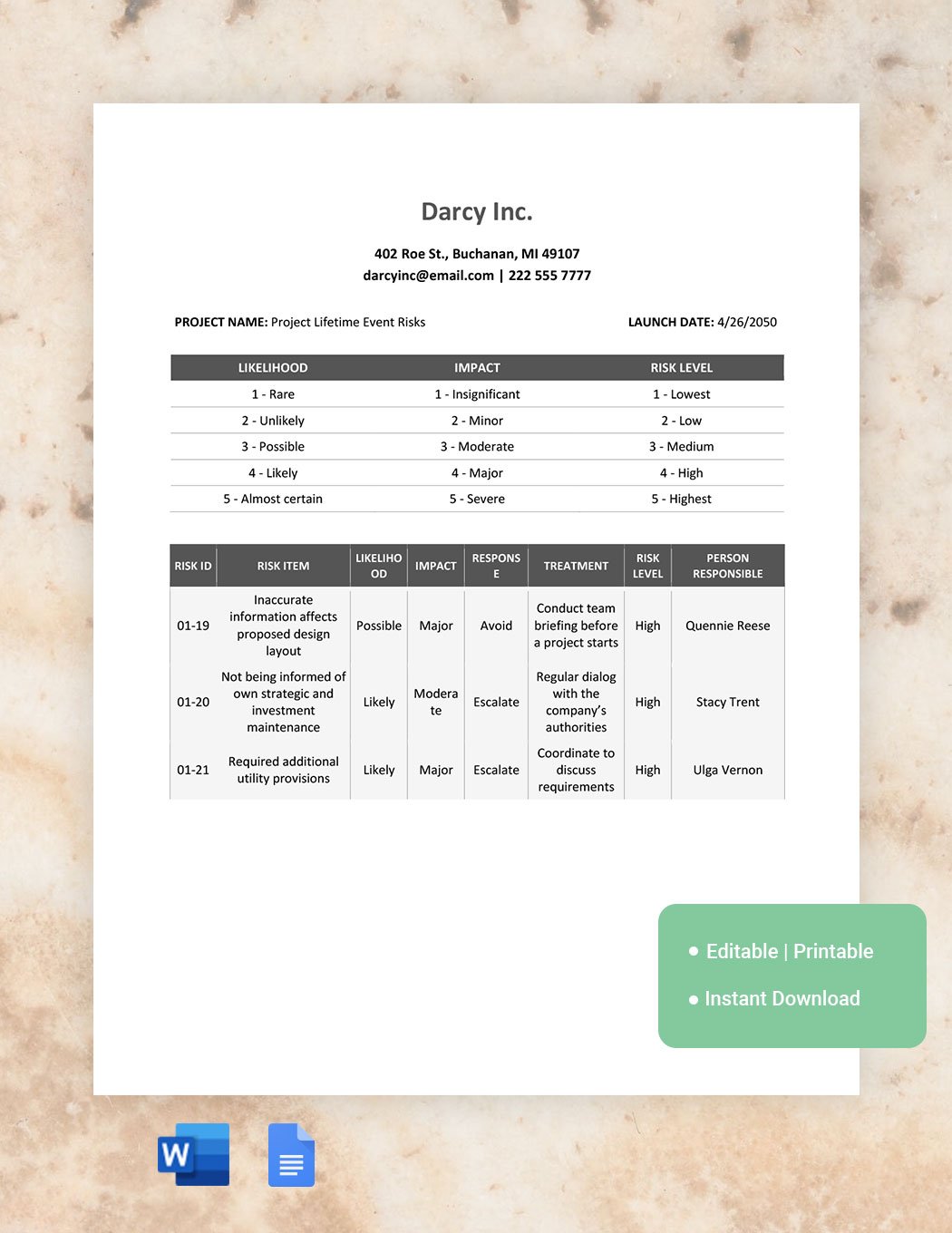
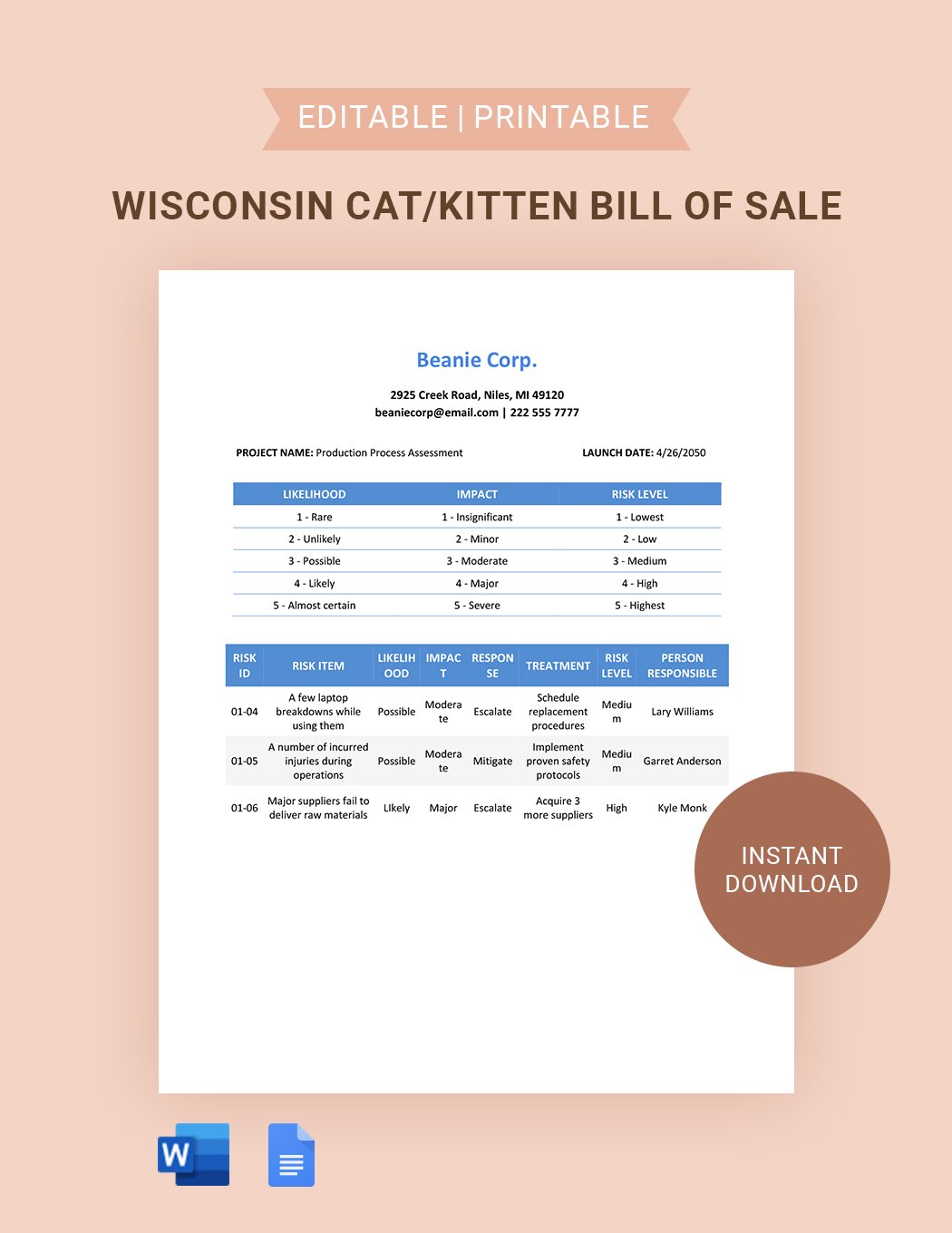
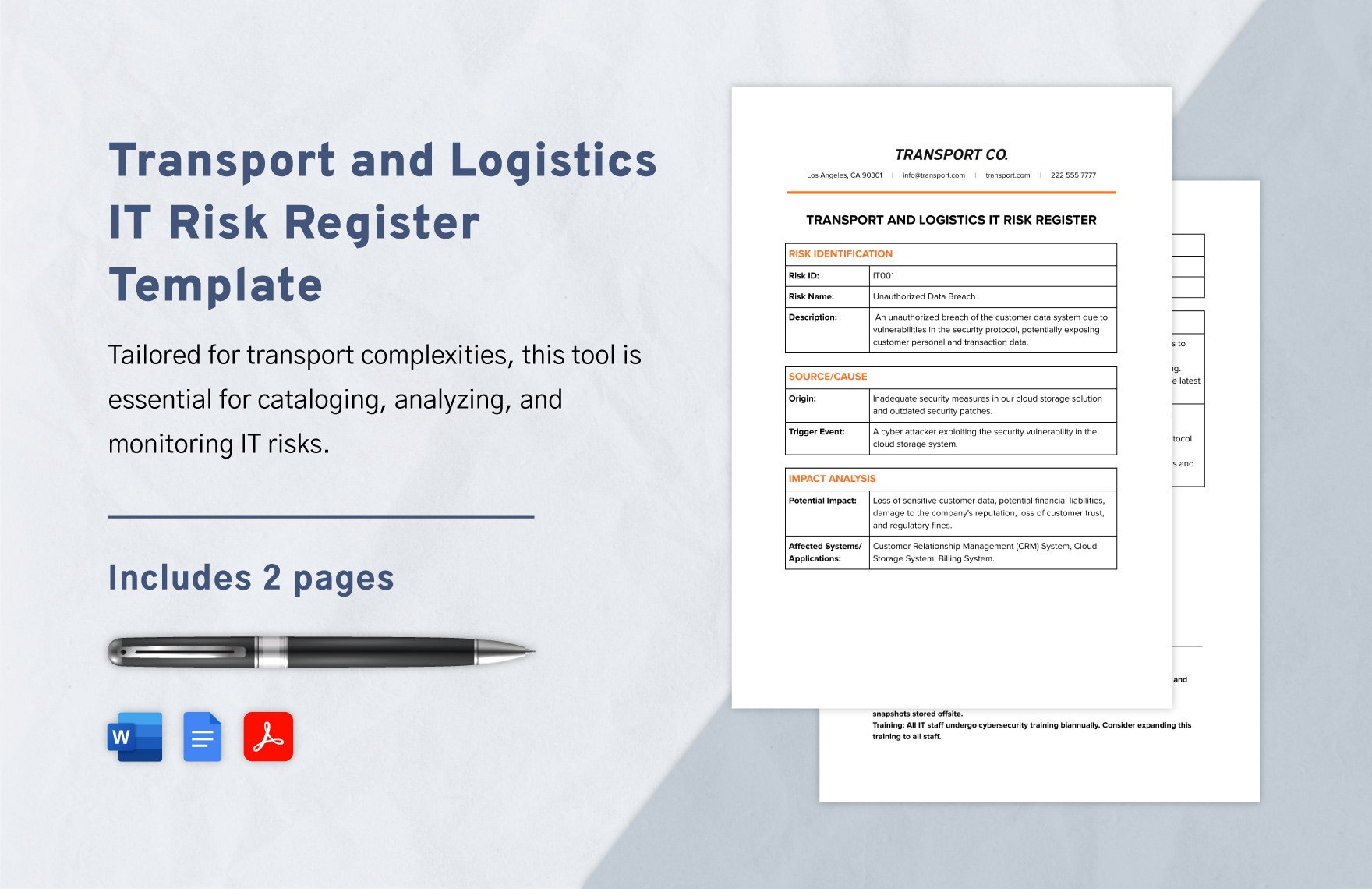
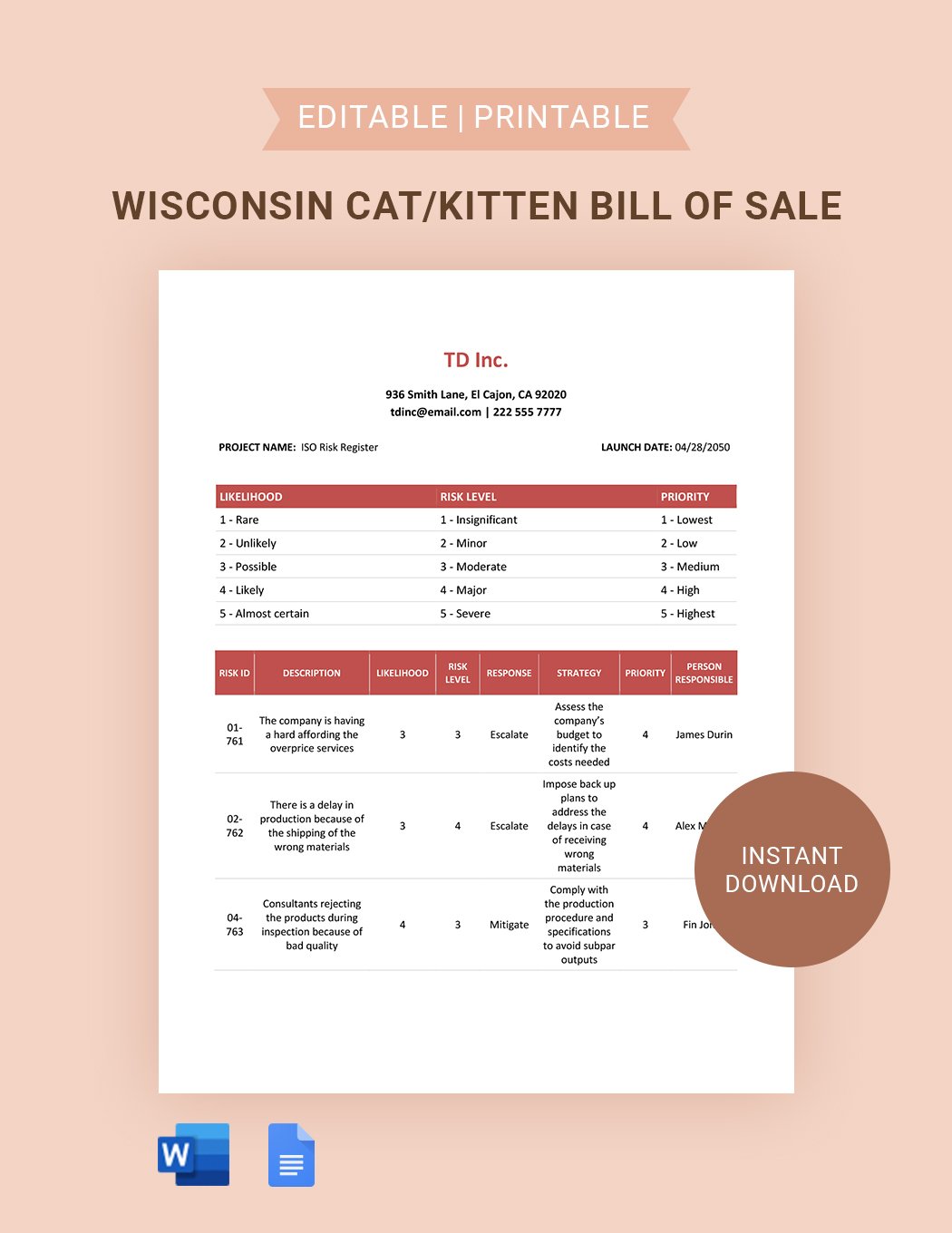
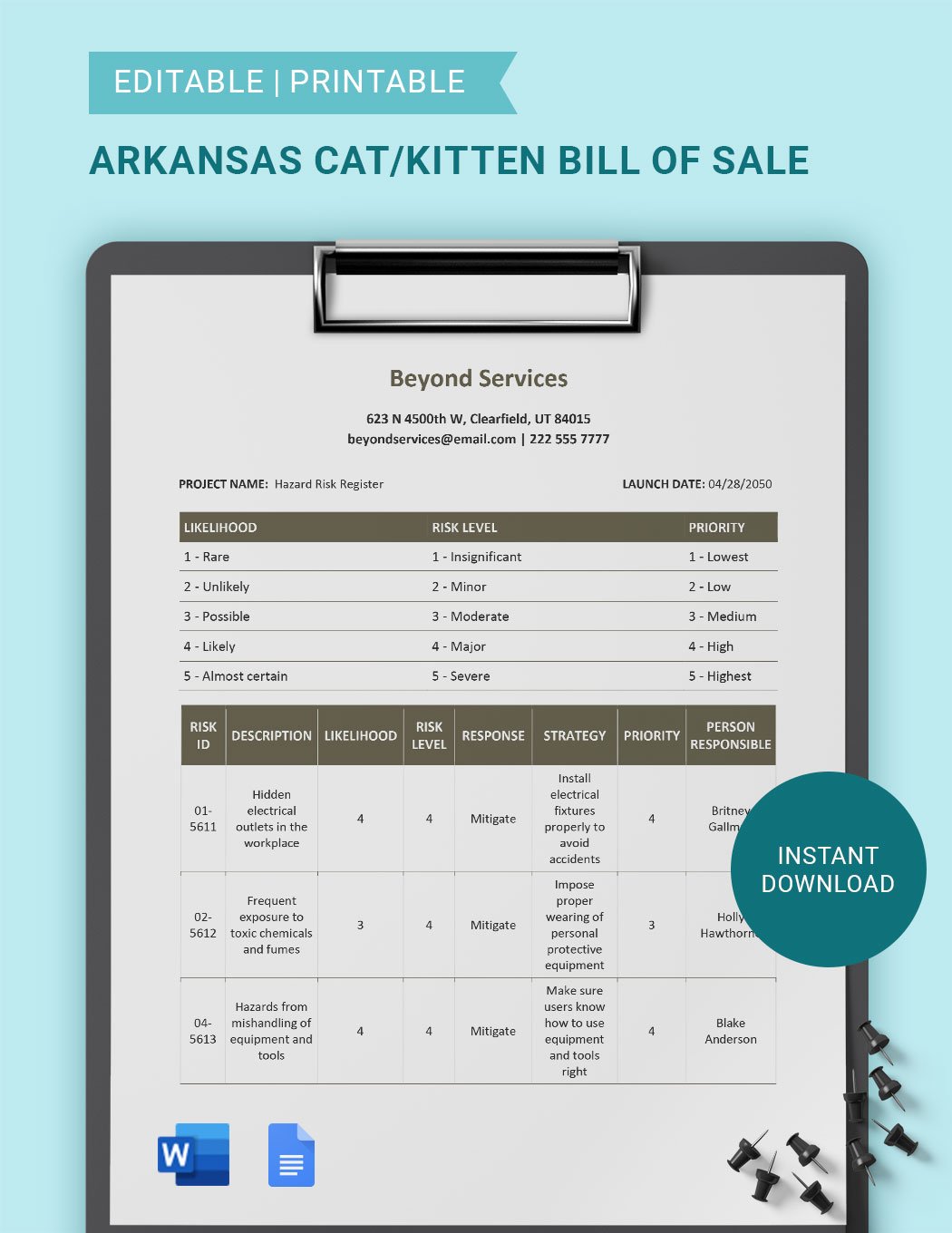
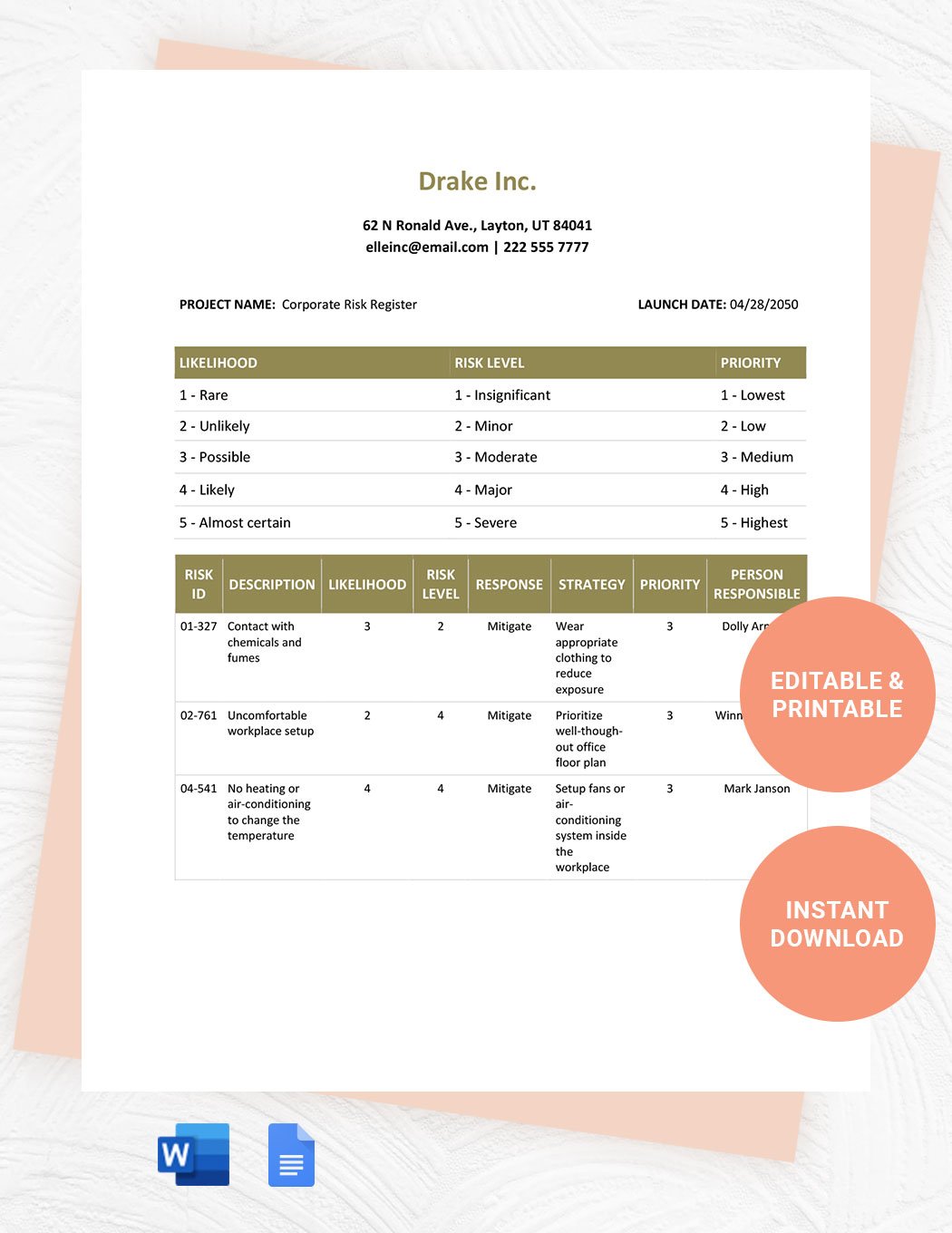
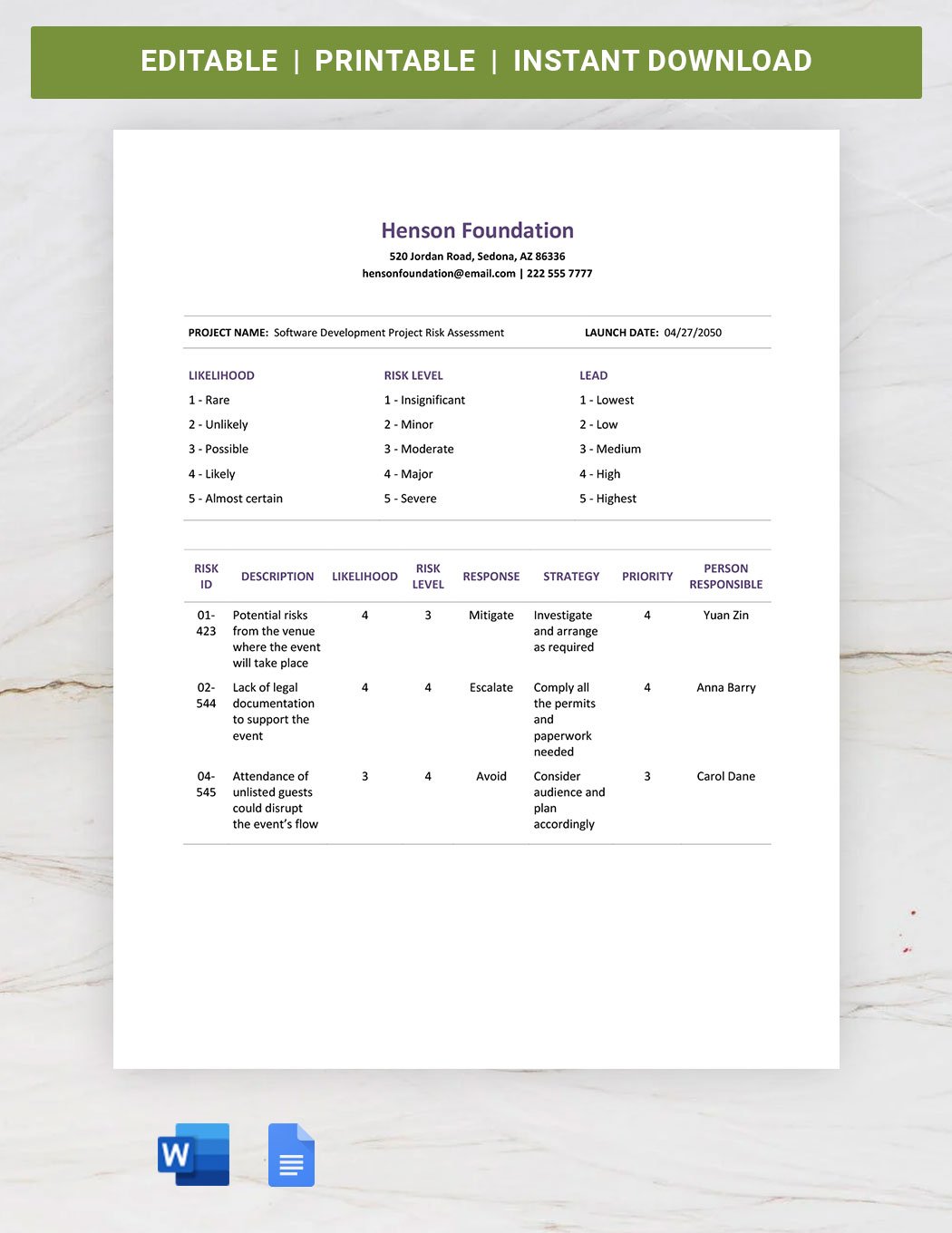
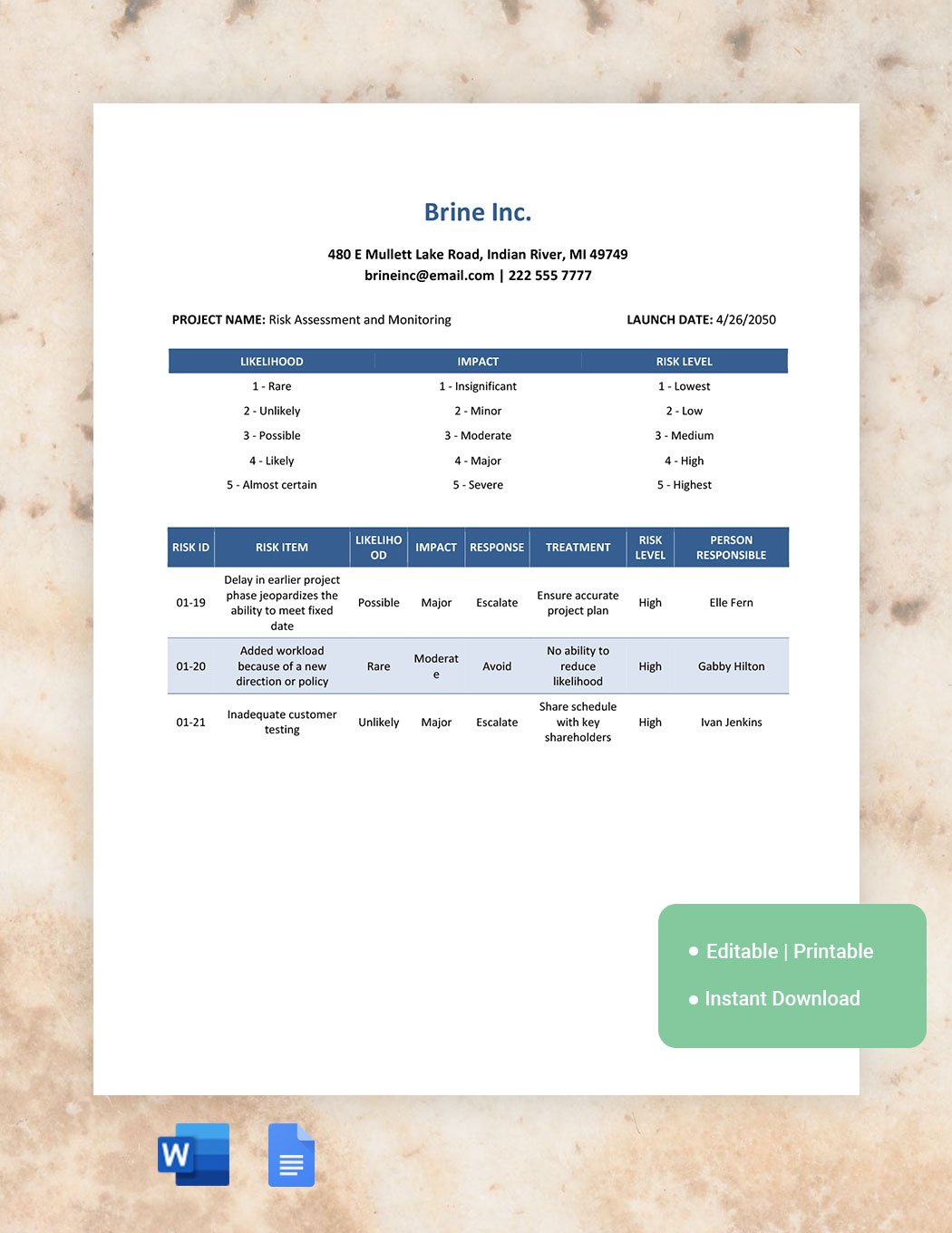
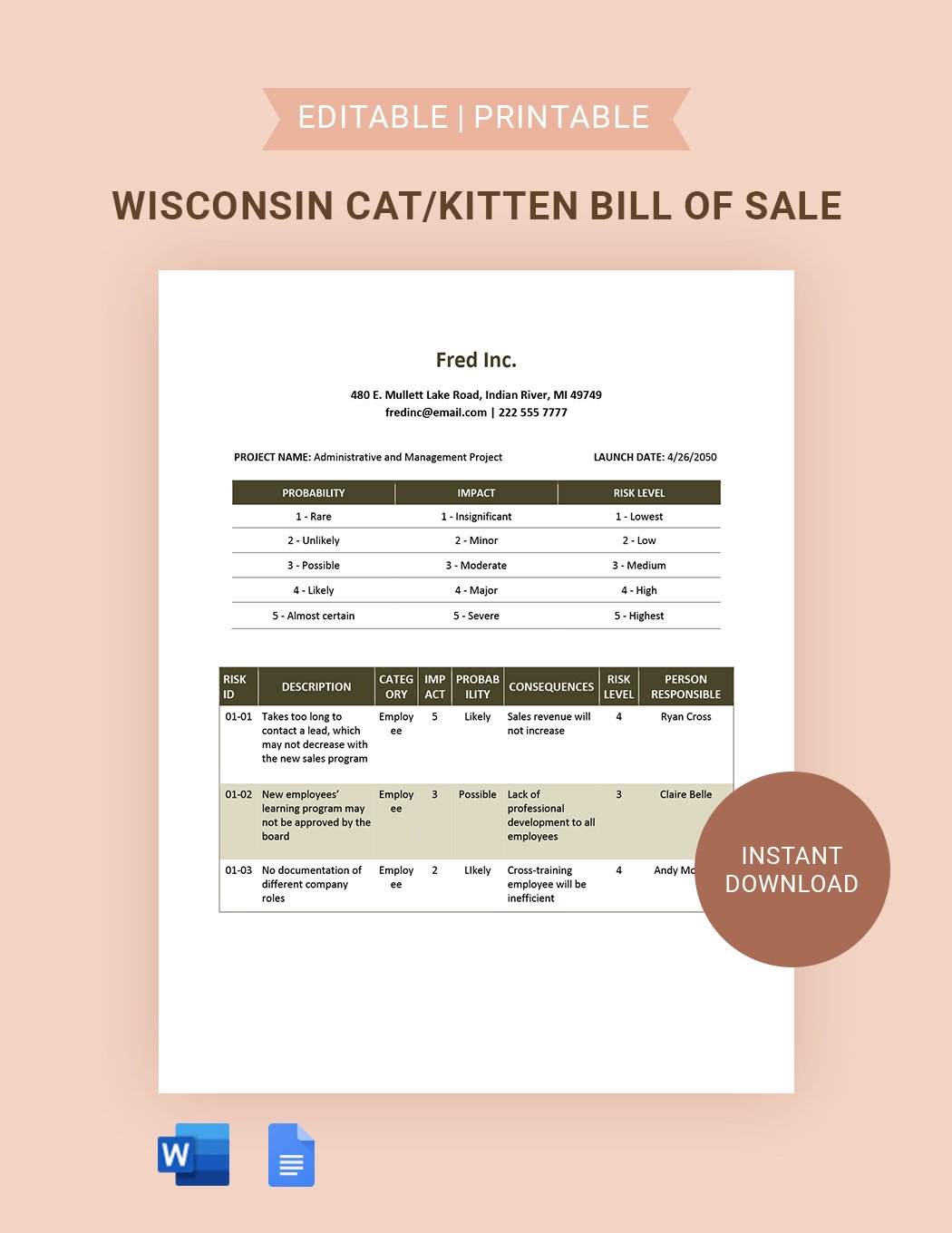
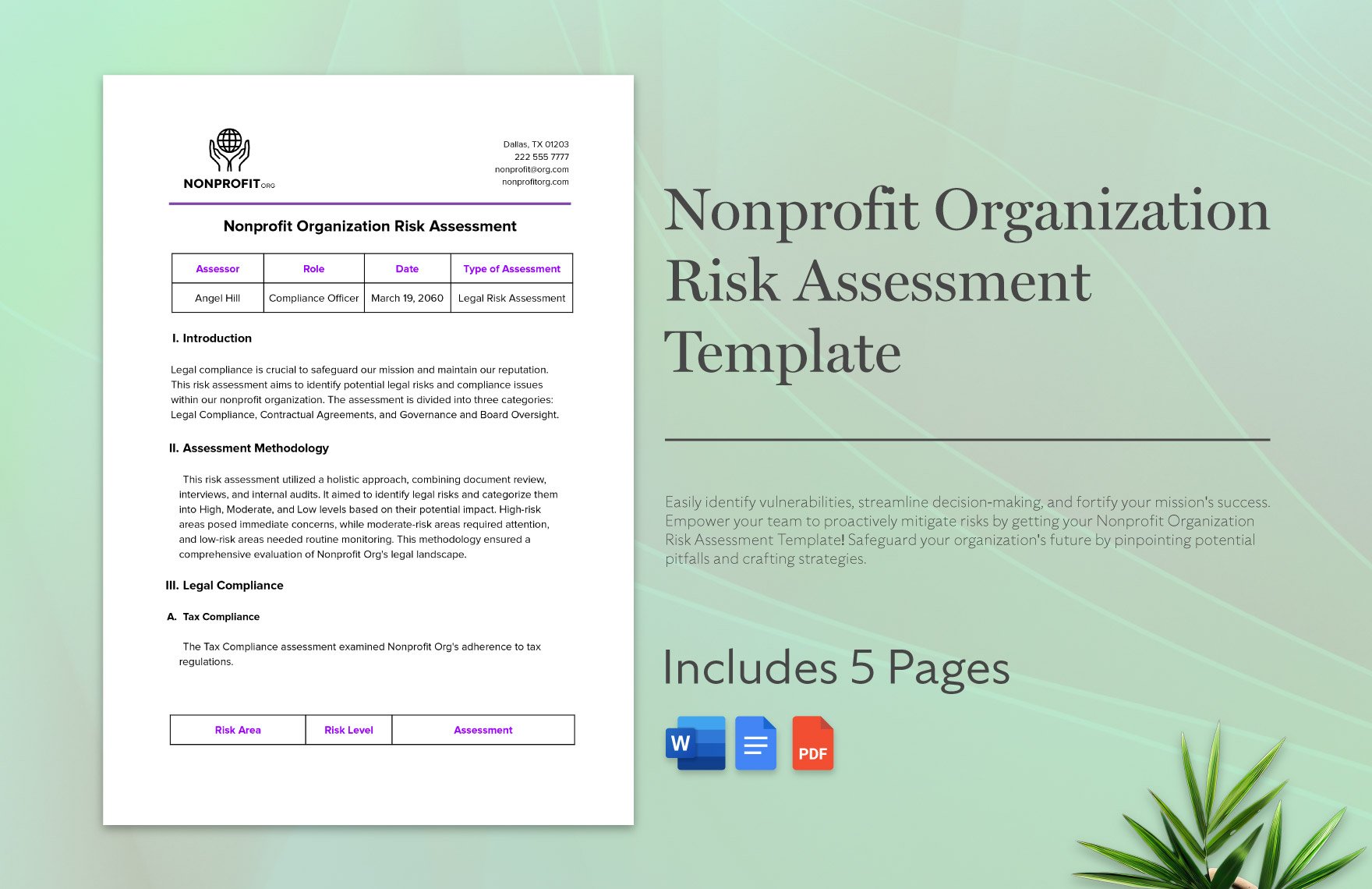
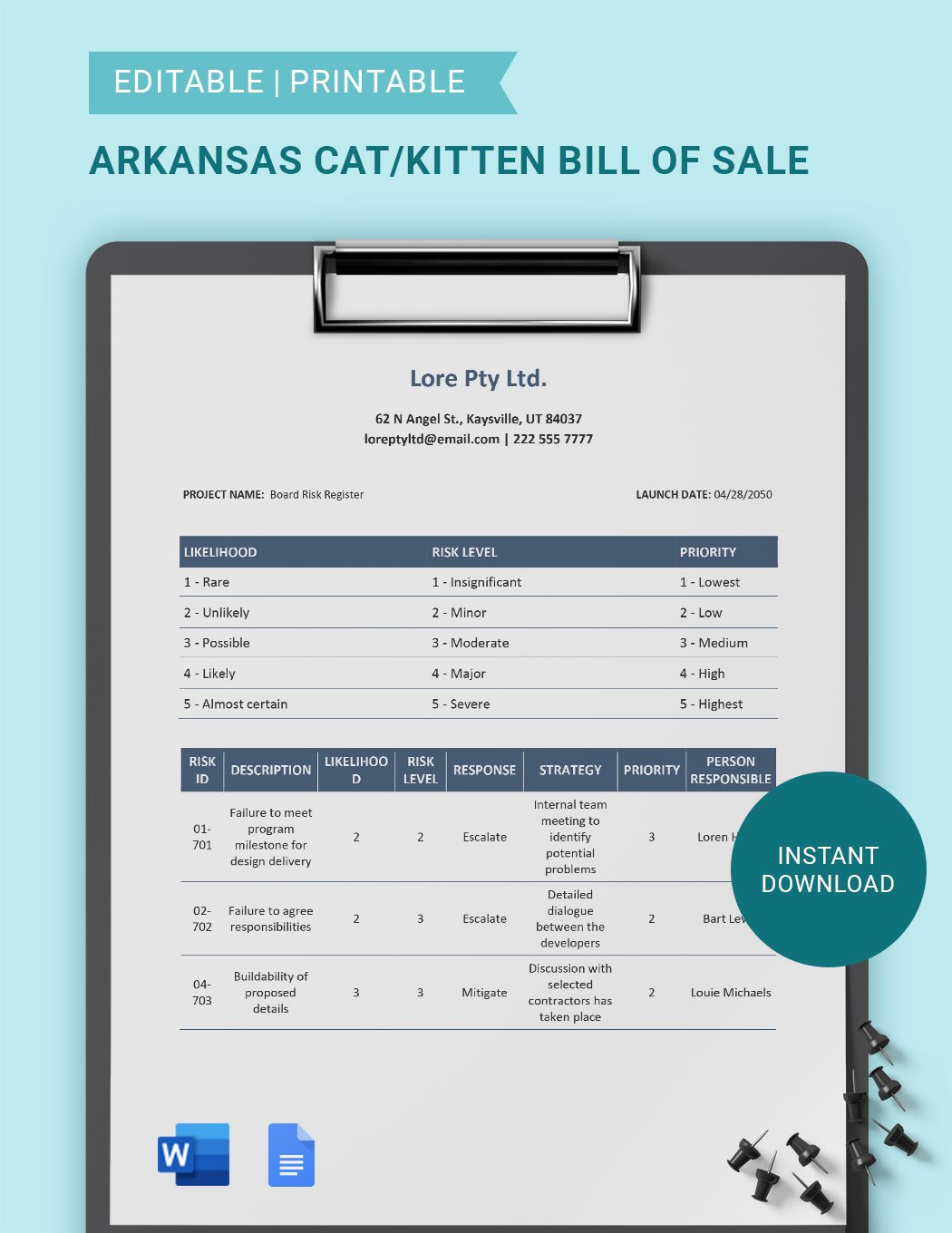
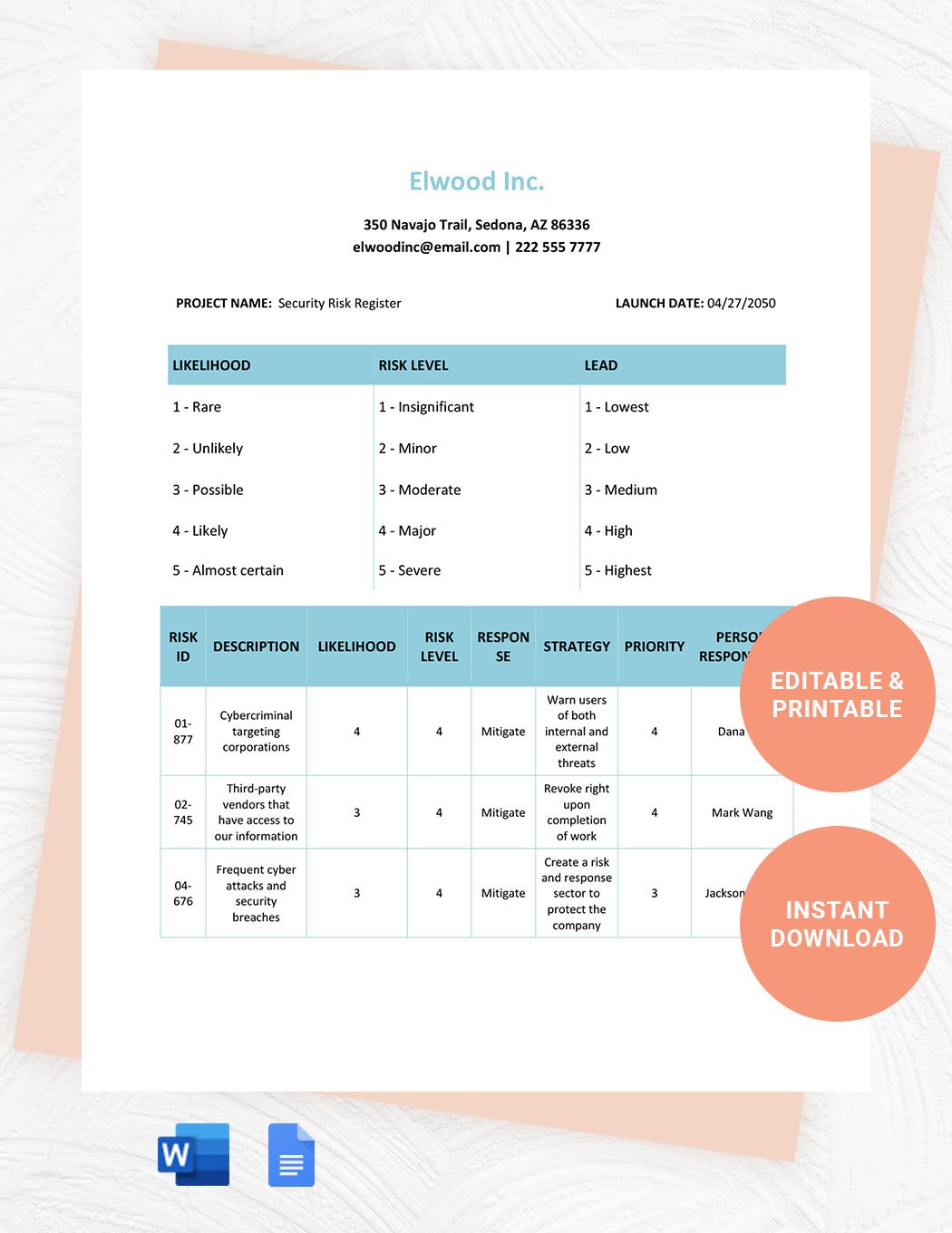
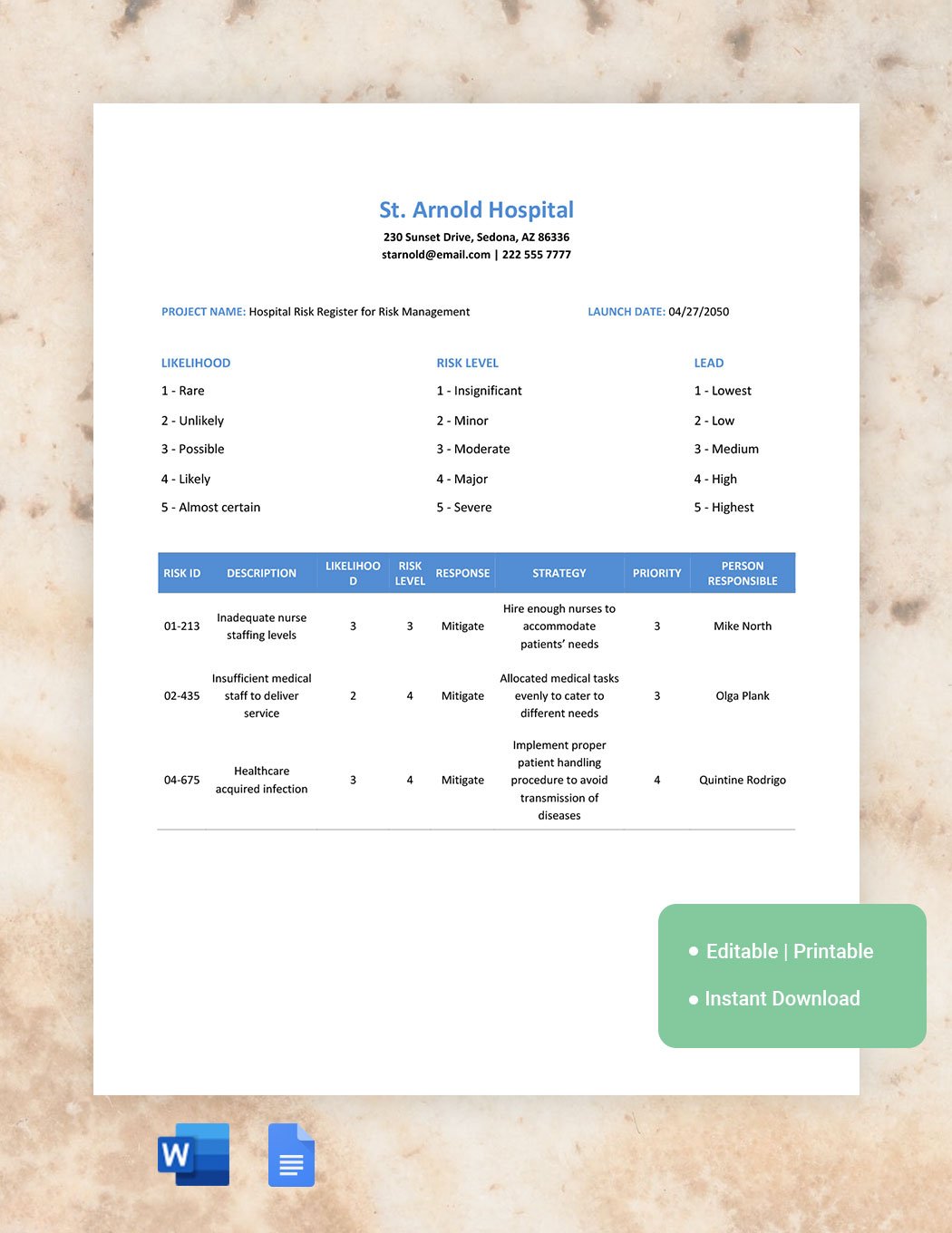
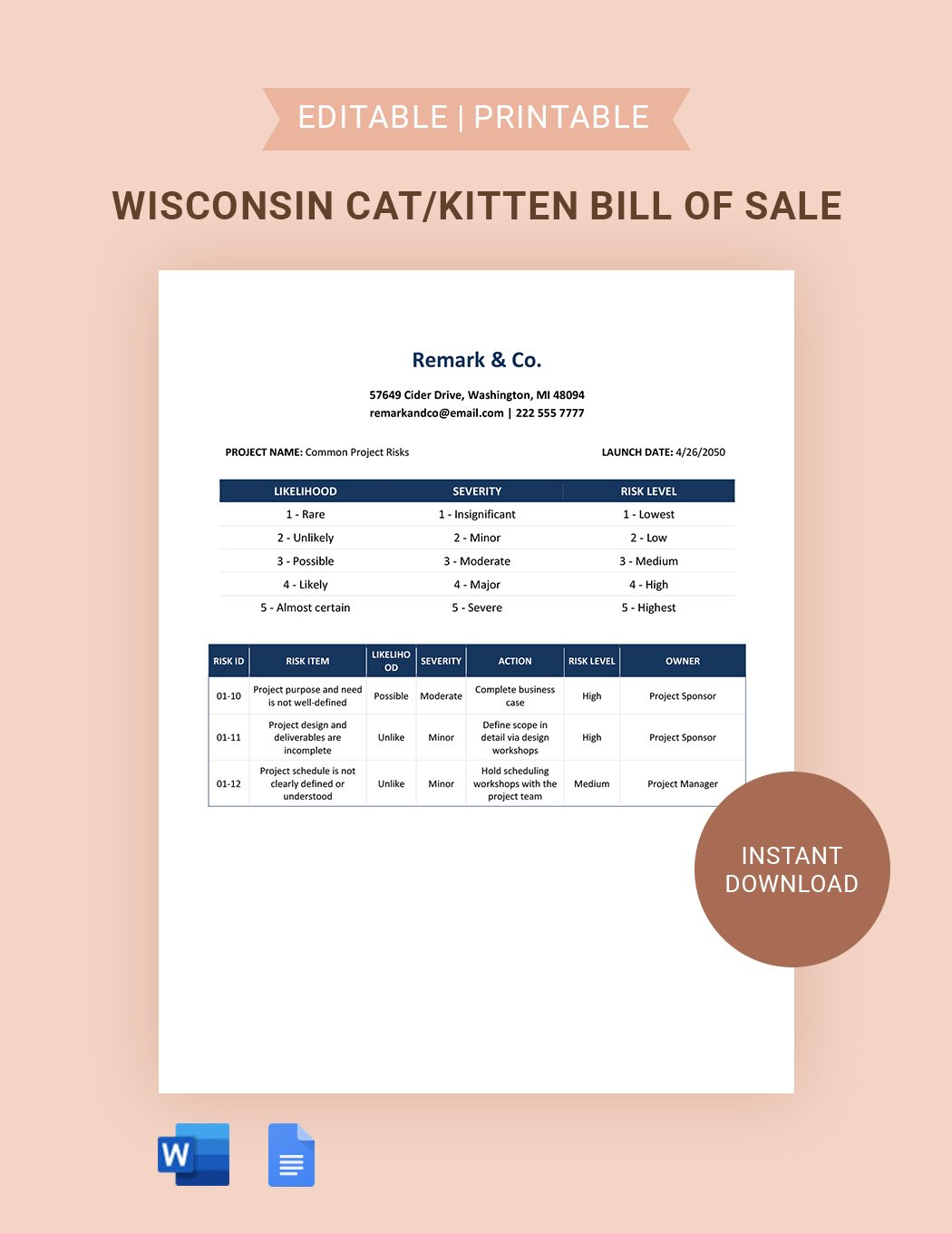
A Risk Register is a structured document used to identify, assess, and manage potential risks within any project or organizational process. Template.net provides online editable Risk Register templates that you can complete or modify directly in the browser to suit your specific project needs.
What is a Risk Register?
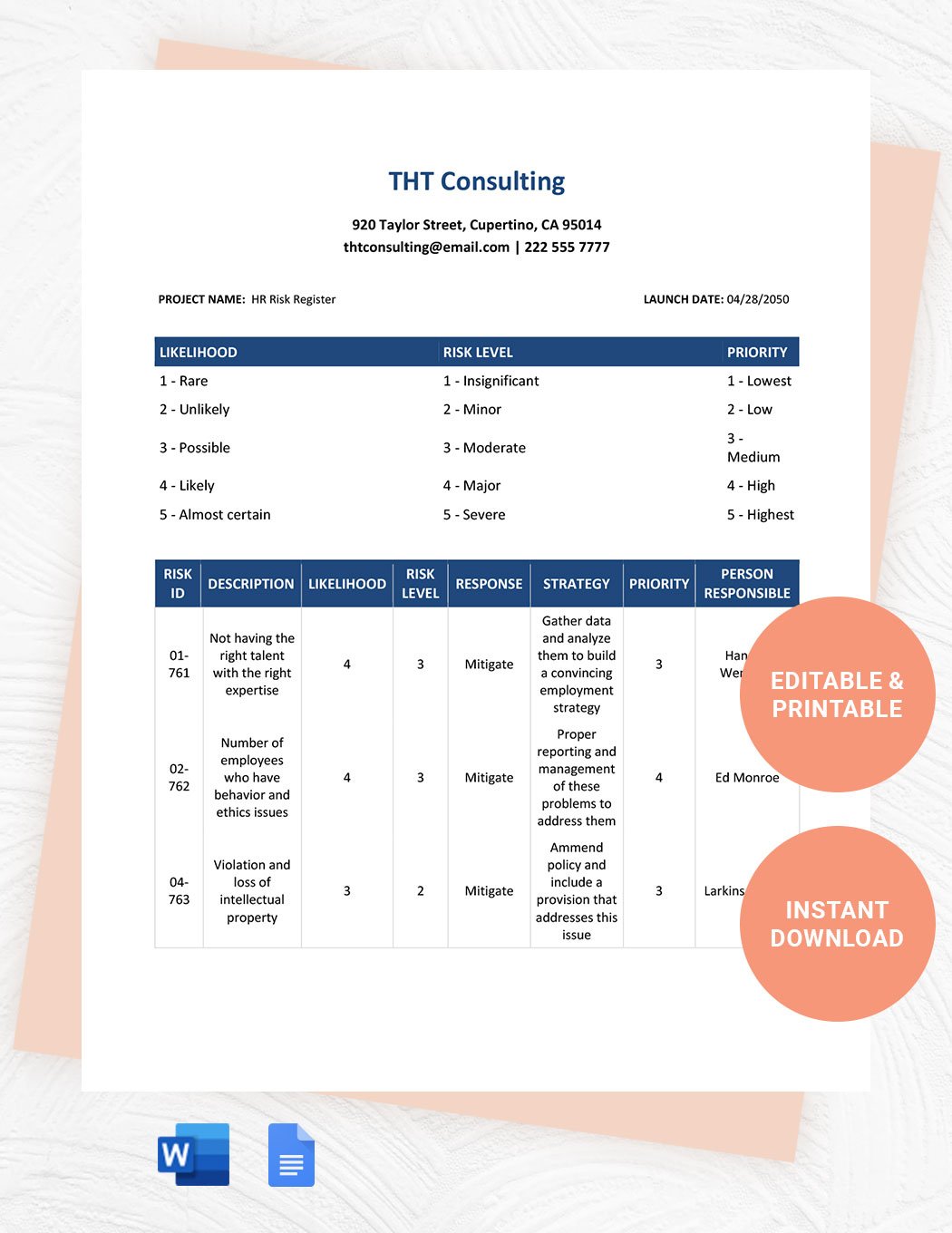
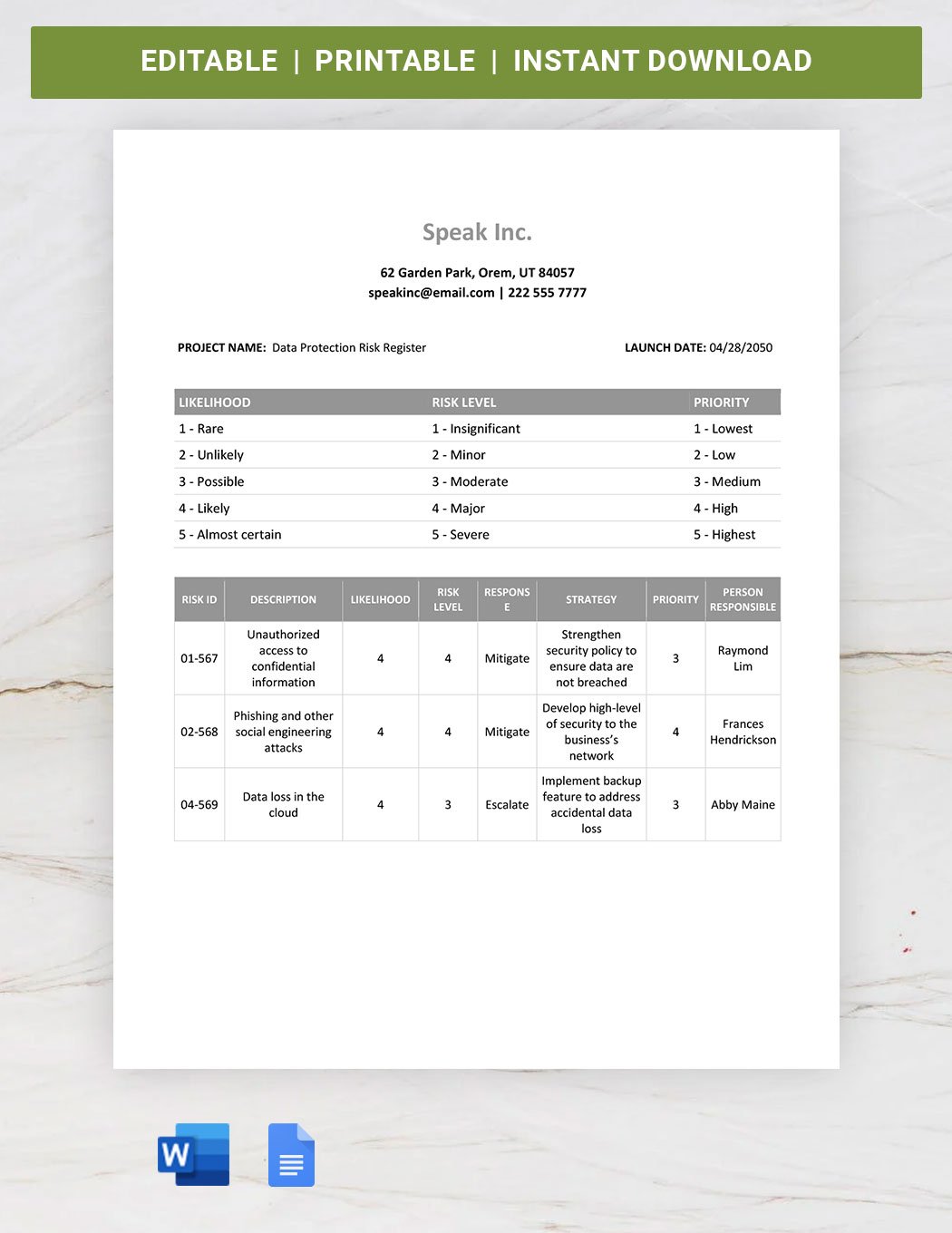
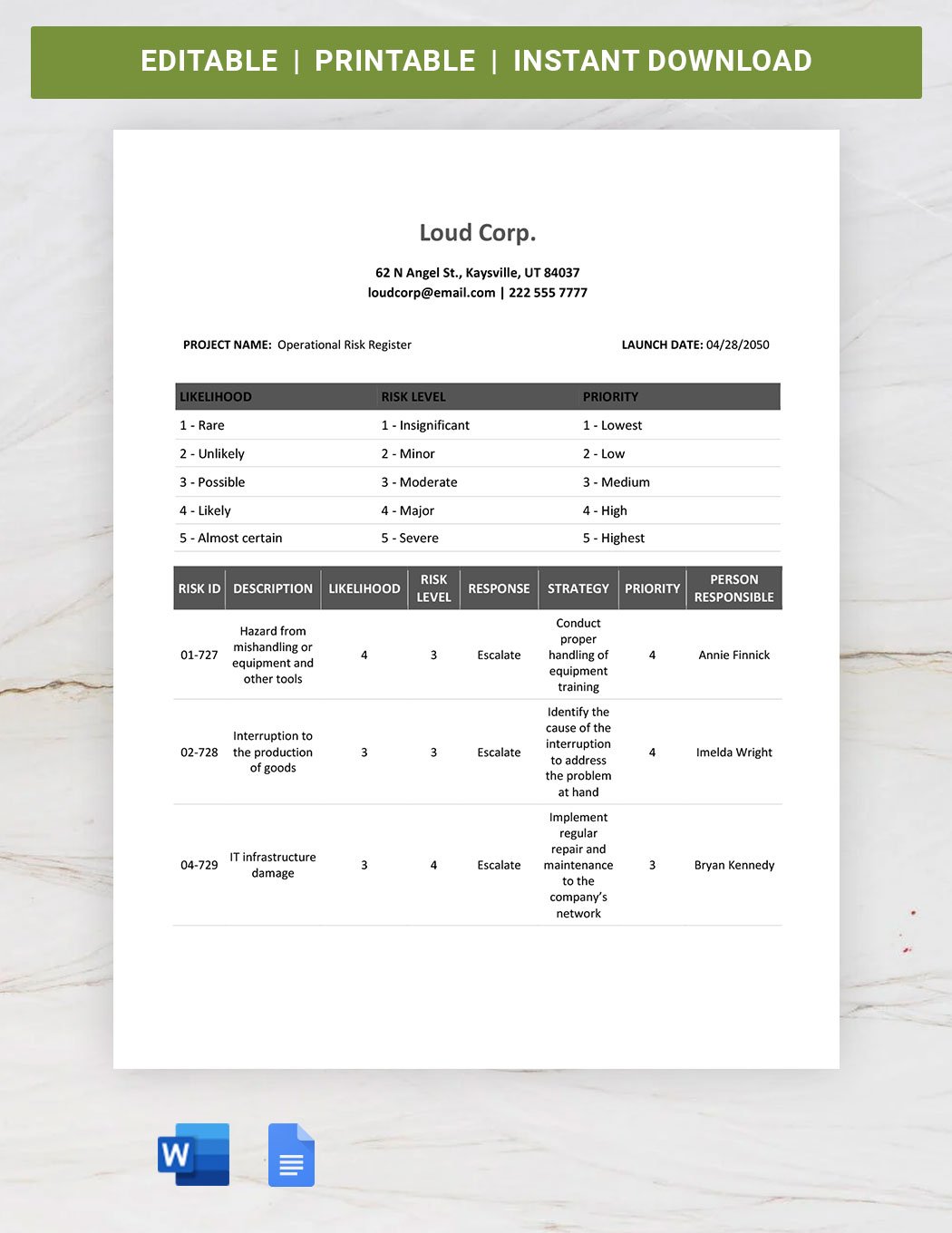
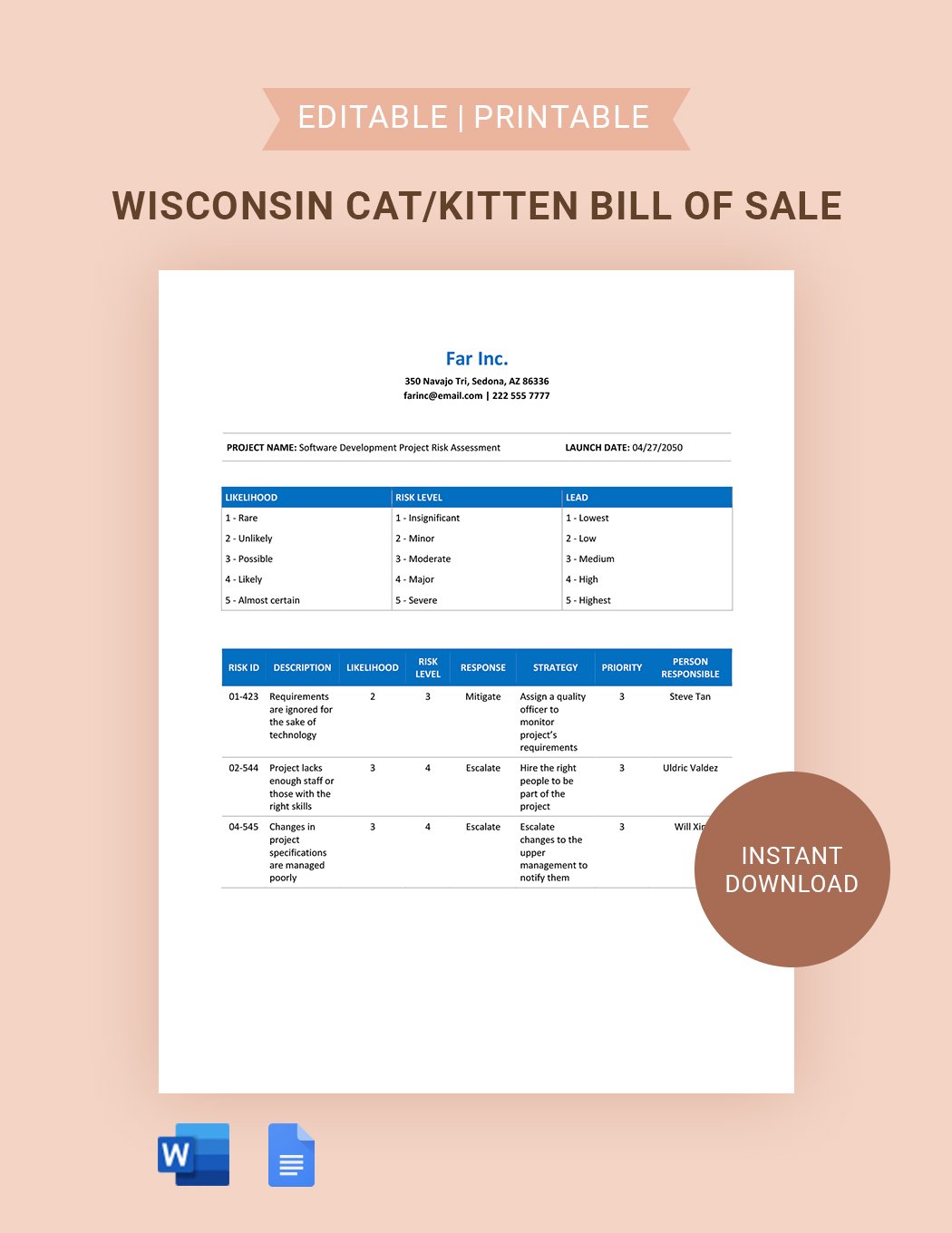
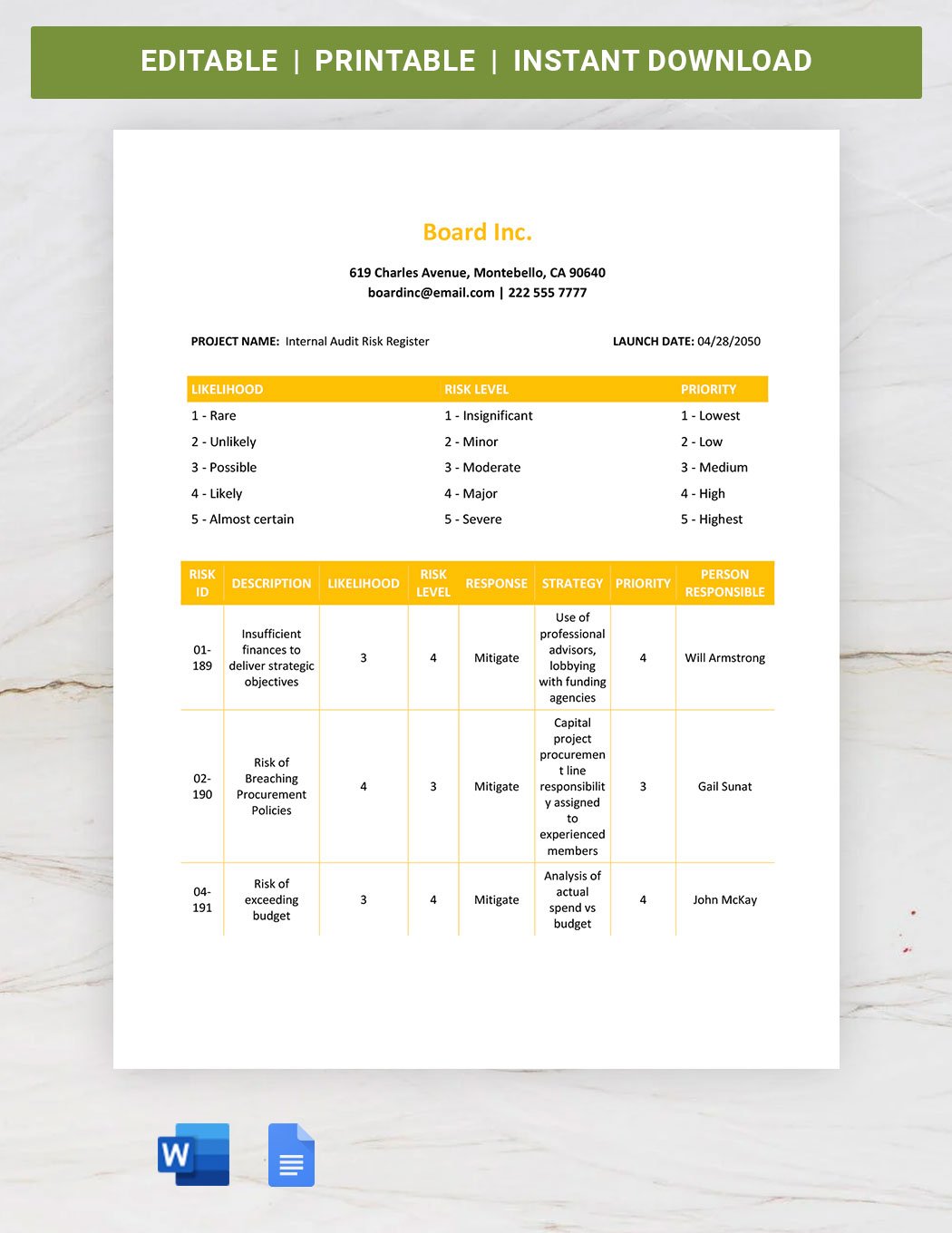
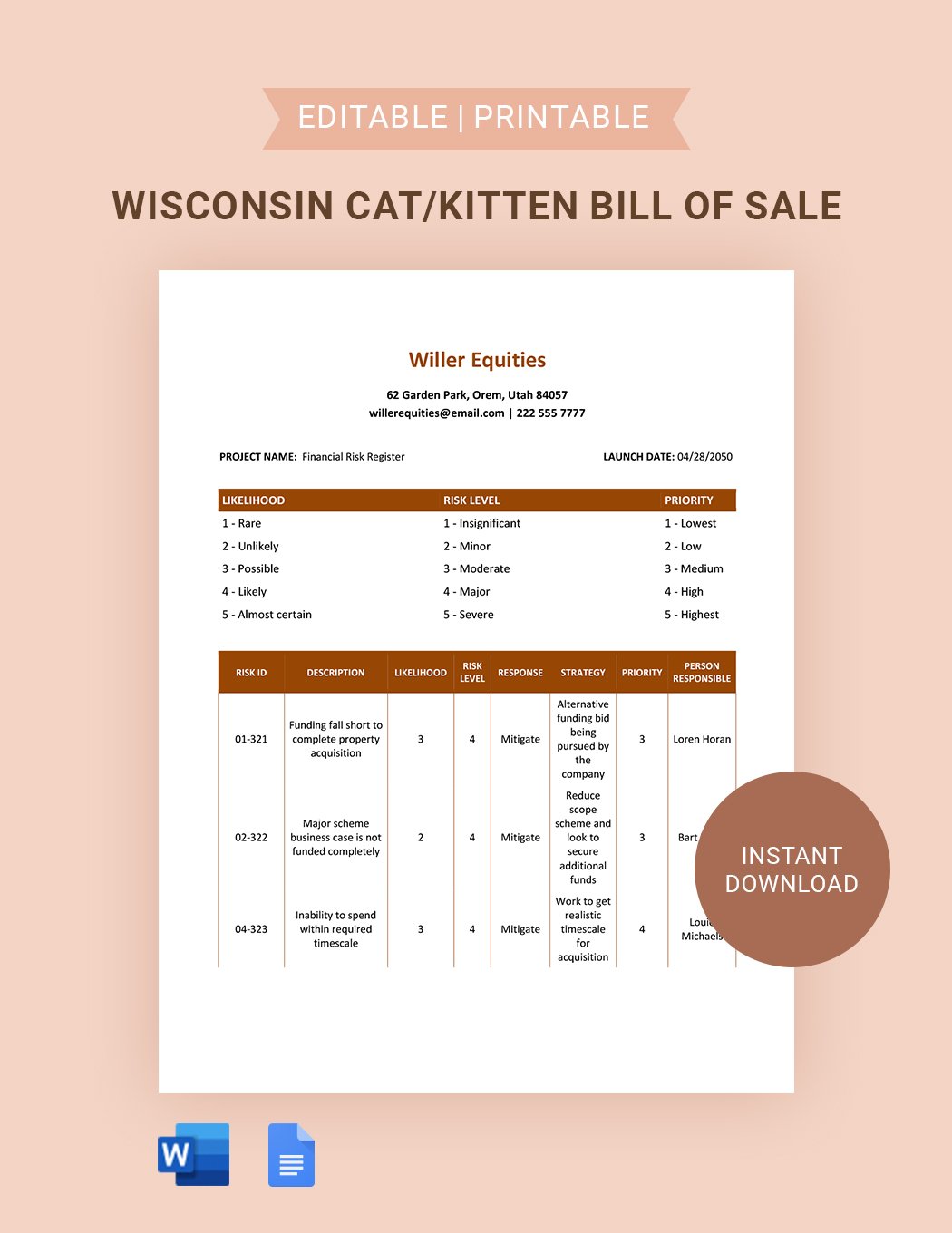
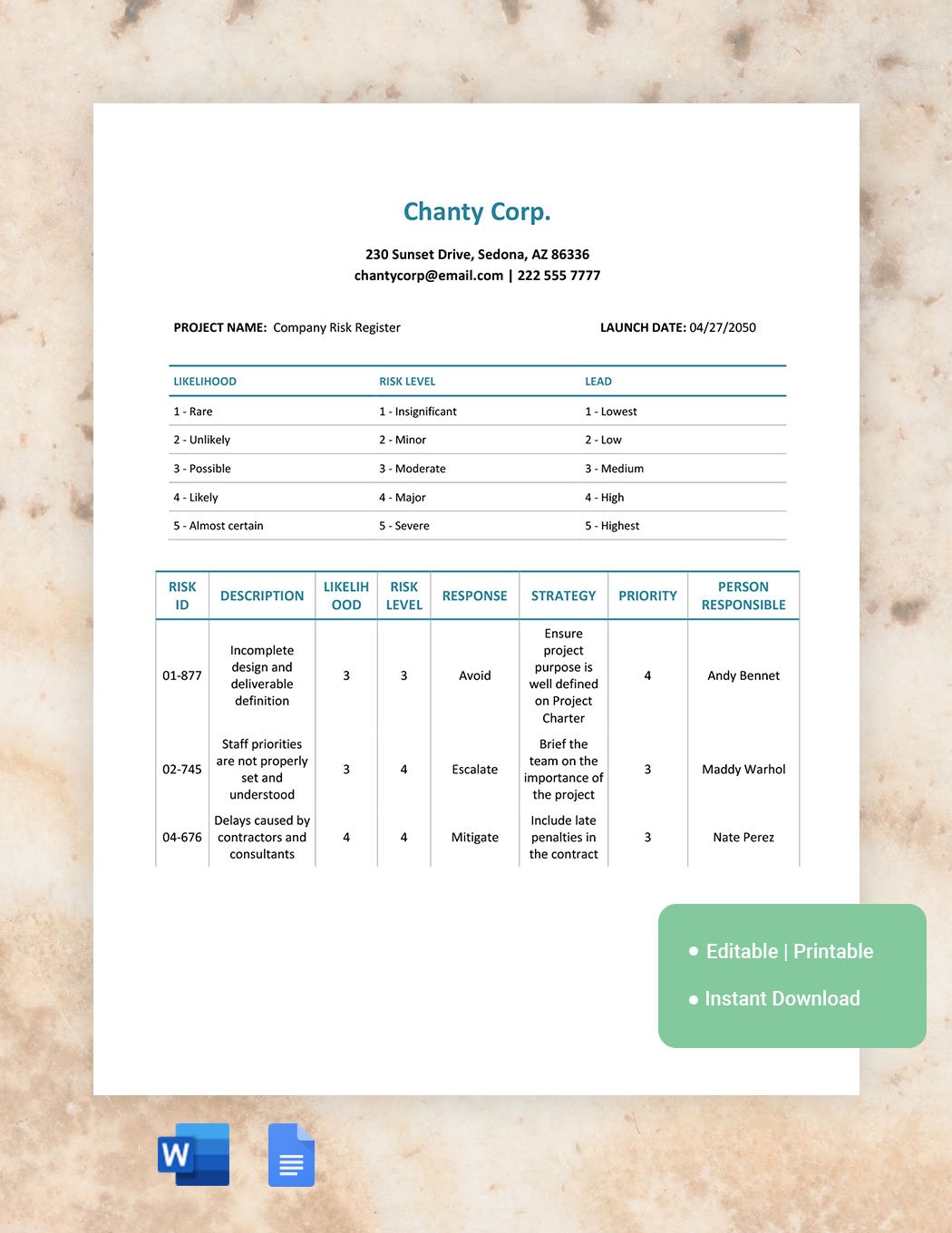
A Risk Register is a detailed document that records potential risks, their assessment, and mitigation strategies within a project or workflow. It serves as a central reference to monitor risk status and manage uncertainties effectively.
Why should I use a Risk Register?
You should use a Risk Register to systematically identify and evaluate risks before they impact your project. It helps you prioritize risks, allocate resources efficiently, and maintain control over possible threats, ultimately improving decision-making and project success.
Who uses Risk Register?
Risk Register users typically include project managers, risk managers, team leaders, and stakeholders who need to track and mitigate risks throughout the lifecycle of a project or organizational process.
What are the best tips for completing my Risk Register?
When completing a Risk Register, start by clearly identifying all potential risks, assess their impact and likelihood, assign risk owners, and define mitigation actions. Regularly update the register to reflect changes and ensure continuous monitoring.
Can I create a Risk Register using AI?
You can create a Risk Register using AI-powered tools to generate initial risk lists and assessments. However, Template.net focuses on providing editable templates that you can customize manually in the browser for precise control.
What file formats can I download for my Risk Register?
Template.net offers editable Risk Register templates downloadable in multiple formats including Word and Google Docs.
What are the essential elements of a Risk Register?
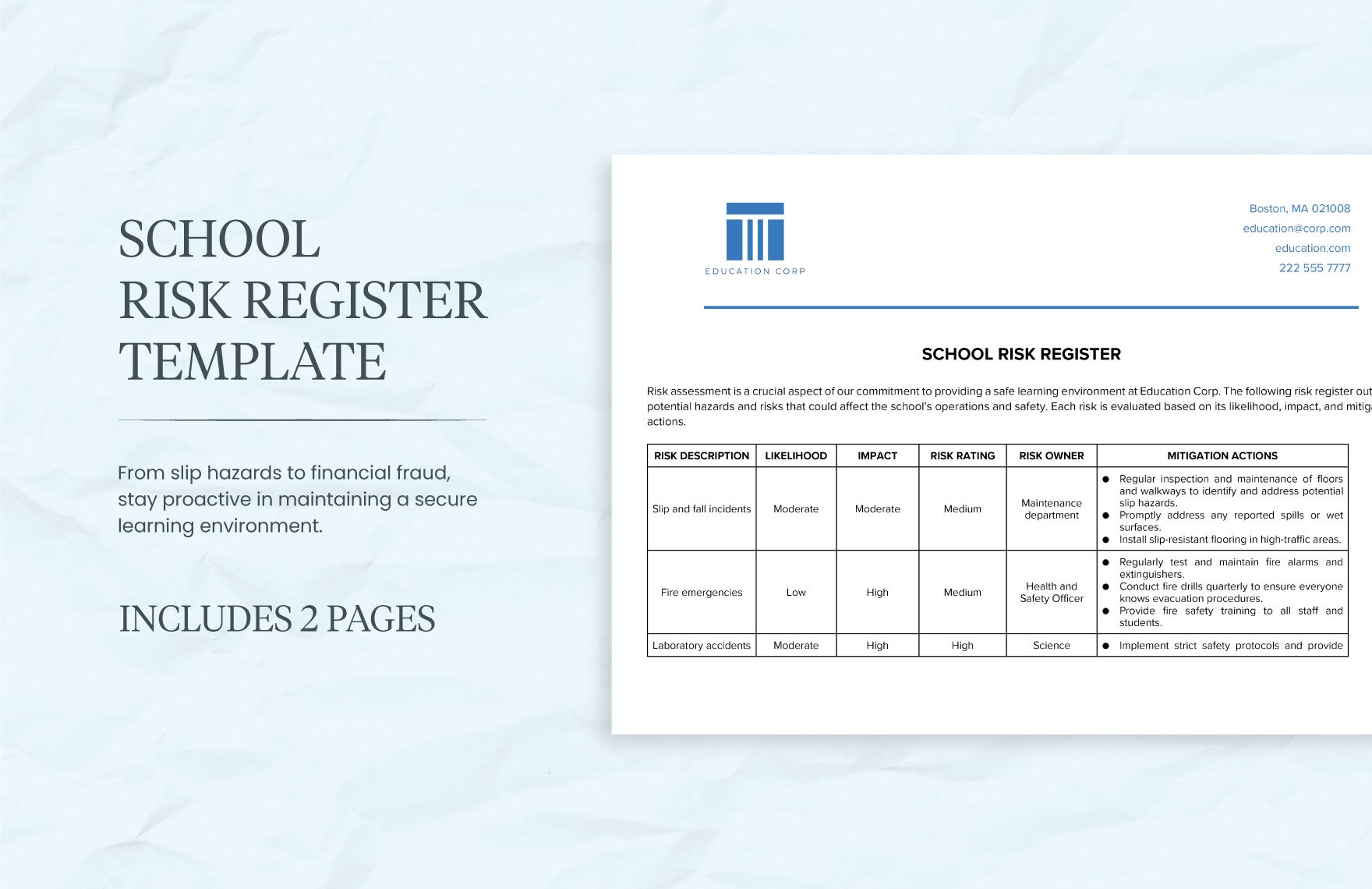
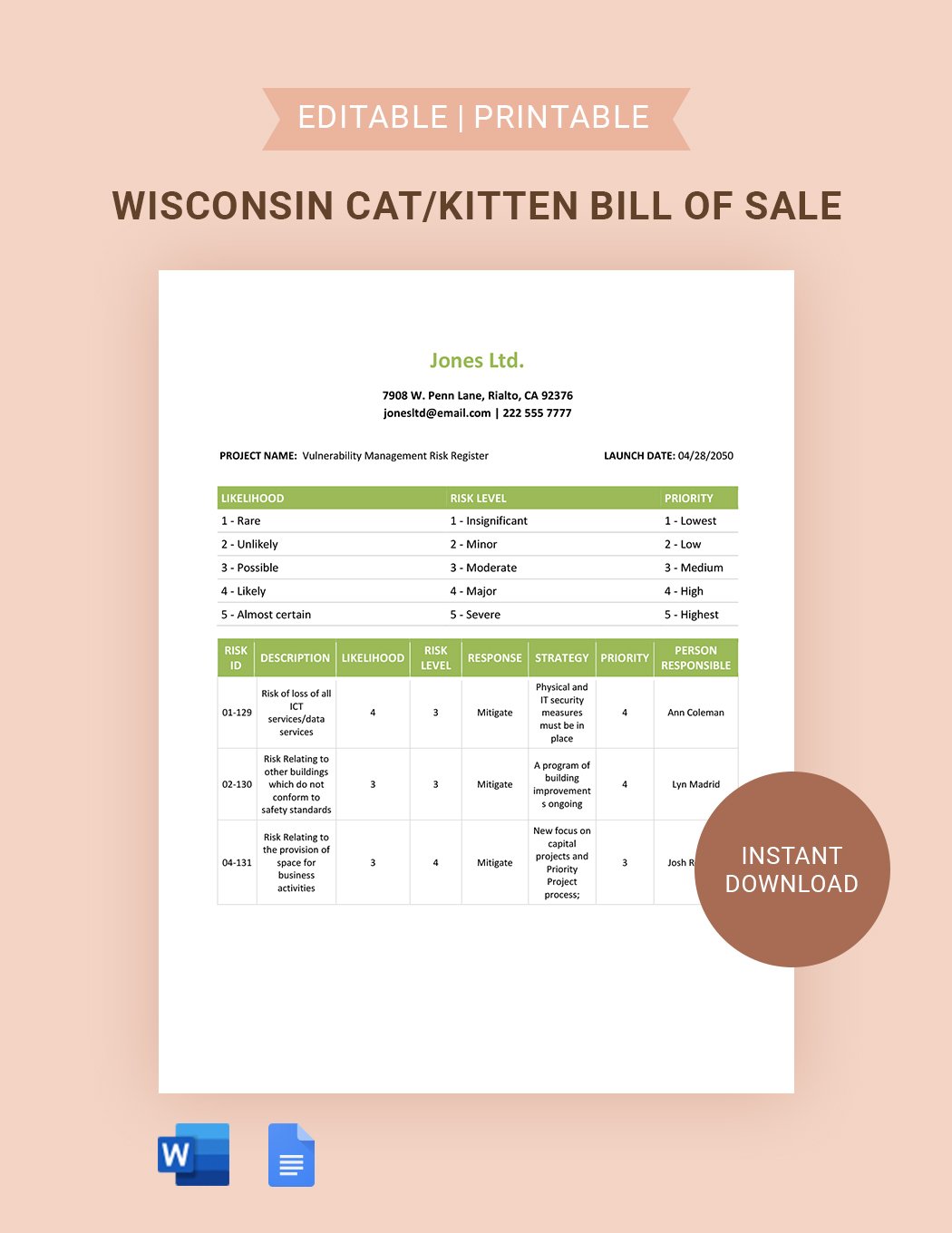
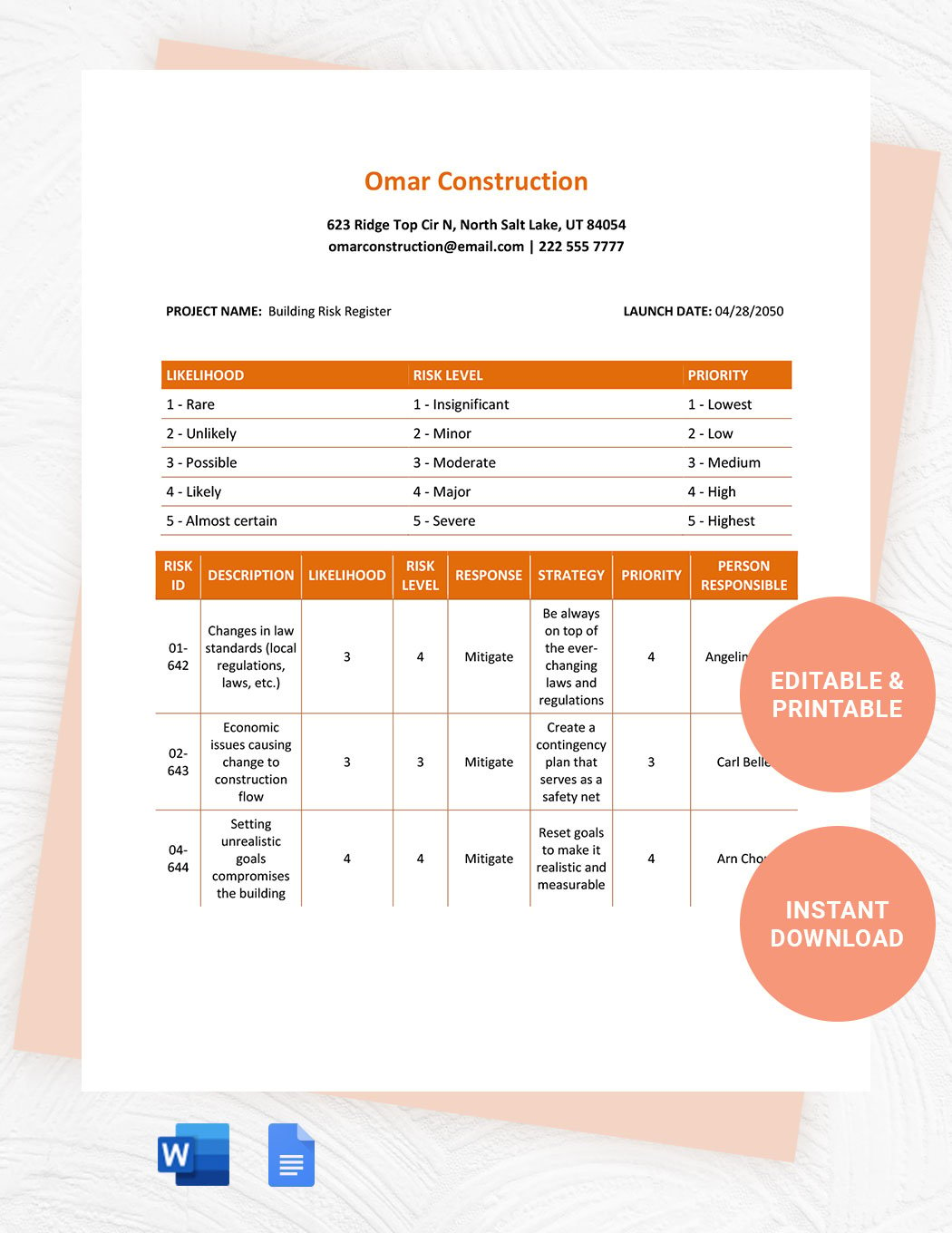
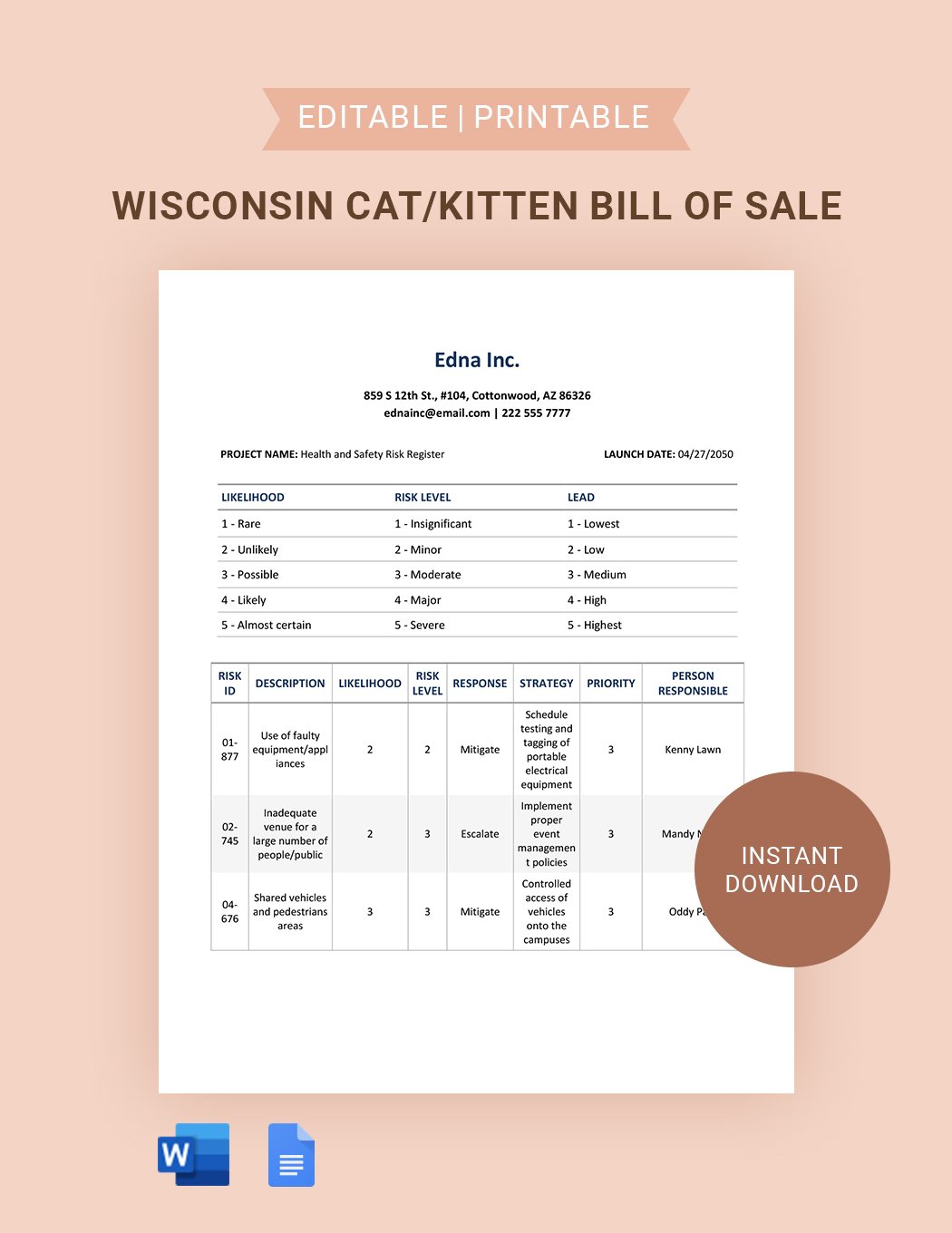
A Risk Register typically includes the following essential elements:
- Risk Identification to describe each risk
- Risk Category classification
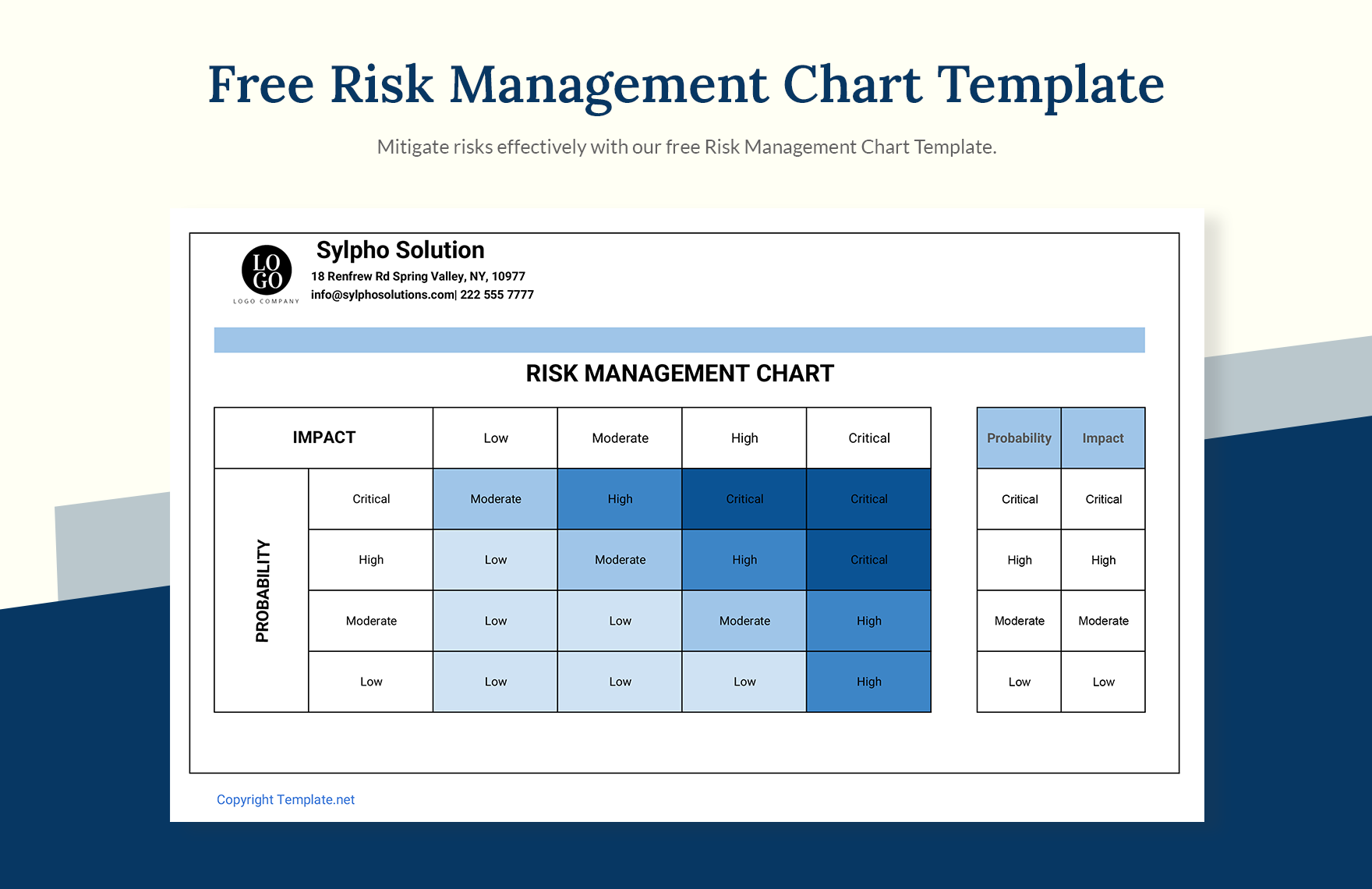
- Likelihood and impact assessment
- Risk Owner assignment
- Mitigation Actions plans
- Status tracking
How is Risk Register used in professional workflows?
In professional workflows, a Risk Register is used to document and communicate risks regularly, support risk mitigation planning, and ensure accountability by assigning owners and tracking risk resolution progress.
What are common use cases for Risk Register templates?
Common use cases for Risk Register templates include project management, compliance tracking, operational risk management, IT security risk assessment, and business continuity planning.
