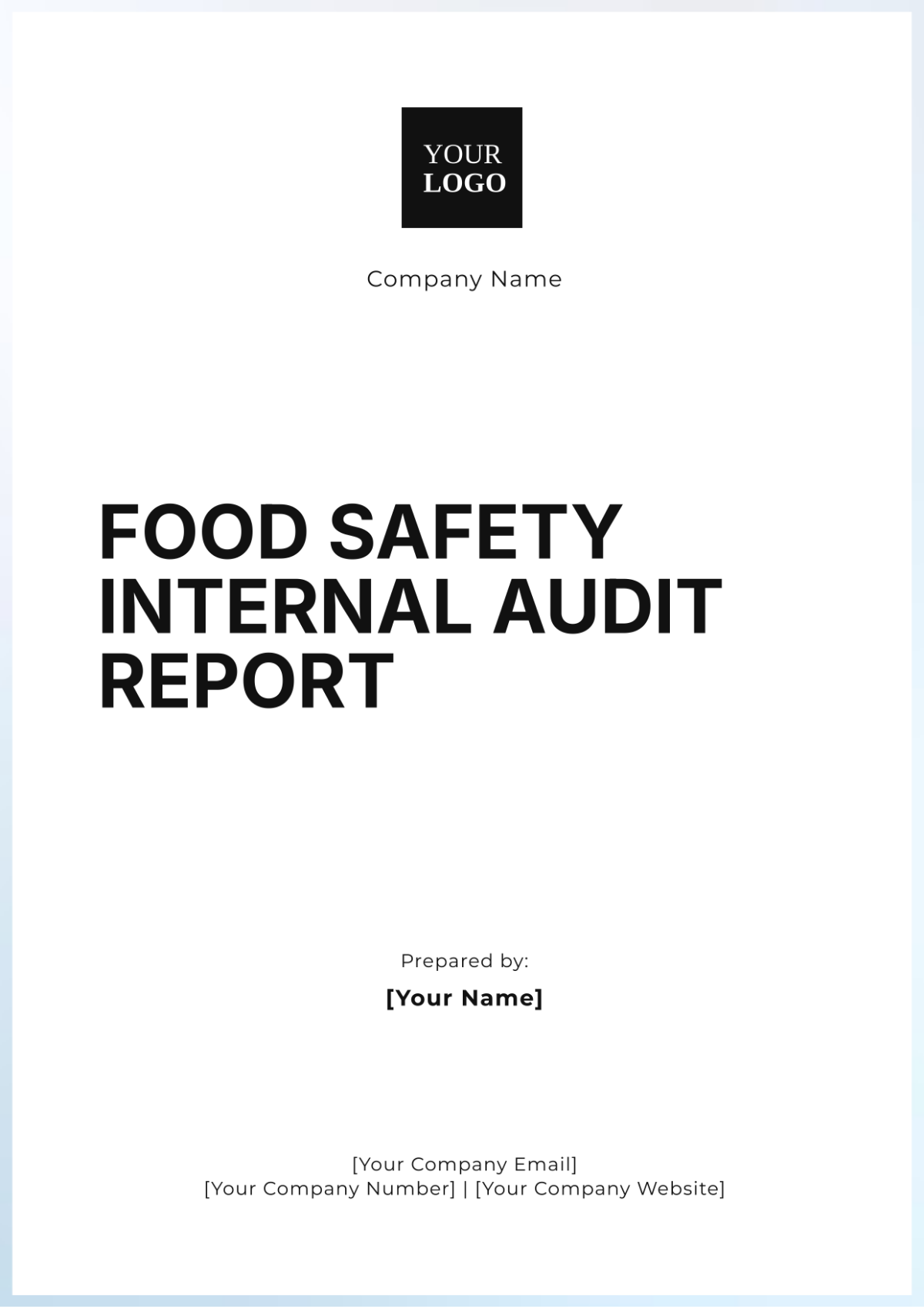
Free Food Safety Internal Audit Report

Executive Summary
This Food Safety Internal Audit was conducted from August 1st to August 5th, 2050, to ensure compliance with all applicable food safety regulations and to assess internal processes within [Your Company Name] for potential risks. The audit aimed to identify areas requiring improvement to enhance food safety standards, mitigate risks, and maintain compliance with industry best practices.
Audit Scope and Objectives
A. Scope
The audit covered the entire lifecycle of food preparation, including procurement, storage, handling, cooking, and service at [Your Company Name]’s central kitchen and all associated outlets. It also included a thorough examination of sanitation, staff training, and inventory practices to determine alignment with both internal policies and external food safety regulations such as HACCP (Hazard Analysis Critical Control Point), FDA, and local health authority guidelines.
B. Objectives
Ensure compliance with local, state, and federal food safety regulations including FDA, USDA, and ISO 22000 standards.
Identify potential food safety risks, such as cross-contamination, improper storage temperatures, and inadequate sanitation.
Assess the effectiveness of current food safety protocols, including staff adherence to standard operating procedures (SOPs) and record-keeping practices.
Recommend improvements aimed at bolstering food safety, reducing the risk of foodborne illness, and enhancing operational efficiency.
Methodology
The audit was conducted over five days, utilizing a combination of:
Direct observations of kitchen workflows and sanitation practices.
Staff interviews to assess understanding of food safety protocols.
Document reviews, including SOPs, training logs, temperature records, and inventory logs.
Key areas of focus included:
Food Handling and Preparation: Observing kitchen procedures to check for compliance with food safety best practices.
Storage and Inventory Management: Reviewing storage conditions, stock rotation, and handling of perishable items.
Cleaning and Sanitation: Assessing the frequency and quality of cleaning schedules for equipment and kitchen areas.
Staff Training and Hygiene Practices: Ensuring all employees have up-to-date food safety training and follow personal hygiene standards.
Compliance with Legal and Regulatory Requirements: Verifying documentation and procedures meet legal standards.
Findings and Observations
A. Food Handling and Preparation
Observations:
Proper glove use was consistent among all staff during food handling.
Temperature logs for cooked foods were inconsistently maintained, with 35% of reviewed logs missing critical entries over the last month.
Cross-contamination prevention measures, such as separate cutting boards for raw and cooked foods, were followed in 80% of instances, but gaps were noted in the morning shift.
Recommendations:
Improve log consistency: Mandate all kitchen staff to complete temperature logs after each batch of cooked food, introducing automated reminders via [Your Company Name]’s kitchen management system.
Enhanced training: Conduct quarterly training sessions on food handling and cross-contamination prevention techniques, focusing on high-risk areas such as the morning shift.
B. Storage and Inventory Management
Observations:
Storage areas were generally clean and well-organized, with clear labeling of all items.
Expired products (amounting to 3.5% of the inventory) were found in the freezer, indicating lapses in regular checks.
The cooling unit in the dairy storage section registered temperatures slightly above the recommended range for three consecutive days.
Recommendations:
Implement FIFO System: Enforce a First In, First Out (FIFO) inventory system, accompanied by daily checks to ensure that older stock is used before newer deliveries.
Temperature monitoring: Regularly monitor and calibrate cooling units. Equip freezers with digital temperature alarms to alert staff if temperatures exceed safe thresholds.
Regular inspections: Schedule bi-weekly inventory reviews to identify expired products and take corrective actions.
Action Plan
Recommendation | Action Required | Responsible Person | Timeline |
|---|---|---|---|
Ensure all staff consistently use temperature logs for cooked foods. | Implement mandatory log entry after each food batch and weekly audits to ensure compliance. | Kitchen Supervisor | By February 15, 2050 |
Implement a FIFO inventory system. | Train staff on FIFO techniques and conduct monthly audits to verify adherence. | Inventory Manager | By March 1, 2050 |
Improve temperature monitoring of freezers. | Install digital alarms in freezer units and schedule quarterly calibration checks. | Facilities Manager | By February 25, 2050 |
Conclusion
The audit highlighted several strengths within [Your Company Name]’s food safety protocols, including well-organized storage areas and appropriate use of protective gear. However, several areas require improvement, particularly in the maintenance of temperature logs and inventory management. Addressing these recommendations through structured training, regular audits, and technological enhancements will ensure [Your Company Name] meets and exceeds food safety standards while reducing operational risks.
Appendices
Appendix A: Audit Checklist (Attached)
Appendix B: Interview Notes (Attached)
- 100% Customizable, free editor
- Access 1 Million+ Templates, photo’s & graphics
- Download or share as a template
- Click and replace photos, graphics, text, backgrounds
- Resize, crop, AI write & more
- Access advanced editor
Safeguard your food handling practices with the Food Safety Internal Audit Report Template from Template.net. Editable in our Ai Editor Tool, this template offers customizable fields to suit your food safety audit requirements. Ensure compliance and improve food safety standards with this essential template. Make it yours now, for free!
You may also like
- Sales Report
- Daily Report
- Project Report
- Business Report
- Weekly Report
- Incident Report
- Annual Report
- Report Layout
- Report Design
- Progress Report
- Marketing Report
- Company Report
- Monthly Report
- Audit Report
- Status Report
- School Report
- Reports Hr
- Management Report
- Project Status Report
- Handover Report
- Health And Safety Report
- Restaurant Report
- Construction Report
- Research Report
- Evaluation Report
- Investigation Report
- Employee Report
- Advertising Report
- Weekly Status Report
- Project Management Report
- Finance Report
- Service Report
- Technical Report
- Meeting Report
- Quarterly Report
- Inspection Report
- Medical Report
- Test Report
- Summary Report
- Inventory Report
- Valuation Report
- Operations Report
- Payroll Report
- Training Report
- Job Report
- Case Report
- Performance Report
- Board Report
- Internal Audit Report
- Student Report
- Monthly Management Report
- Small Business Report
- Accident Report
- Call Center Report
- Activity Report
- IT and Software Report
- Internship Report
- Visit Report
- Product Report
- Book Report
- Property Report
- Recruitment Report
- University Report
- Event Report
- SEO Report
- Conference Report
- Narrative Report
- Nursing Home Report
- Preschool Report
- Call Report
- Customer Report
- Employee Incident Report
- Accomplishment Report
- Social Media Report
- Work From Home Report
- Security Report
- Damage Report
- Quality Report
- Internal Report
- Nurse Report
- Real Estate Report
- Hotel Report
- Equipment Report
- Credit Report
- Field Report
- Non Profit Report
- Maintenance Report
- News Report
- Survey Report
- Executive Report
- Law Firm Report
- Advertising Agency Report
- Interior Design Report
- Travel Agency Report
- Stock Report
- Salon Report
- Bug Report
- Workplace Report
- Action Report
- Investor Report
- Cleaning Services Report
- Consulting Report
- Freelancer Report
- Site Visit Report
- Trip Report
- Classroom Observation Report
- Vehicle Report
- Final Report
- Software Report