C-Suite Succession Plan Layout
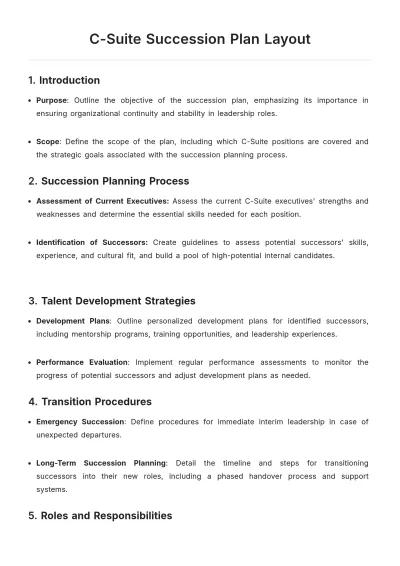
1. Introduction
Purpose: Outline the objective of the succession plan, emphasizing its importance in ensuring organizational continuity and stability in leadership roles.
Scope: Define the scope of the plan, including which C-Suite positions are covered and the strategic goals associated with the succession planning process.
2. Succession Planning Process
Assessment of Current Executives: Assess the current C-Suite executives' strengths and weaknesses and determine the essential skills needed for each position.
Identification of Successors: Create guidelines to assess potential successors' skills, experience, and cultural fit, and build a pool of high-potential internal candidates.
3. Talent Development Strategies
Development Plans: Outline personalized development plans for identified successors, including mentorship programs, training opportunities, and leadership experiences.
Performance Evaluation: Implement regular performance assessments to monitor the progress of potential successors and adjust development plans as needed.
4. Transition Procedures
Emergency Succession: Define procedures for immediate interim leadership in case of unexpected departures.
Long-Term Succession Planning: Detail the timeline and steps for transitioning successors into their new roles, including a phased handover process and support systems.
5. Roles and Responsibilities
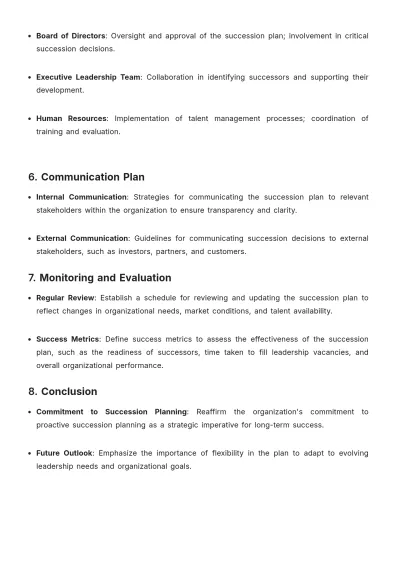
Board of Directors: Oversight and approval of the succession plan; involvement in critical succession decisions.
Executive Leadership Team: Collaboration in identifying successors and supporting their development.
Human Resources: Implementation of talent management processes; coordination of training and evaluation.
6. Communication Plan
Internal Communication: Strategies for communicating the succession plan to relevant stakeholders within the organization to ensure transparency and clarity.
External Communication: Guidelines for communicating succession decisions to external stakeholders, such as investors, partners, and customers.
7. Monitoring and Evaluation
Regular Review: Establish a schedule for reviewing and updating the succession plan to reflect changes in organizational needs, market conditions, and talent availability.
Success Metrics: Define success metrics to assess the effectiveness of the succession plan, such as the readiness of successors, time taken to fill leadership vacancies, and overall organizational performance.
8. Conclusion
Commitment to Succession Planning: Reaffirm the organization's commitment to proactive succession planning as a strategic imperative for long-term success.
Future Outlook: Emphasize the importance of flexibility in the plan to adapt to evolving leadership needs and organizational goals.
Plan Templates @ Template.net