














Free Strategy Map Templates: Customizable Visual Planning and Analysis Guides
What is a Strategy Map?
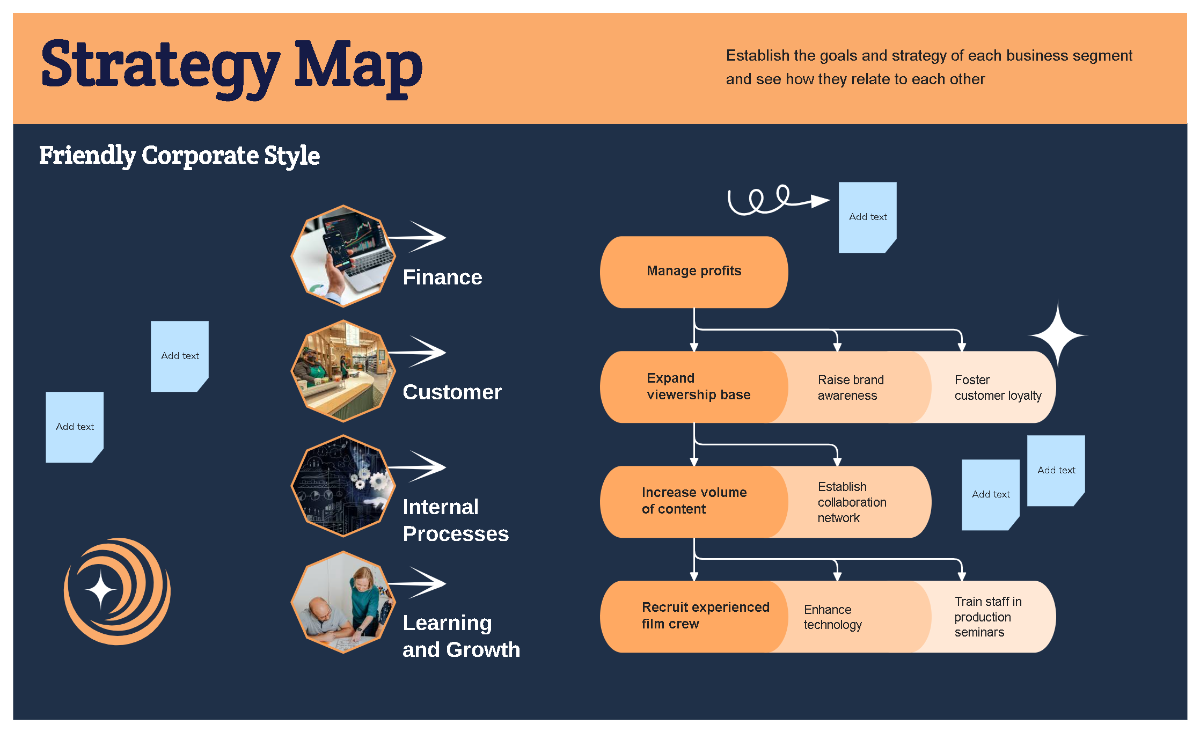
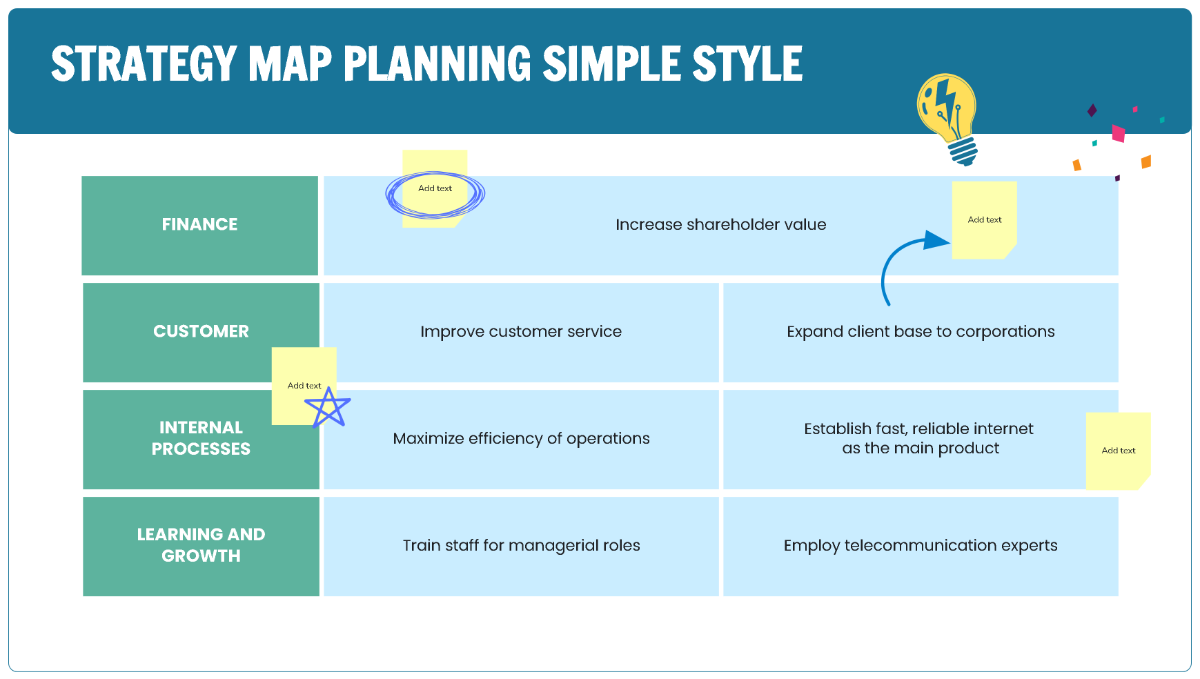
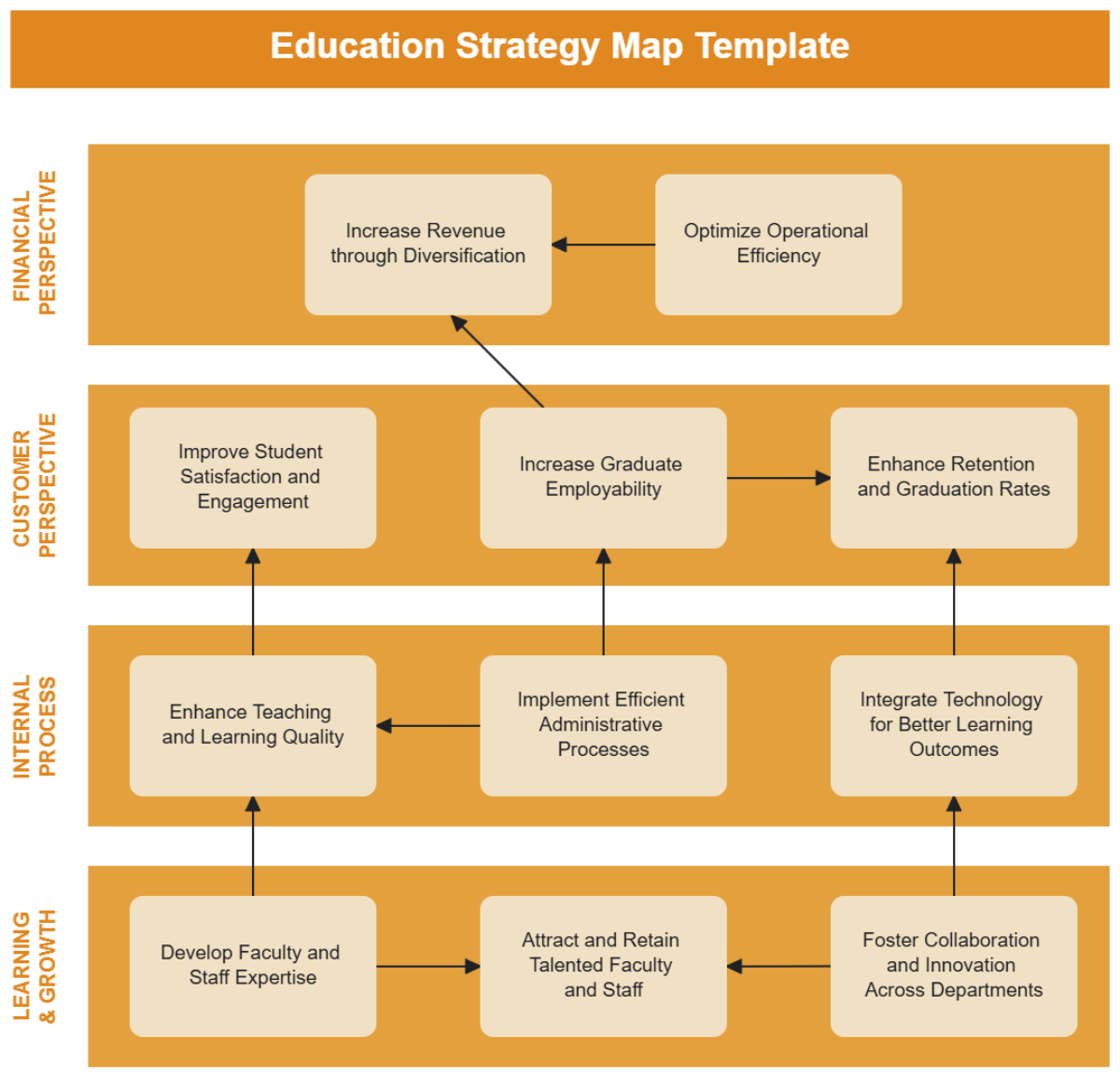
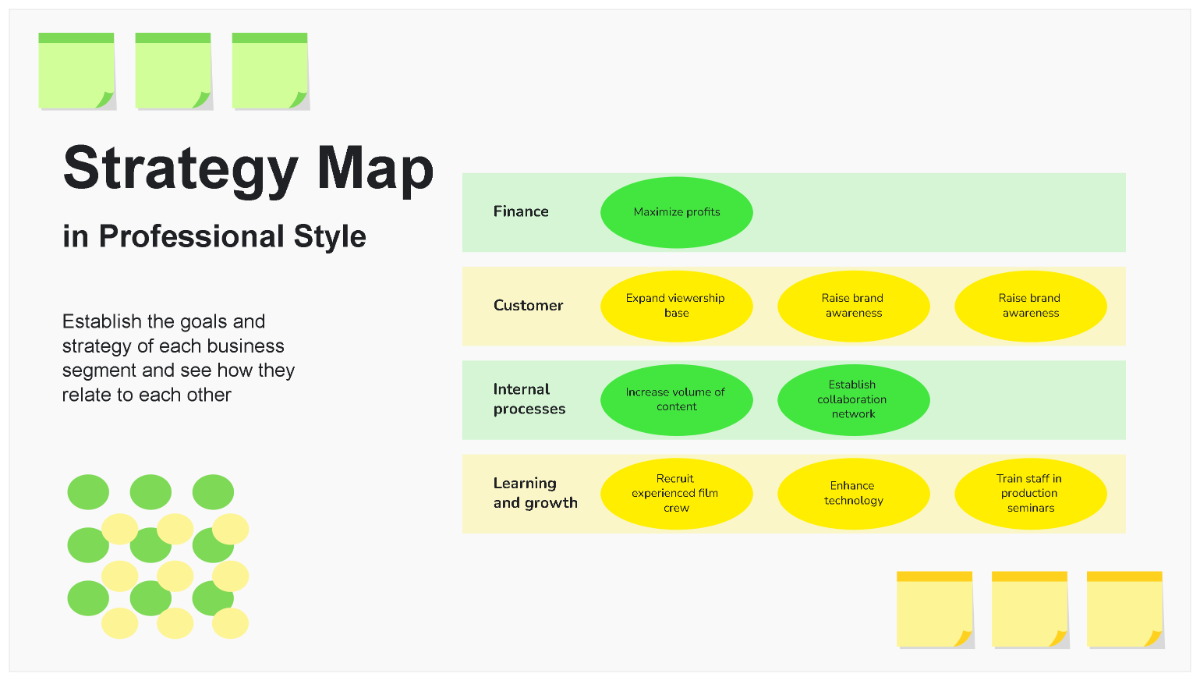
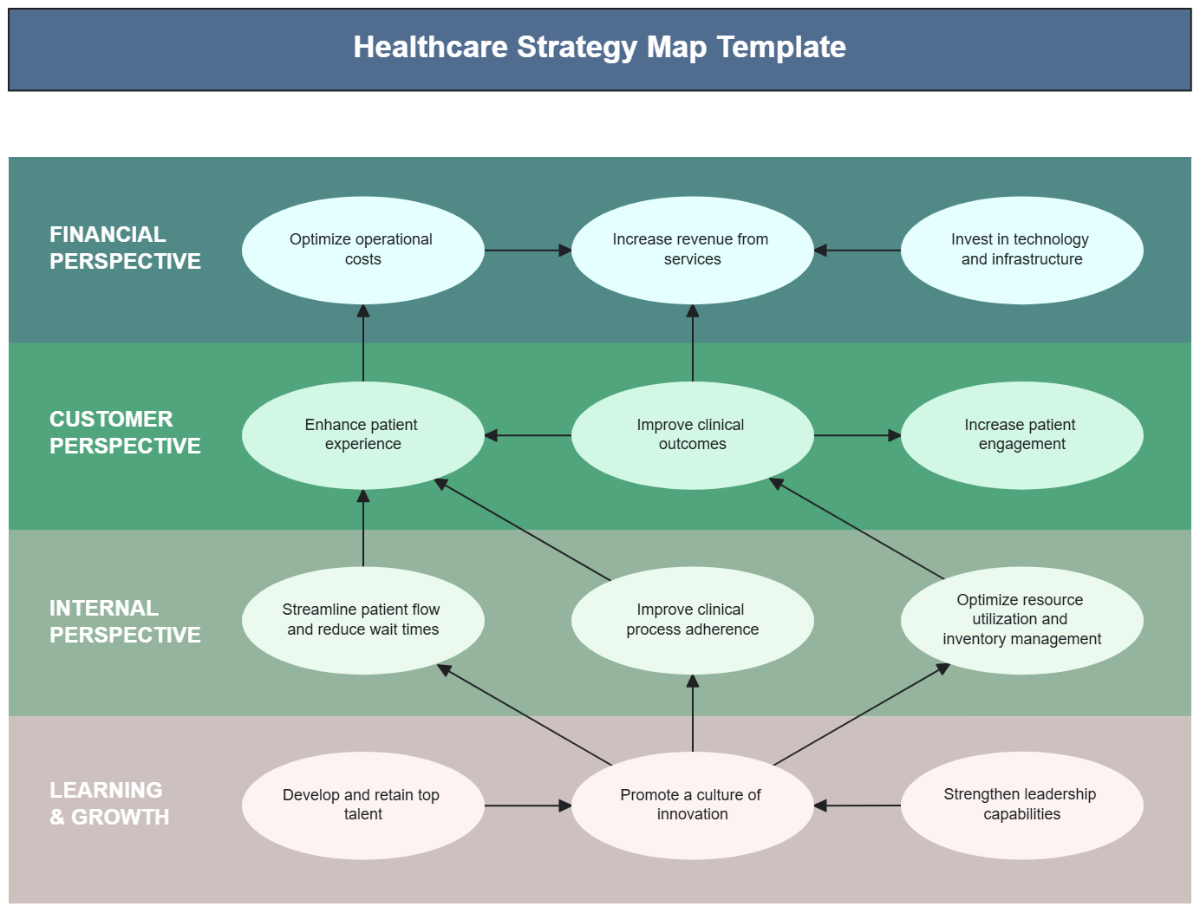
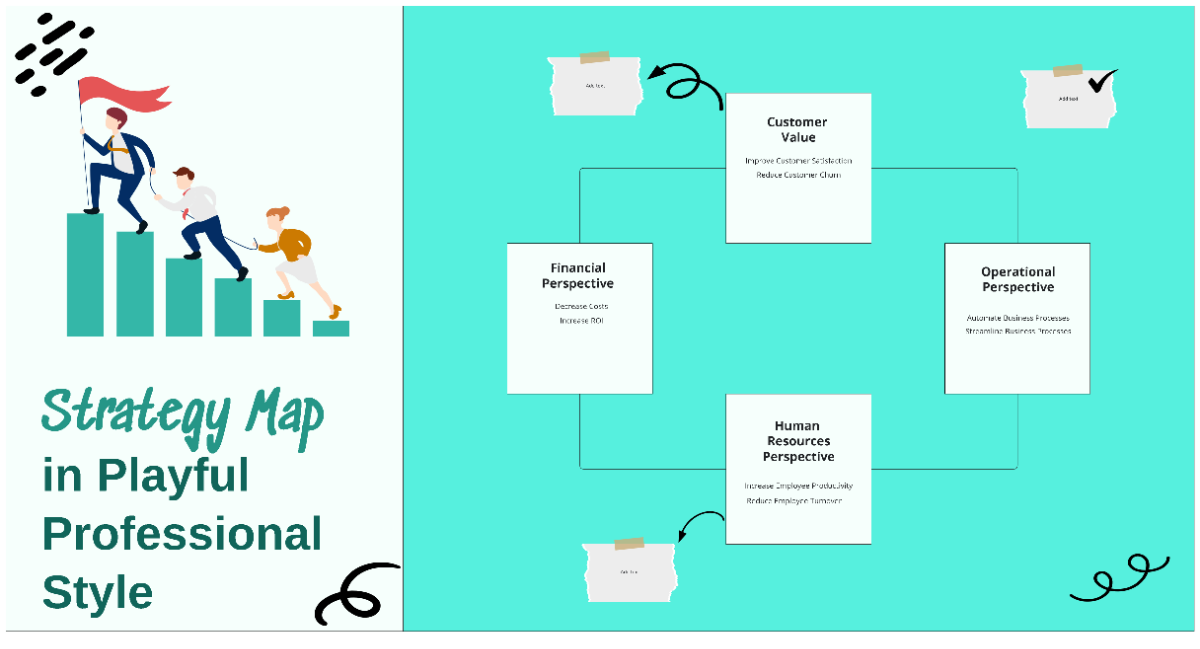
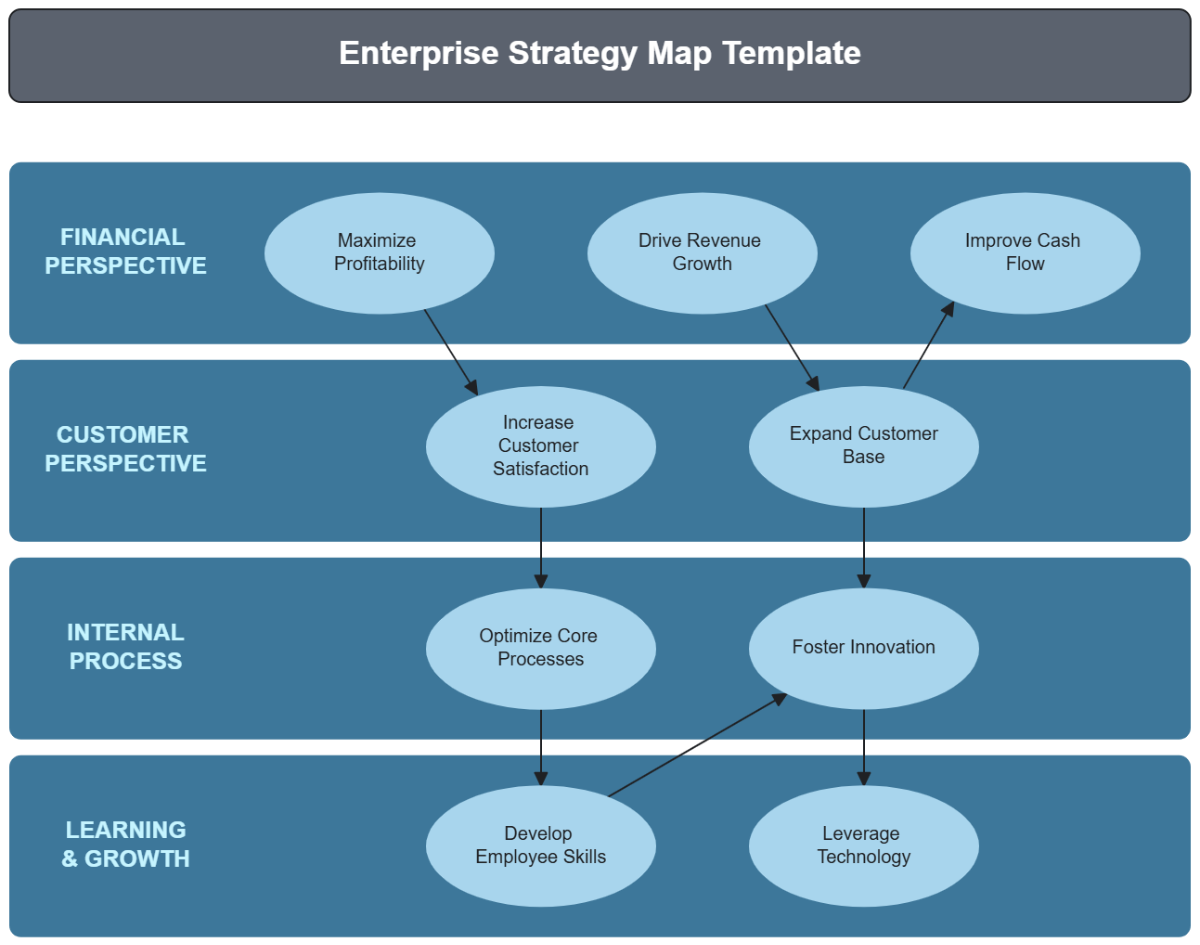
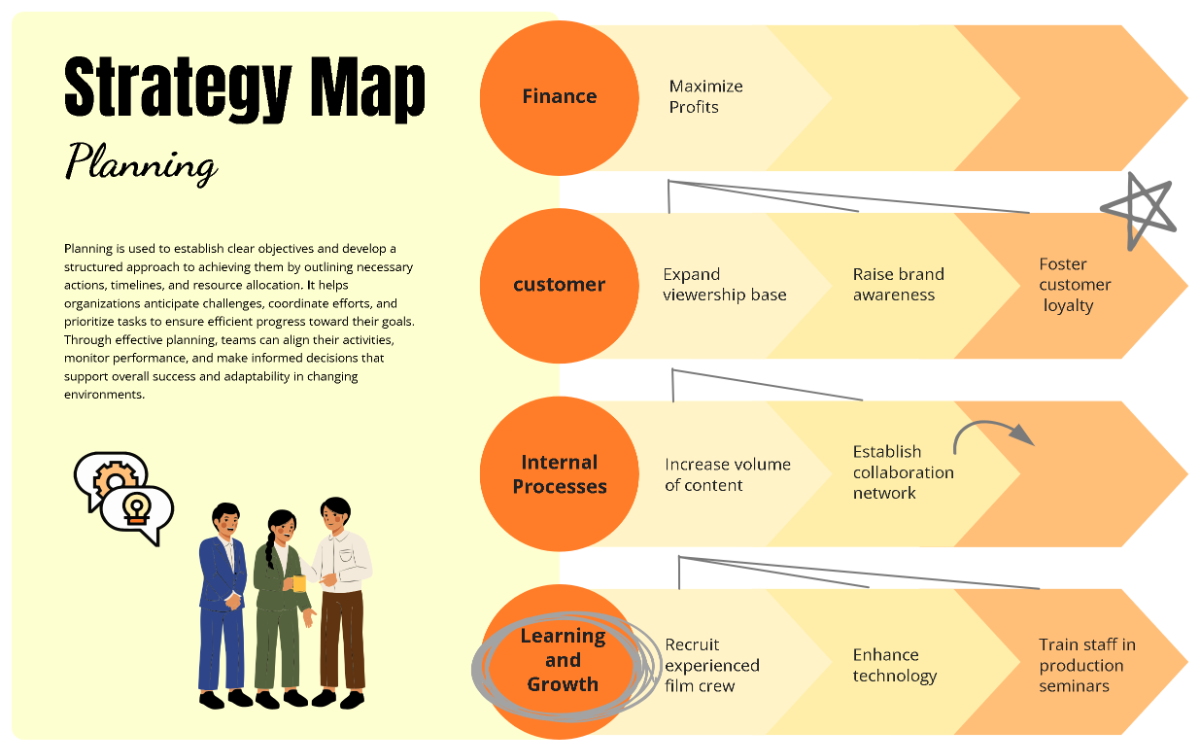
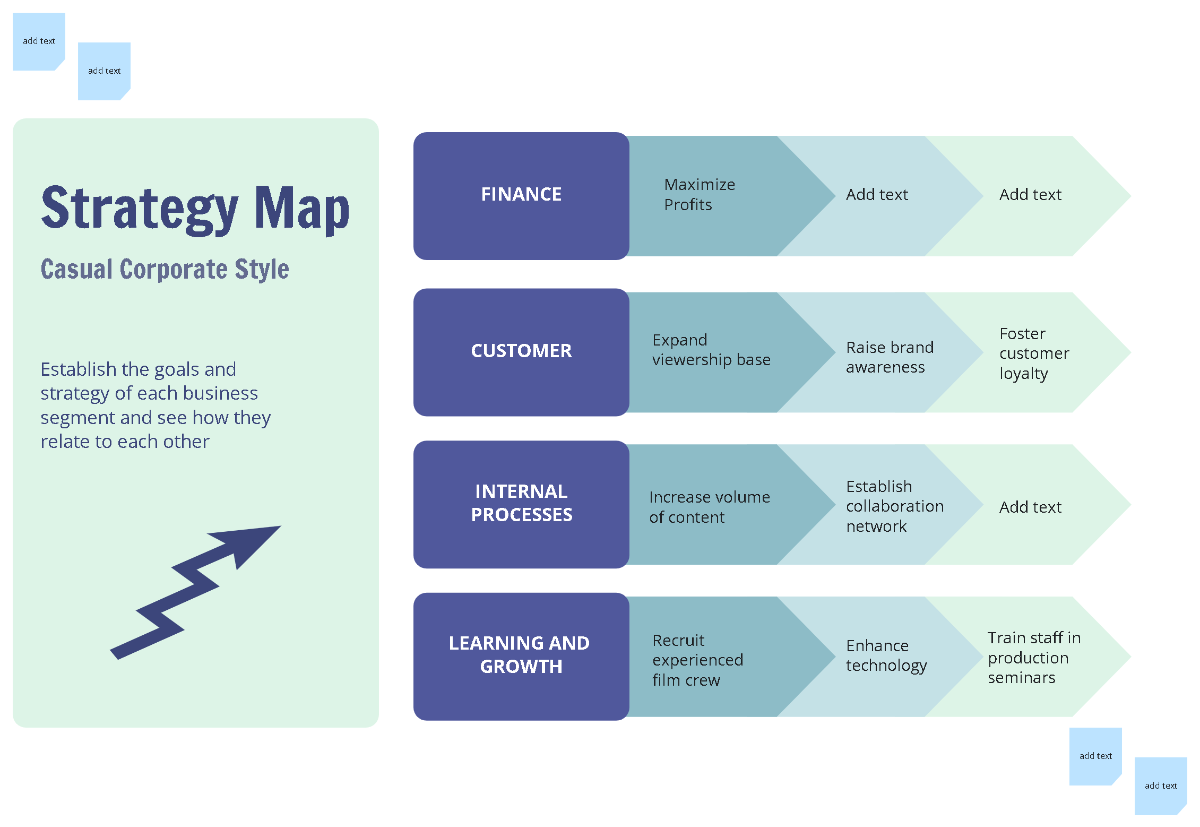
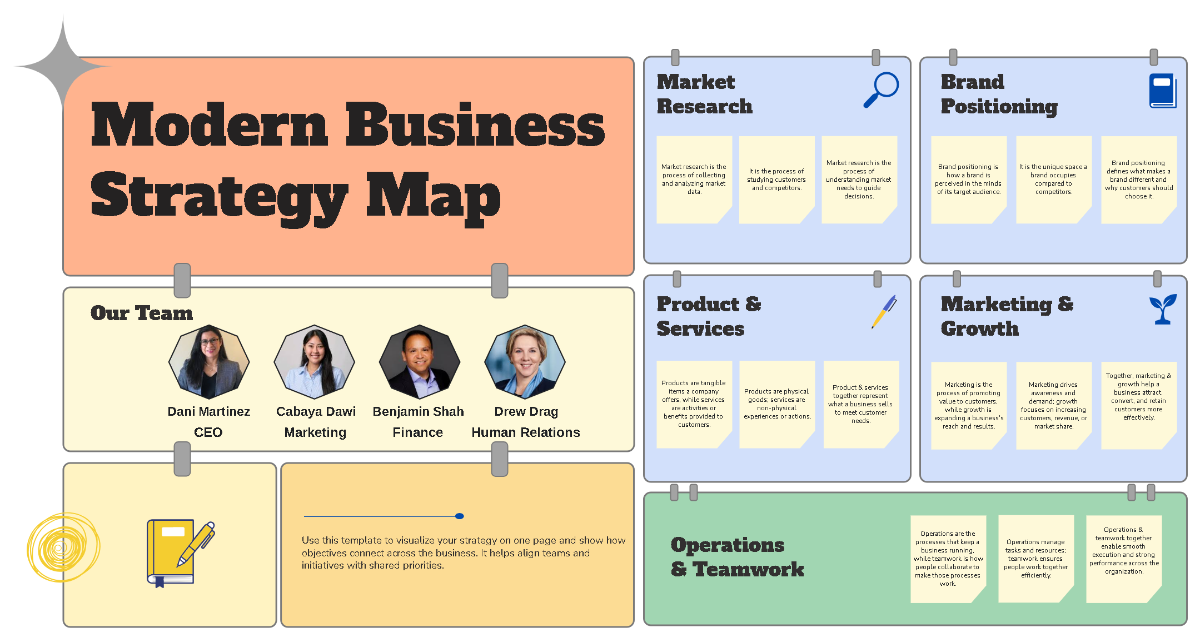
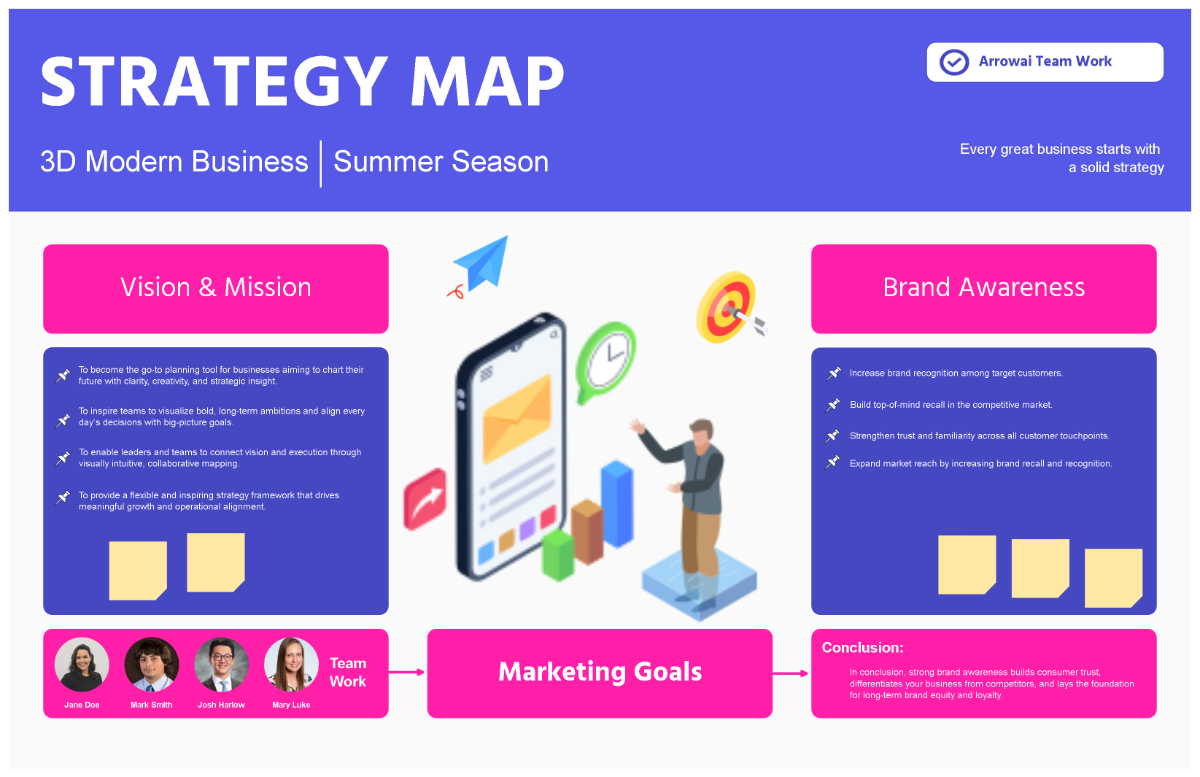
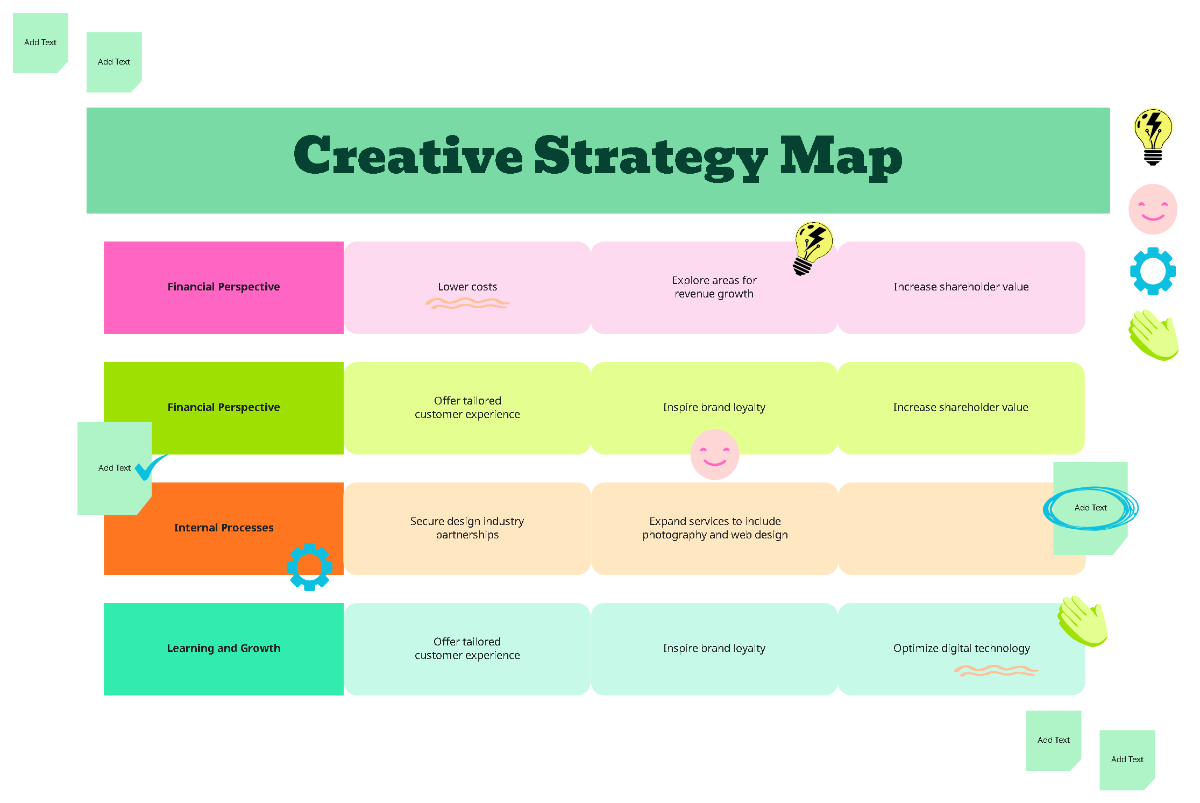
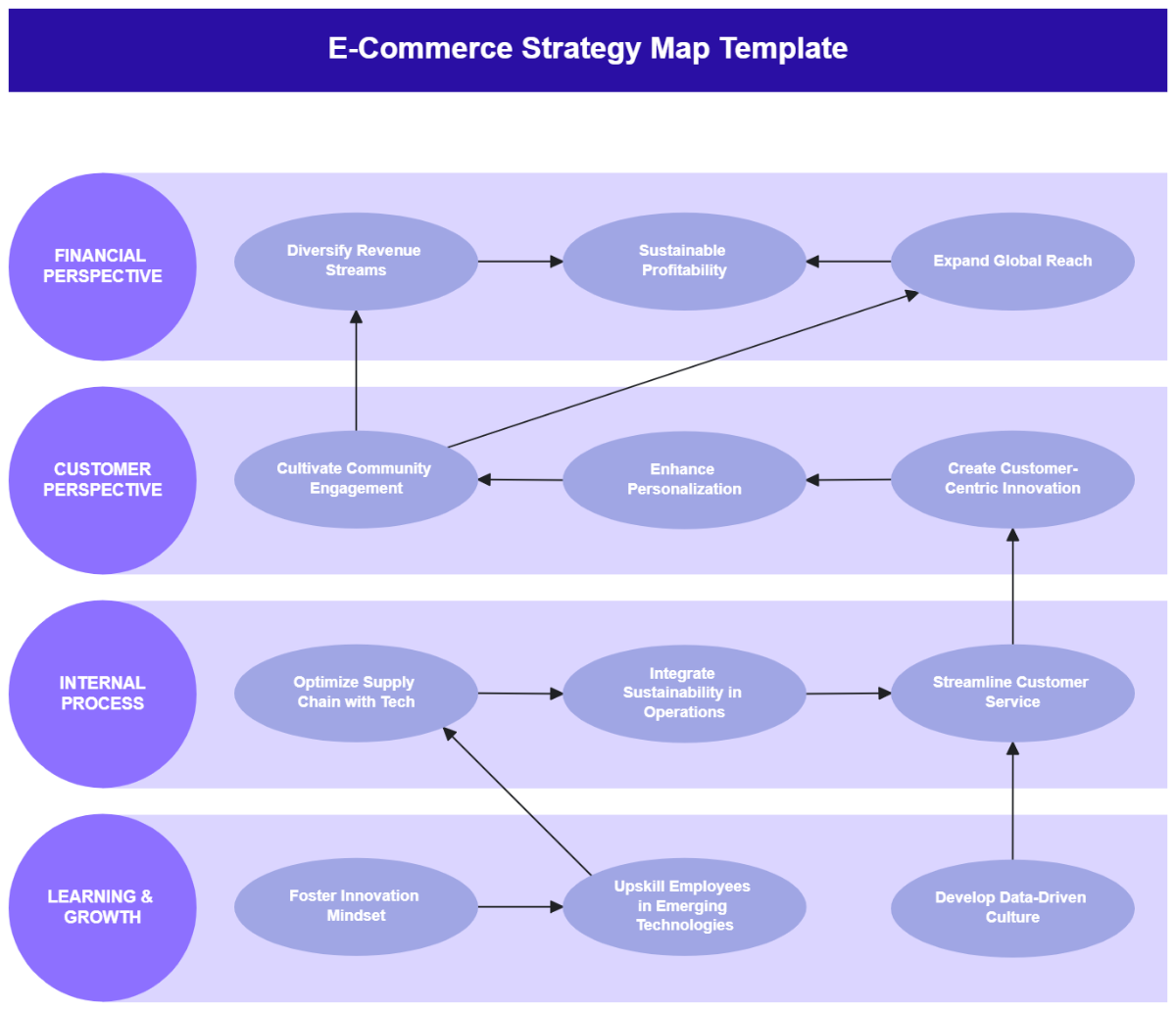
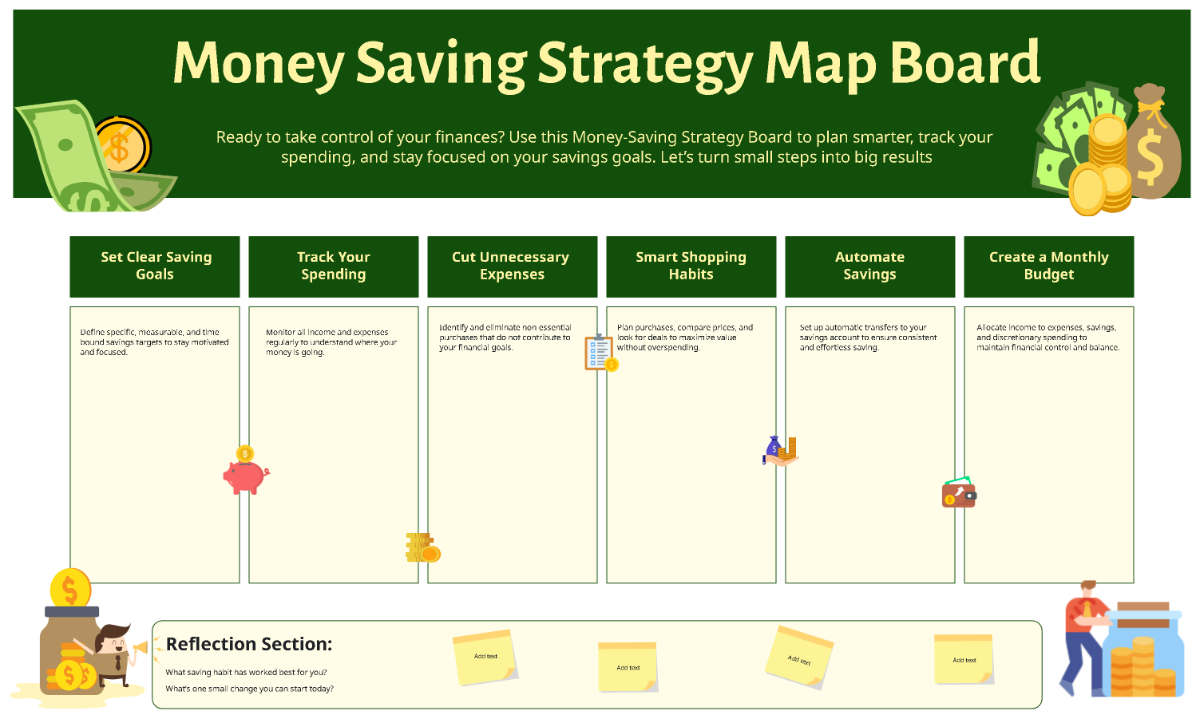
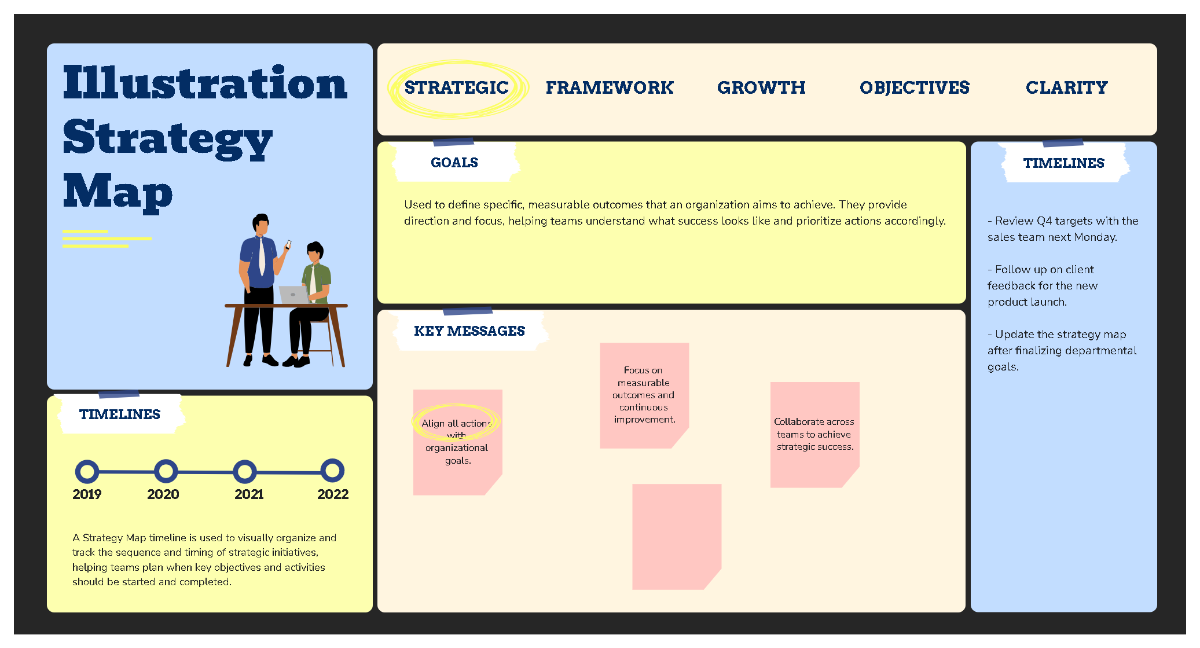
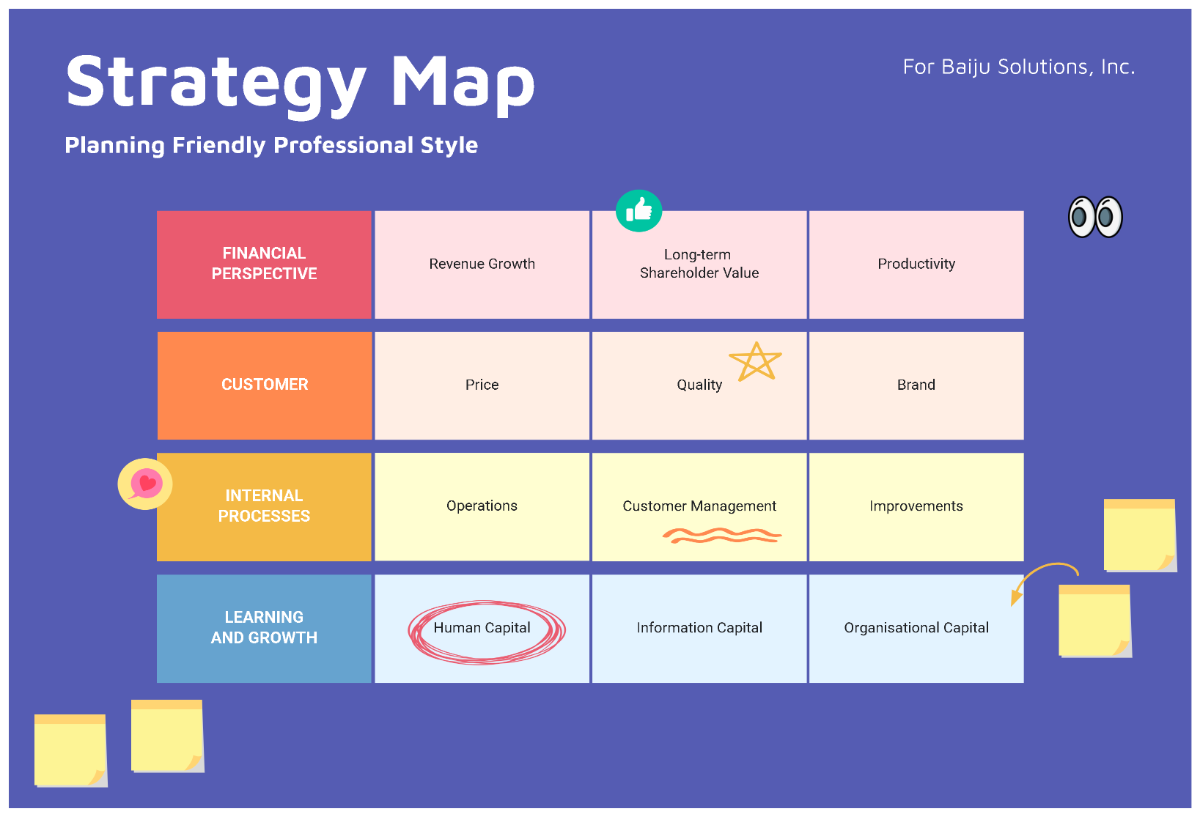
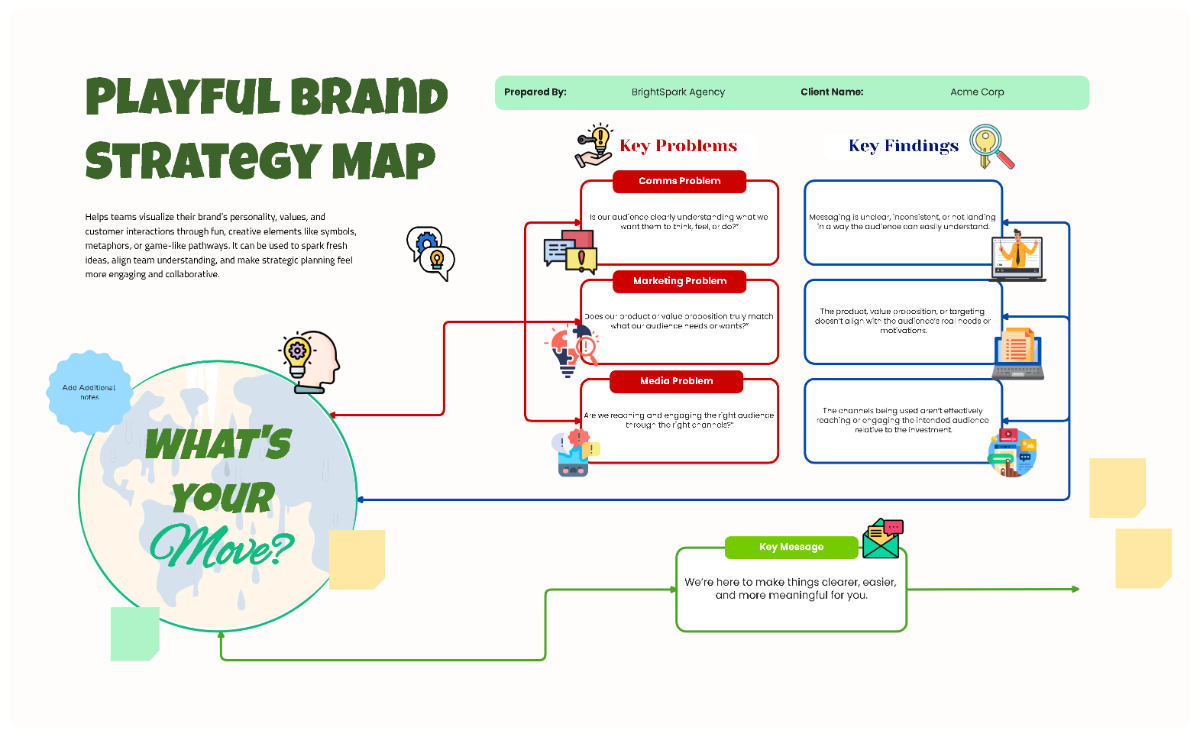
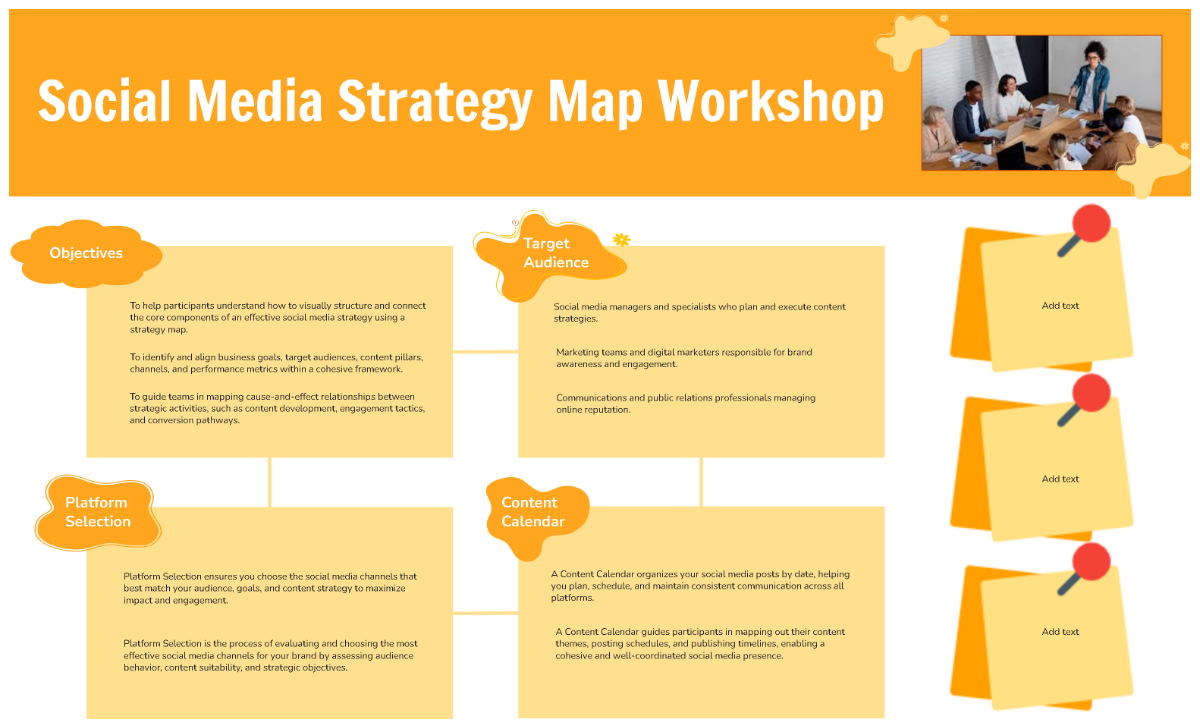
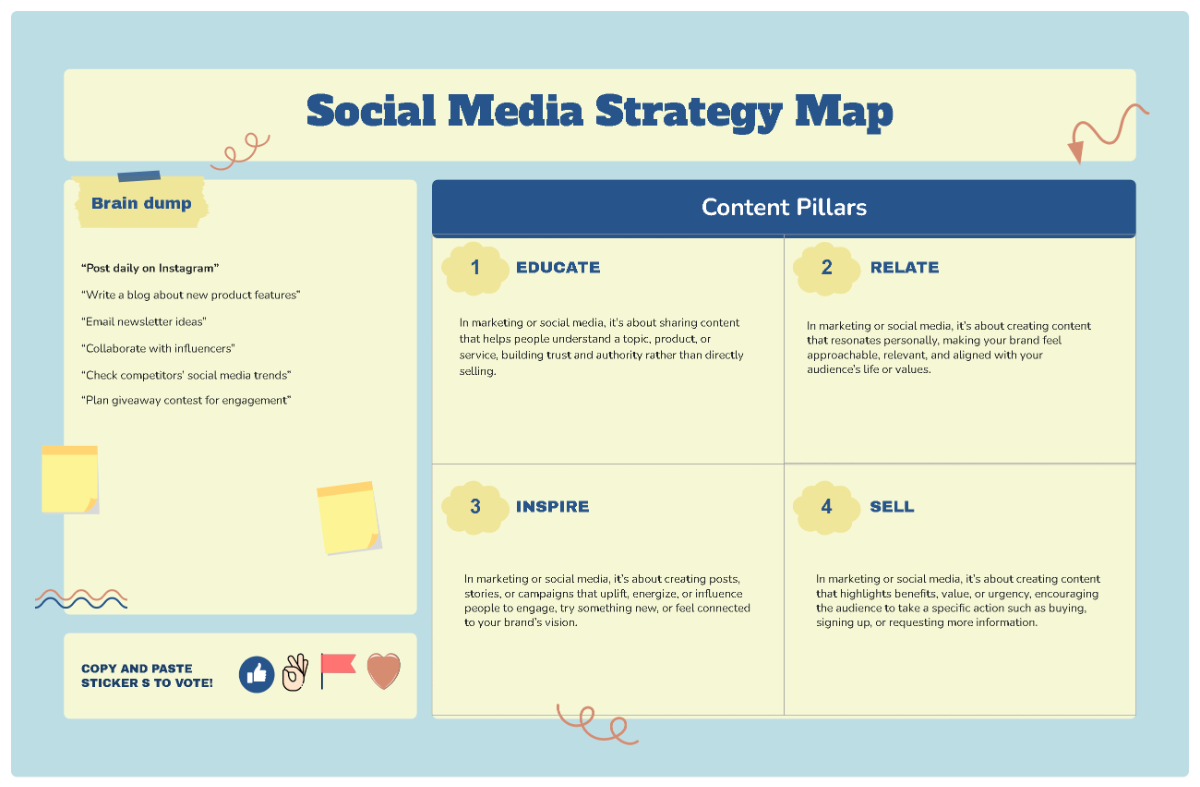
A Strategy Map is a visual diagram that outlines an organization's strategic objectives and their cause-and-effect relationships across various perspectives like financial, customer, internal processes, and learning and growth. Strategy Map emphasizes workflow connections and visual hierarchy to communicate strategy clearly.
Why should I use a Strategy Map?
You should use a Strategy Map to clarify and communicate your strategic goals effectively, aligning all levels of your organization. Strategy Map enhances structural clarity, supports collaboration features, and connects objectives visually to improve decision-making and performance tracking.
Who uses Strategy Maps?
Strategy Maps are primarily used by executives, managers, business analysts, and strategic planners who need to visualize and communicate organizational goals. These users rely on Strategy Map to align teams, monitor progress, and support collaboration features in strategic planning sessions.
What are the best tips for completing my Strategy Map?
When completing your Strategy Map, focus on clear connections and simplicity to ensure understanding. Consider these tips:
- Define clear objectives – specify strategic goals for each perspective
- Establish cause-and-effect links – show how objectives influence each other
- Use consistent visual hierarchy – prioritize objectives by importance
- Keep design simple – avoid clutter for better communication
- Engage stakeholders – collaborate for accuracy and buy-in
- Regularly update – reflect changes in strategy or performance
What file formats can I download for my Strategy Map?
Template.net whiteboard templates for Strategy Map support multiple export formats for collaboration and sharing, including PDF, PNG, SVG, and Microsoft PowerPoint. You can easily download and use these formats for presentations, reports, or further editing.
Can I create a Strategy Map using AI?
Template.net provides an AI-powered tool that generates new Strategy Map structures from prompts. You can use the Strategy Map Maker to quickly create customized and visually structured Strategy Maps.
What essential elements should be included in my Strategy Map?
A Strategy Map should include key elements that represent an organization's strategic framework. Essential elements include:
- Financial objectives – goals related to profitability and growth
- Customer objectives – desired customer outcomes and satisfaction
- Internal process objectives – critical operational processes
- Learning and growth objectives – employee skills and innovation
- Cause-and-effect linkages – arrows connecting objectives to show influence
- Clear labels and descriptions – concise text explaining each goal
What are the benefits of using Strategy Map in my business workflow?
Using a Strategy Map in your business workflow improves alignment, communication, and performance tracking. Benefits include enhanced visual hierarchy of goals, better workflow connections across departments, increased transparency, and support for collaborative strategic planning.
What structural standards should my Strategy Map follow?
Your Strategy Map should follow structural standards that ensure clarity and usability. This includes maintaining a logical flow from top-level financial goals down to learning and growth objectives, consistent shape and color coding, clear directional arrows for cause-and-effect, and balanced spacing to avoid clutter.
