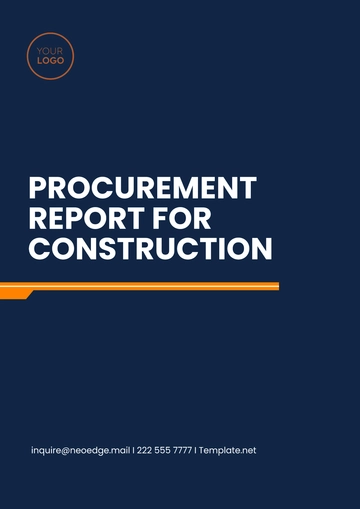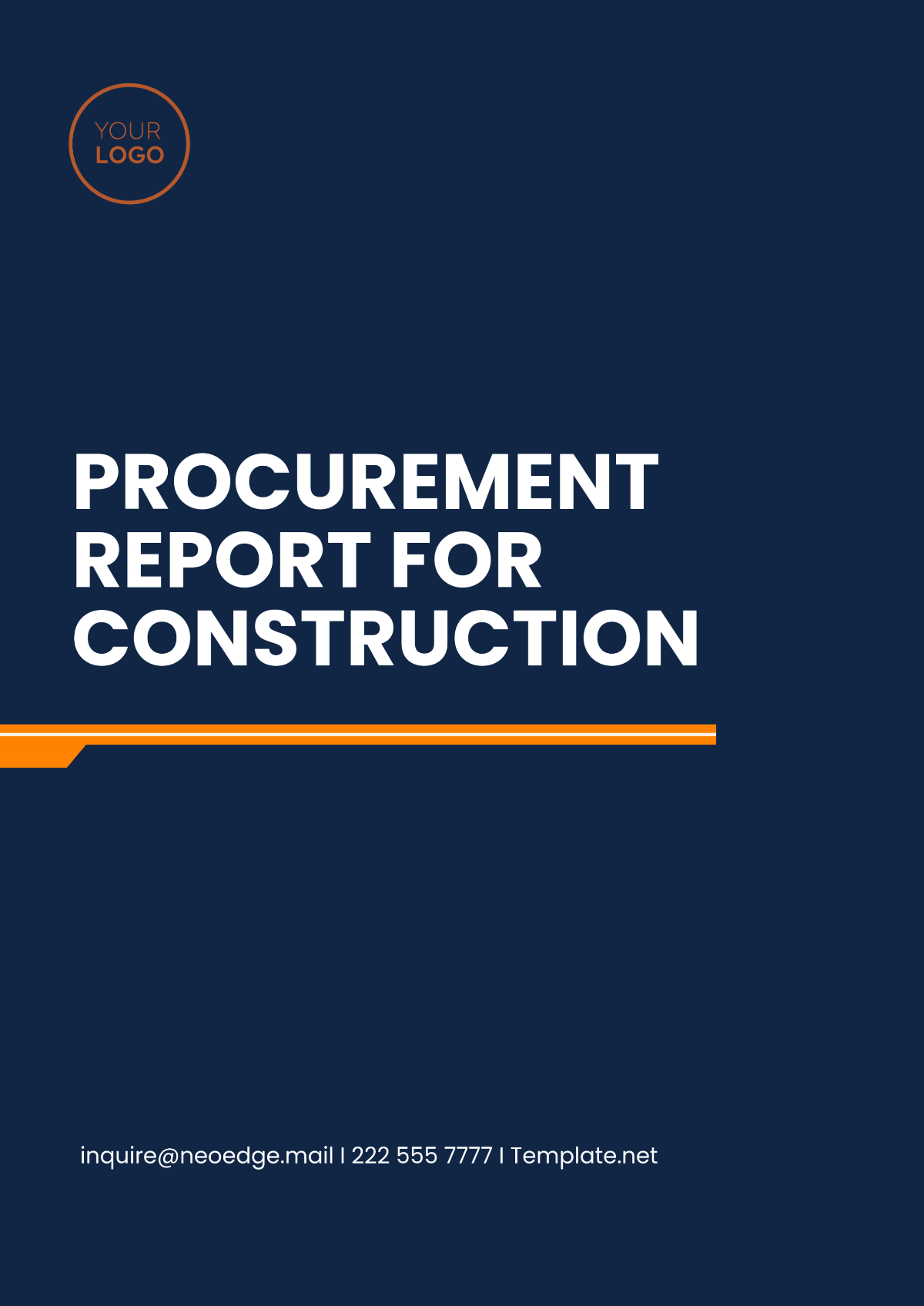
Free Procurement Report for Construction

Prepared by: [Your Name]
I. Introduction
This report provides a comprehensive analysis of the procurement activities undertaken for the construction project. It encompasses the procurement processes, strategies employed, and results obtained in acquiring the necessary materials, equipment, labor, and services. The report aims to provide a transparent view of the procurement activities, timelines, costs, vendor selection, compliance with regulations, and potential risks or challenges.
II. Procurement Processes
A. Project Planning and Requirements Gathering
The initial stage of procurement involves detailed planning and gathering of project requirements. This includes understanding the project scope, identifying necessary resources, and estimating the required budget. A project plan is developed to serve as a guide throughout the procurement cycle.
B. Tendering and Bidding
Once the project requirements are clear, the tendering process is initiated. This involves creating and distributing Request for Proposals (RFPs) and Invitations to Bid (ITBs) to potential vendors. The tendering process is essential in ensuring competitive pricing and securing the right resources for the project.
C. Vendor Evaluation and Selection
Responses to the bids and proposals are meticulously evaluated based on criteria such as cost, experience, reliability, and compliance with project requirements. The selection of vendors is a critical decision that impacts the project's success and timely completion.
III. Procurement Strategies
A. Strategic Sourcing
Strategic sourcing is employed to identify suppliers who offer the best value in terms of quality and cost. Long-term supplier relationships are established to ensure consistent supply and potential cost savings.
B. Lean Procurement
Lean procurement strategies are utilized to eliminate waste and improve efficiency in the procurement process. This involves streamlining processes, reducing unnecessary steps, and fostering collaboration with suppliers.
C. Risk Management
Comprehensive risk management strategies are incorporated to mitigate potential risks in the procurement process. This includes identifying potential risks, developing mitigation plans, and monitoring risk throughout the project's lifecycle.
IV. Results Analysis
A. Cost Analysis
Of the total project budget, the following allocations were made for procurement:
Category | Budget Allocated | Actual Cost |
|---|---|---|
Materials | $1,000,000 | $950,000 |
Equipment | $500,000 | $520,000 |
Labor | $700,000 | $680,000 |
Services | $300,000 | $310,000 |
The procurement process remained within budget for most categories, with minor overruns in equipment and services due to unforeseen circumstances.
B. Timeline Compliance
The project adhered to the planned procurement timeline, with key milestones achieved as scheduled. A timeline of significant procurement activities is outlined below:
Project Kick-Off: January 10
Tendering Process: February 1 - March 15
Vendor Selection and Contracting: March 20 - April 10
Resource Acquisition and Delivery: April 15 - May 25
V. Vendor Selection
A. Criteria for Selection
The criteria used for vendor selection included:
Cost-effectiveness
Quality of products and services
Reputation and reliability
Compliance with industry standards and regulations
B. Selected Vendors
The following vendors were selected for the project's procurement needs:
Vendor Name | Category | Reason for Selection |
|---|---|---|
Grandeco Materials | Materials | Competitive pricing and quality assurance |
ApexCorp Equipment Co. | Equipment | Proven track record and availability of the latest equipment |
BuildRight Services | Labor | Skilled workforce and timely delivery |
Prime Consultants | Services | Expertise and compliance with regulations |
VI. Compliance with Regulations
A. Regulatory Standards
All procurement activities complied with relevant construction industry regulations, including environmental, safety, and labor laws. Regular audits ensured adherence to these standards throughout the project duration.
B. Audit and Monitoring
Periodic audits were conducted to ensure compliance with regulatory standards. Monitoring mechanisms were put in place to promptly address any compliance issues that arose during the procurement process.
VII. Risks and Challenges
A. Potential Risks
Potential risks identified during the procurement process included:
Supply chain disruptions due to global events
Price fluctuations in raw materials
Delays in equipment delivery
Compliance challenges with subcontractors
B. Mitigation Strategies
Mitigation strategies implemented to address the potential risks included:
Establishing alternative suppliers to reduce dependency on single sources
Locking in prices with long-term contracts
Maintaining regular communication with vendors for timely updates
Ensuring strict compliance checks for all subcontractors
VIII. Conclusion
The procurement process for the construction project was executed efficiently, achieving key objectives within budget and on schedule. Strategic sourcing, risk management, and compliance with regulatory standards played a significant role in the successful acquisition of materials, equipment, labor, and services. The insights and strategies outlined in this report provide a valuable reference for future projects to optimize procurement operations and enhance project delivery.
- 100% Customizable, free editor
- Access 1 Million+ Templates, photo’s & graphics
- Download or share as a template
- Click and replace photos, graphics, text, backgrounds
- Resize, crop, AI write & more
- Access advanced editor
Streamline your procurement process with the Procurement Report for Construction Template from Template.net. This editable, customizable template helps track supplier deliveries, material orders, and costs. Fully editable in our AI Editor Tool, you can modify it to suit your project’s specific procurement needs. Manage construction materials and suppliers efficiently with this professional and user-friendly template.
You may also like
- Sales Report
- Daily Report
- Project Report
- Business Report
- Weekly Report
- Incident Report
- Annual Report
- Report Layout
- Report Design
- Progress Report
- Marketing Report
- Company Report
- Monthly Report
- Audit Report
- Status Report
- School Report
- Reports Hr
- Management Report
- Project Status Report
- Handover Report
- Health And Safety Report
- Restaurant Report
- Construction Report
- Research Report
- Evaluation Report
- Investigation Report
- Employee Report
- Advertising Report
- Weekly Status Report
- Project Management Report
- Finance Report
- Service Report
- Technical Report
- Meeting Report
- Quarterly Report
- Inspection Report
- Medical Report
- Test Report
- Summary Report
- Inventory Report
- Valuation Report
- Operations Report
- Payroll Report
- Training Report
- Job Report
- Case Report
- Performance Report
- Board Report
- Internal Audit Report
- Student Report
- Monthly Management Report
- Small Business Report
- Accident Report
- Call Center Report
- Activity Report
- IT and Software Report
- Internship Report
- Visit Report
- Product Report
- Book Report
- Property Report
- Recruitment Report
- University Report
- Event Report
- SEO Report
- Conference Report
- Narrative Report
- Nursing Home Report
- Preschool Report
- Call Report
- Customer Report
- Employee Incident Report
- Accomplishment Report
- Social Media Report
- Work From Home Report
- Security Report
- Damage Report
- Quality Report
- Internal Report
- Nurse Report
- Real Estate Report
- Hotel Report
- Equipment Report
- Credit Report
- Field Report
- Non Profit Report
- Maintenance Report
- News Report
- Survey Report
- Executive Report
- Law Firm Report
- Advertising Agency Report
- Interior Design Report
- Travel Agency Report
- Stock Report
- Salon Report
- Bug Report
- Workplace Report
- Action Report
- Investor Report
- Cleaning Services Report
- Consulting Report
- Freelancer Report
- Site Visit Report
- Trip Report
- Classroom Observation Report
- Vehicle Report
- Final Report
- Software Report