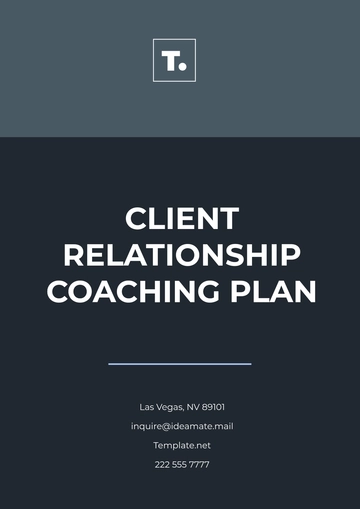
Free Client Relationship Coaching Plan

Prepared by: [Your Name]
Date: [Date]
I. Client Information
Client Name: Jewell Ward
Client Age: 35
Occupation: Senior Marketing Manager at Eyefusion
Coaching Duration: 6 months (with potential for extension)
Initial Coaching Objective: Improve interpersonal communication skills within the team and strengthen client relationships for enhanced business growth.
Background Information:
Jewell has worked as a Senior Marketing Manager for 8 years, overseeing a diverse team of creative professionals. While successful in her career, she struggles with clear communication, particularly when managing her team and interacting with clients. She’s also facing challenges in balancing her demanding career with her personal life. Jewell is highly motivated to improve these areas to create a healthier work-life balance and enhance her professional relationships.
II. Assessment of Current Relationships
A. Personal Relationships:
Jewell's relationships have been strained due to her intense work schedule. She often finds herself too consumed by work to engage fully with family and friends.
Challenges Identified:
Lack of quality time spent with family due to work commitments.
Difficulty in setting boundaries between work and home life, often bringing work stress home.
Struggling to communicate openly with her partner about stress levels and work-related issues.
B. Professional Relationships:
Jewell’s professional relationships are similarly affected by communication breakdowns and unclear expectations.
Challenges Identified:
Team Communication: Jewell’s leadership style, while effective in terms of results, does not always encourage open dialogue. Some team members feel hesitant to voice concerns or offer creative input.
Feedback Gaps: There is a lack of consistent feedback, leaving team members unsure about their performance and expectations.
Client Engagement: Jewell’s client communication is often transactional, and she hasn’t fully embraced personalized relationship-building strategies.
Tensions with New Clients: As the company takes on more high-profile clients, Jewell has found it difficult to build rapport quickly, sometimes leading to misunderstandings and missed opportunities.
III. Coaching Goals
Goal 1: Improve Communication Skills
Objective: Enhance Jewell’s ability to communicate effectively, ensuring she is heard and understood in both her personal and professional relationships.
Strategies:
Active Listening: Practice active listening by summarizing and validating the speaker’s point before responding.
Clear Messaging: Break down complex ideas into simple, actionable items to avoid confusion.
Non-Verbal Cues: Increase awareness of body language and tone to ensure messages are clear and supportive.
Expected Outcomes:
More productive meetings where team members feel comfortable sharing ideas.
Improved clarity in emails and presentations, reducing misunderstandings.
Enhanced connection in personal relationships through better engagement.
Goal 2: Strengthen Team Collaboration
Objective: Foster a culture of collaboration and mutual respect within Jewell's team to enhance creativity, accountability, and trust.
Strategies:
Team Feedback Sessions: Hold regular one-on-one and group meetings where feedback is encouraged and valued.
Conflict Resolution Training: Provide training in conflict resolution to address any emerging issues promptly.
Inclusive Decision-Making: Involve the team in brainstorming and decision-making processes to increase engagement and innovation.
Expected Outcomes:
A more cohesive, motivated, and innovative team.
Better problem-solving through diverse input.
Improved performance, with team members feeling more supported and aligned with company goals.
Goal 3: Enhance Client Relationship Management
Objective: Build stronger, long-term relationships with key clients, fostering trust, loyalty, and satisfaction.
Strategies:
Personalized Communication: Tailor emails and meetings to each client’s needs, ensuring they feel valued and heard.
Proactive Problem-Solving: Anticipate client needs and address potential issues before they become problems.
Client Satisfaction Surveys: Regularly collect feedback to ensure clients are happy with services and make necessary adjustments.
Expected Outcomes:
Increased client retention and loyalty.
Stronger partnerships and repeat business.
A more streamlined and client-centric communication strategy.
IV. Action Plan
Step 1: Communication Training
Objective: To improve Jewell's communication effectiveness with both her team and clients.
Action:
Attend a Communication Skills Workshop: Jewell will attend a 1-week intensive course focusing on active listening, empathetic communication, and clarity in messaging.
Role-Playing Scenarios: In coaching sessions, role-play difficult conversations to practice techniques in real-time, such as delivering constructive feedback or managing client expectations.
Daily Practice: Implement communication strategies in daily emails, team meetings, and personal conversations.
Timeline:
Workshop: Week 2 of the coaching plan.
Role-playing: Weekly sessions with feedback.
Daily practice: Ongoing.
Step 2: Team Building Activities
Objective: To increase team collaboration and foster a positive, transparent work culture.
Action:
Monthly Team-Building Workshops: Conduct team-building activities such as problem-solving exercises, personality assessments, and trust-building games.
Weekly Check-Ins: Regular one-on-one check-ins to address concerns, provide feedback, and acknowledge achievements.
Collaborative Goal Setting: Encourage the team to set shared goals and create a roadmap for achieving them together.
Timeline:
First workshop: Month 1.
Weekly check-ins: Ongoing.
Collaborative goal-setting: Month 2.
Step 3: Client Interaction Strategy
Objective: To strengthen relationships with clients and improve satisfaction.
Action:
Develop Personalized Communication Plans: Tailor each client's communication to address their specific preferences, interests, and business needs.
Proactive Client Calls: Schedule bi-weekly calls with top clients to anticipate their needs and resolve potential issues.
Follow-Up Protocol: After every meeting, Jewell will send follow-up emails summarizing key points and next steps.
Timeline:
Initial client calls: Month 1.
Follow-up protocol: Immediate implementation.
V. Progress Tracking
A. Monthly Check-Ins
Objective: Evaluate Jewell’s progress in achieving her communication and relationship-building goals.
Action:
Assess improvements in communication during one-on-one sessions with Jewell.
Evaluate the effectiveness of team-building workshops through employee feedback.
Monitor the impact of client communication changes by reviewing client feedback and retention rates.
Timeline:
Check-ins: At the end of each month.
B. Quarterly Review
Objective: Conduct a comprehensive review of Jewell's progress and adjust the coaching plan if necessary.
Action:
Review the effectiveness of communication strategies with Jewell’s team and clients.
Analyze data on team engagement, client satisfaction, and overall relationship health.
Refine the coaching plan to target any remaining weaknesses or challenges.
Timeline:
Review: End of Month 3.
VI. Feedback and Adjustments
A. Feedback Loop
Objective: Ensure that the coaching plan remains relevant and effective for Jewell’s needs.
Action:
Collect anonymous feedback from Jewell’s team on communication and collaboration improvements.
Gather input from clients on their satisfaction with Jewell’s relationship-building efforts.
Encourage Jewell to provide regular feedback on the coaching process itself to ensure her engagement and comfort.
Timeline:
Feedback: Monthly surveys.
Adjustments: As needed based on feedback.
B. Coaching Adjustments
Objective: Make adjustments to the coaching plan as Jewell progresses through the program.
Action:
If communication improvements are insufficient, schedule additional role-playing sessions or external communication coaching.
If team dynamics are not improving, introduce new conflict resolution strategies or team interventions.
If client relationships are still struggling, implement deeper relationship management strategies or client engagement tactics.
Timeline:
Ongoing adjustments based on quarterly reviews and client feedback.
- 100% Customizable, free editor
- Access 1 Million+ Templates, photo’s & graphics
- Download or share as a template
- Click and replace photos, graphics, text, backgrounds
- Resize, crop, AI write & more
- Access advanced editor
Enhance client connections with the Client Relationship Coaching Plan Template from Template.net. This editable and customizable template helps coaches design strategies to build strong, long-lasting client relationships. Easily adjust the plan using our Ai Editor Tool to address each client’s unique needs. Perfect for coaches who specialize in communication and relationship-building, this template offers a structured way to strengthen client engagement and trust.
You may also like
- Finance Plan
- Construction Plan
- Sales Plan
- Development Plan
- Career Plan
- Budget Plan
- HR Plan
- Education Plan
- Transition Plan
- Work Plan
- Training Plan
- Communication Plan
- Operation Plan
- Health And Safety Plan
- Strategy Plan
- Professional Development Plan
- Advertising Plan
- Risk Management Plan
- Restaurant Plan
- School Plan
- Nursing Home Patient Care Plan
- Nursing Care Plan
- Plan Event
- Startup Plan
- Social Media Plan
- Staffing Plan
- Annual Plan
- Content Plan
- Payment Plan
- Implementation Plan
- Hotel Plan
- Workout Plan
- Accounting Plan
- Campaign Plan
- Essay Plan
- 30 60 90 Day Plan
- Research Plan
- Recruitment Plan
- 90 Day Plan
- Quarterly Plan
- Emergency Plan
- 5 Year Plan
- Gym Plan
- Personal Plan
- IT and Software Plan
- Treatment Plan
- Real Estate Plan
- Law Firm Plan
- Healthcare Plan
- Improvement Plan
- Media Plan
- 5 Year Business Plan
- Learning Plan
- Marketing Campaign Plan
- Travel Agency Plan
- Cleaning Services Plan
- Interior Design Plan
- Performance Plan
- PR Plan
- Birth Plan
- Life Plan
- SEO Plan
- Disaster Recovery Plan
- Continuity Plan
- Launch Plan
- Legal Plan
- Behavior Plan
- Performance Improvement Plan
- Salon Plan
- Security Plan
- Security Management Plan
- Employee Development Plan
- Quality Plan
- Service Improvement Plan
- Growth Plan
- Incident Response Plan
- Basketball Plan
- Emergency Action Plan
- Product Launch Plan
- Spa Plan
- Employee Training Plan
- Data Analysis Plan
- Employee Action Plan
- Territory Plan
- Audit Plan
- Classroom Plan
- Activity Plan
- Parenting Plan
- Care Plan
- Project Execution Plan
- Exercise Plan
- Internship Plan
- Software Development Plan
- Continuous Improvement Plan
- Leave Plan
- 90 Day Sales Plan
- Advertising Agency Plan
- Employee Transition Plan
- Smart Action Plan
- Workplace Safety Plan
- Behavior Change Plan
- Contingency Plan
- Continuity of Operations Plan
- Health Plan
- Quality Control Plan
- Self Plan
- Sports Development Plan
- Change Management Plan
- Ecommerce Plan
- Personal Financial Plan
- Process Improvement Plan
- 30-60-90 Day Sales Plan
- Crisis Management Plan
- Engagement Plan
- Execution Plan
- Pandemic Plan
- Quality Assurance Plan
- Service Continuity Plan
- Agile Project Plan
- Fundraising Plan
- Job Transition Plan
- Asset Maintenance Plan
- Maintenance Plan
- Software Test Plan
- Staff Training and Development Plan
- 3 Year Plan
- Brand Activation Plan
- Release Plan
- Resource Plan
- Risk Mitigation Plan
- Teacher Plan
- 30 60 90 Day Plan for New Manager
- Food Safety Plan
- Food Truck Plan
- Hiring Plan
- Quality Management Plan
- Wellness Plan
- Behavior Intervention Plan
- Bonus Plan
- Investment Plan
- Maternity Leave Plan
- Pandemic Response Plan
- Succession Planning
- Coaching Plan
- Configuration Management Plan
- Remote Work Plan
- Self Care Plan
- Teaching Plan
- 100-Day Plan
- HACCP Plan
- Student Plan
- Sustainability Plan
- 30 60 90 Day Plan for Interview
- Access Plan
- Site Specific Safety Plan