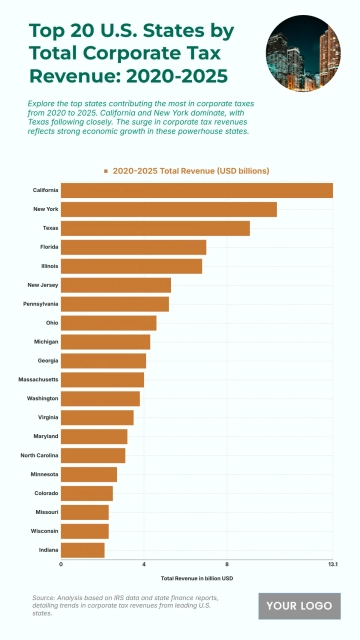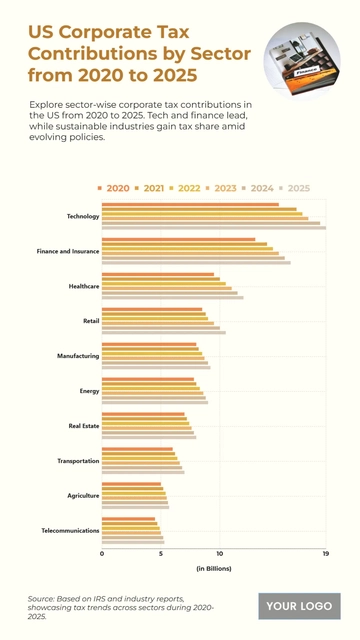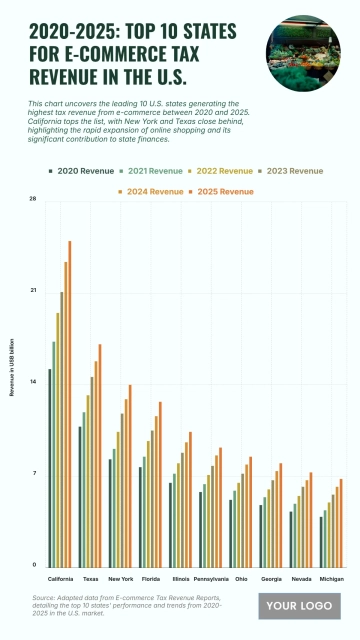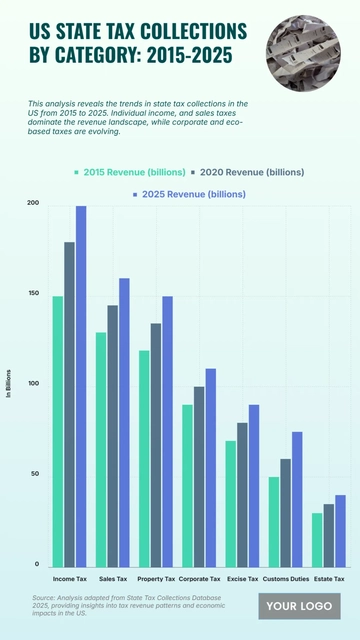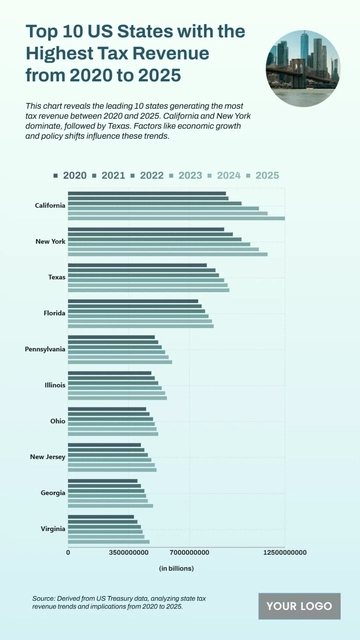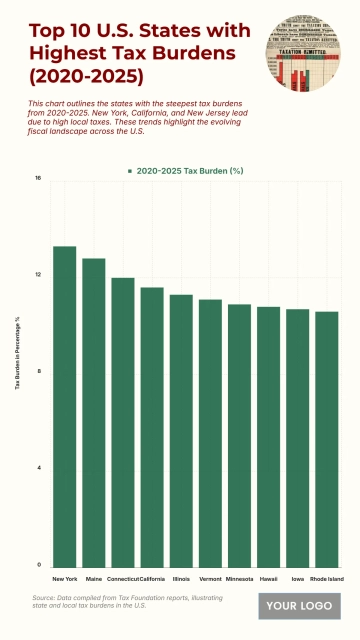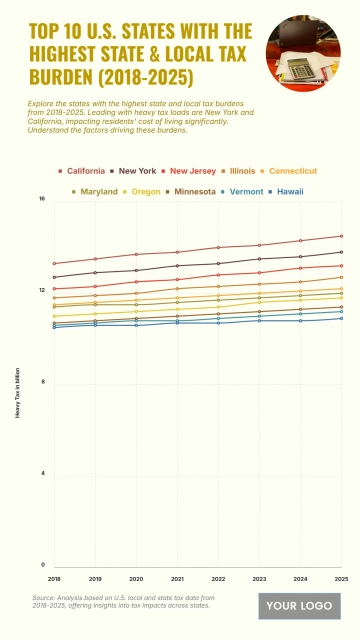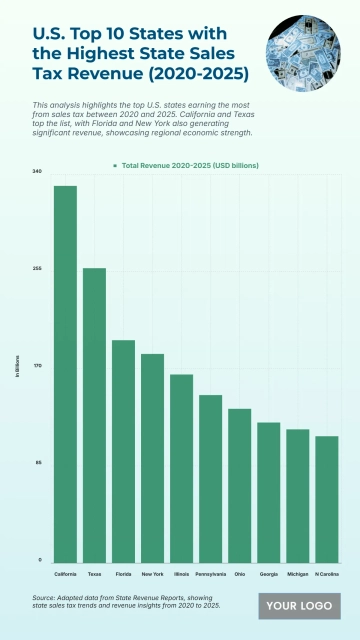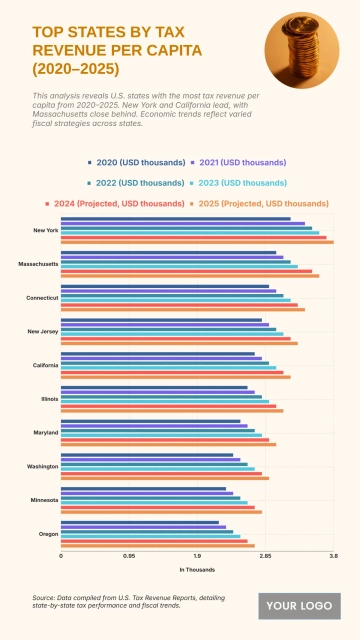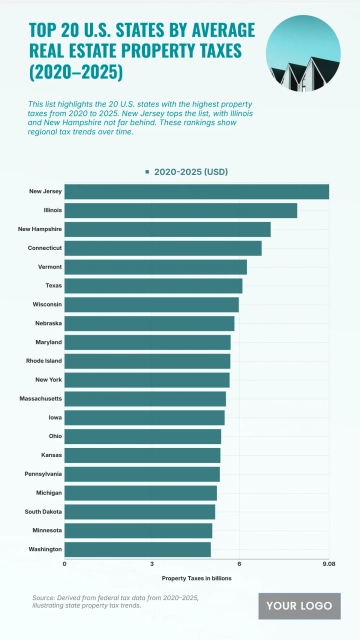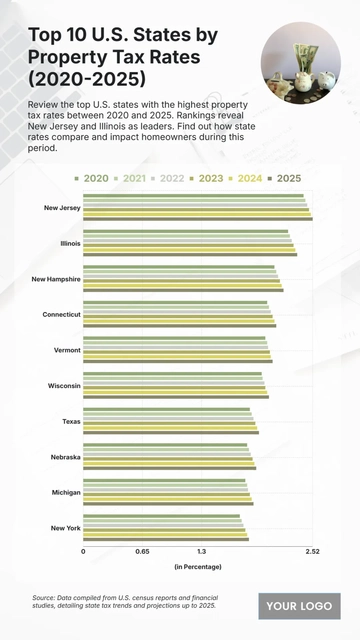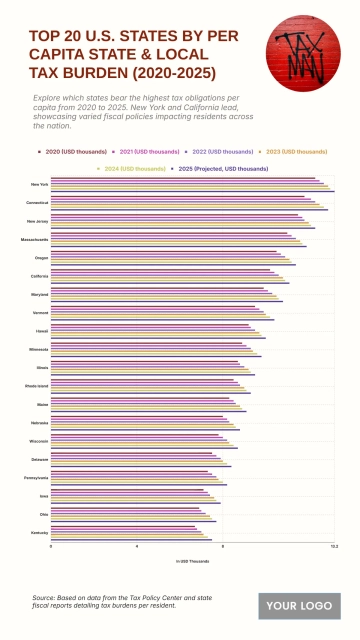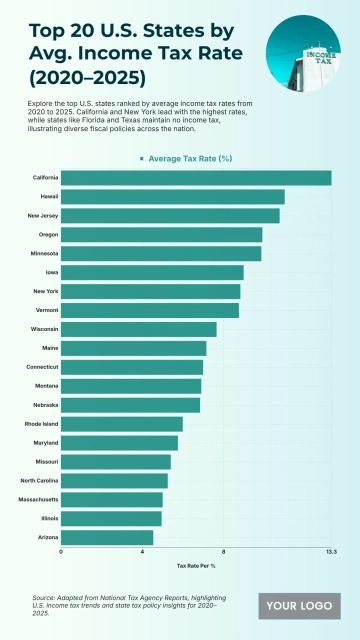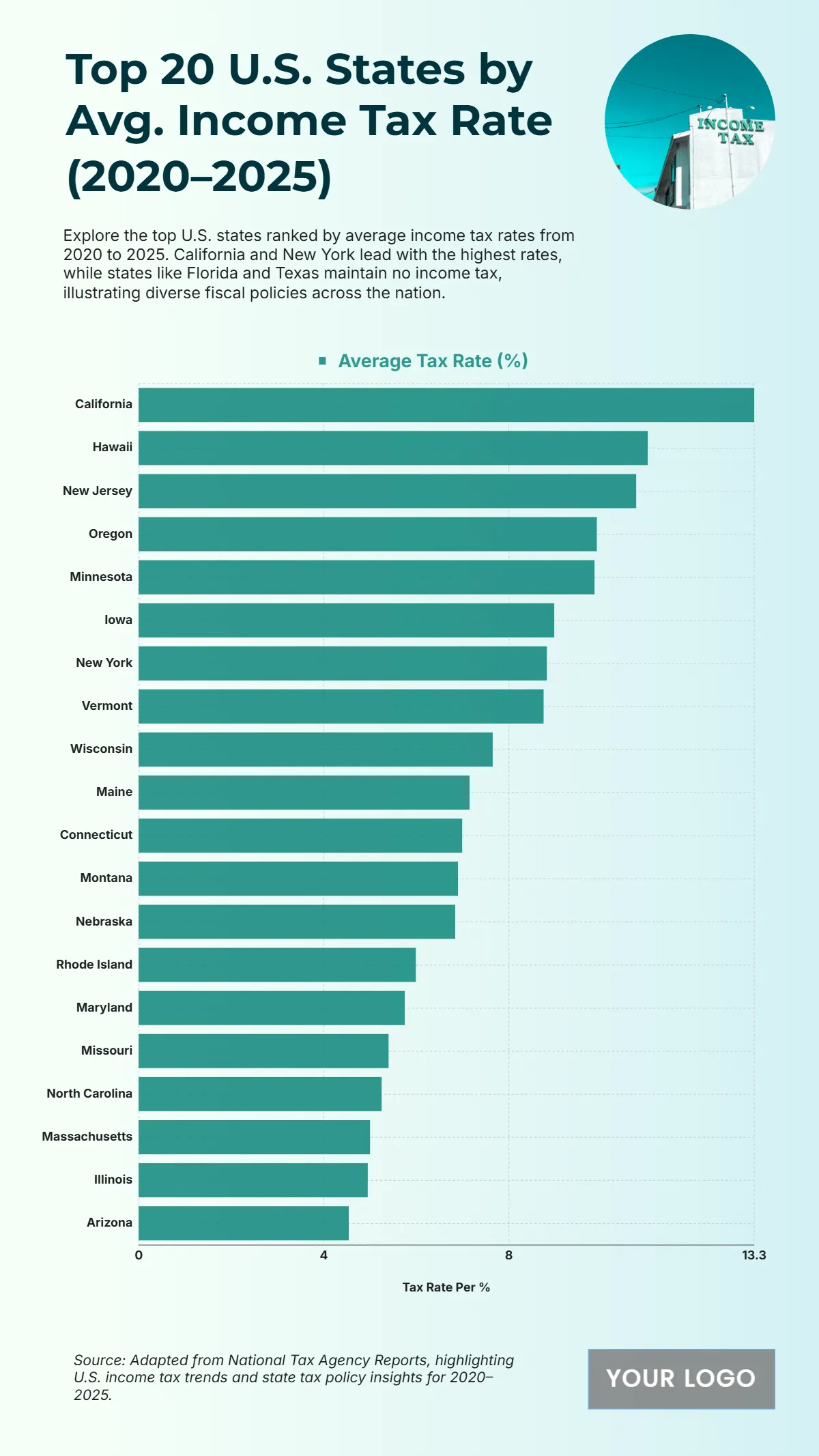
The chart illustrates the average income tax rates across U.S. states from 2020 to 2025, showcasing how fiscal policies differ regionally. California holds the highest average tax rate at 13.3%, reflecting its progressive taxation structure. Hawaii follows with 11%, while New Jersey registers 10.75%, highlighting its strong state-level tax collection. Oregon stands at 9.9%, with Minnesota slightly lower at 9.85%. States like Iowa (8.98%) and New York (8.82%) maintain upper-tier tax rates, aligning with their robust state-funded programs. Vermont follows with 8.75%, and Wisconsin stands at 7.65%, while Maine records 7.15%. Connecticut and Montana remain moderate at 6.99% and 6.9%, respectively. Nebraska is at 6.84%, and several states like Rhode Island, Maryland, and Missouri show rates between 5.99%–5.4%. The lowest among the top 20 are Massachusetts (5%), Illinois (4.95%), and Arizona (4.54%), indicating more lenient tax structures compared to higher-tax states.
| Labels | Average Tax Rate (%) |
|---|---|
| California | 13.3 |
| Hawaii | 11 |
| New Jersey | 10.75 |
| Oregon | 9.9 |
| Minnesota | 9.85 |
| Iowa | 8.98 |
| New York | 8.82 |
| Vermont | 8.75 |
| Wisconsin | 7.65 |
| Maine | 7.15 |
| Connecticut | 6.99 |
| Montana | 6.9 |
| Nebraska | 6.84 |
| Rhode Island | 5.99 |
| Maryland | 5.75 |
| Missouri | 5.4 |
| North Carolina | 5.25 |
| Massachusetts | 5 |
| Illinois | 4.95 |
| Arizona | 4.54 |